

Cooling Jobs Report Reduces October Fed Hike Odds — Markets Adjust Expectations
Tuesday, October 06, 2026
COOLING JOBS REPORT REDUCES OCTOBER FED HIKE ODDS — MARKETS ADJUST EXPECTATIONS
In the world of high-stakes finance, a plot twist can send ripples through the markets like an unexpected guest at a party. The latest U.S. jobs report is that unanticipated guest, coming in with a headline that’s sure to have every Wall Street analyst frantically adjusting their spreadsheets. September saw just 29,000 new jobs—a far cry from what anyone expected—and it has left investors and market watchers doing a collective double take.
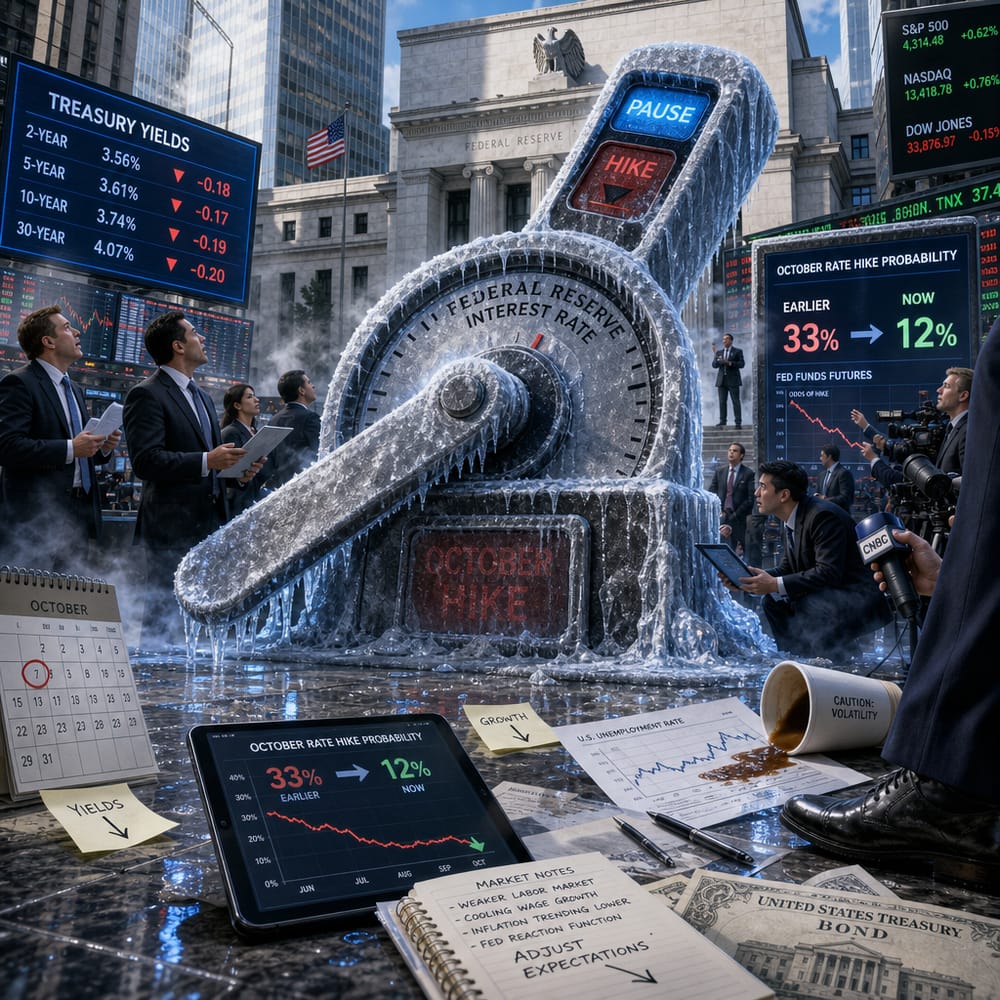
If you're wondering why this matters, let's break it down. When it comes to interest rates, the Federal Reserve is the DJ at the economic dance party, deciding whether to keep the music pumping or slow things down. When job numbers spike, it can signal a booming economy, prompting the Fed to hike interest rates to keep inflation in check. But these lackluster job numbers? They’re the equivalent of the DJ hitting pause, giving everyone time to reassess.
With unemployment ticking up to 4.2%, the Fed's October rate hike now looks about as likely as finding a unicorn in your backyard. Investors who were bracing for another rate increase can breathe a bit easier, at least for now. Fewer jobs and higher unemployment are signals that the economy might be cooling, which reduces the urgency for the Fed to jack up borrowing costs.
So, what does this mean for your investments? First, let's talk stock market. With the rate hike fears subsiding, stock indices are getting a bit of a pep in their step. Lower interest rates tend to boost stock prices since they make borrowing cheaper and can lead to increased spending by businesses and consumers alike. Expect sectors like technology and real estate to potentially benefit as the monetary environment stays looser than previously anticipated.
Meanwhile, the bond market is having its own little party. U.S. Treasury yields, the return on government bonds, are easing from their recent highs. When yields drop, bond prices go up, which is great news if you've got some bonds tucked away in your portfolio. It's a classic case of, "What goes up must come down," and after a recent run-up to multi-decade highs, yields are finally taking a breather.
Interest-rate futures are another place to watch. These are essentially traders' bets on where rates are heading, and they're now suggesting that the Fed will hold off on raising rates in October. This shift in expectations is crucial for anyone with a stake in the money markets, as it influences everything from loan interest rates to mortgage costs.
Speaking of borrowing, let’s chat about consumer costs. Lower rates can translate to cheaper loans, which is a Godsend for anyone planning to buy a house or refinance their mortgage. It's like finding a coupon for 10% off your biggest purchase. Car loans, too, might get a little less painful, which is good news given the record-high monthly payments buyers have been facing recently.
But what about the naysayers? There’s always a counterpoint, and it revolves around inflation. Some skeptics argue that not addressing rising prices swiftly could lead to a dreaded return of inflationary pressures. However, with oil prices sliding and Treasury yields easing, inflation might not be as much of a threat as it seemed just a few weeks ago.
In this ever-evolving economic landscape, it’s crucial to stay informed and nimble. The Fed's next move is anyone's guess, but one thing is clear: the markets are adjusting to a new reality, and investors need to as well. So keep watching those job reports, stay tuned to interest-rate signals, and always be ready to pivot your strategies as the economic storyline unfolds. It’s a wild ride, but who said investing was boring?
This article is for informational purposes only and is not investment advice. Always do your own research or consult a licensed financial professional before making investment decisions.
© Copyright 2024. All Rights Reserved.
© Copyright 2024. All Rights Reserved.