

Cooling Inflation Signals Trigger Market Volatility
Wednesday, August 19, 2026
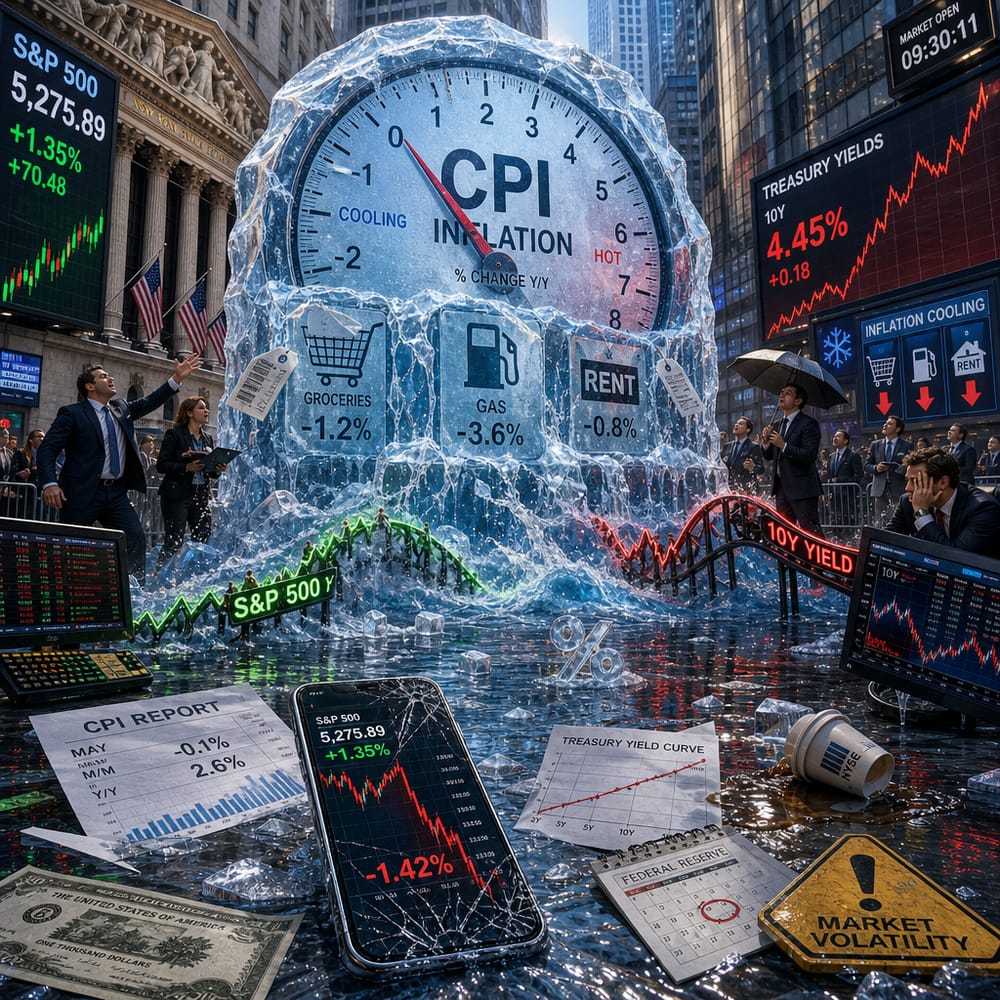
THE GREAT MARKET TEETER-TOTTER: COOLING INFLATION AND THE SPIKE IN VOLATILITY
In the roller coaster ride of global markets, the recent inflation data was like a surprise drop that had investors initially throwing their hands up in glee, only to grip the safety bar shortly after. The headlines blared the good news: inflation is cooling! But, before you could say "interest rate hike," markets took an unexpected dip, leaving investors scratching their heads and reassessing their strategies.
You see, inflation isn't just a sleepy economic number; it's like the thermostat for the Federal Reserve's interest rate policy. When prices soar, the Fed cranks up interest rates to cool the economy down. Yet, when inflation shows signs of settling, they might ease off the gas, or at least that's what one might think.
NEWS FLASH: COOLING INFLATION SPARKS INITIAL MARKET CHEER
The latest data showed a slowing of inflation, a market dream come true. Stocks surged as investors breathed a collective sigh of relief, imagining a future with fewer rate hikes. The S&P 500, that barometer of American corporate health, initially responded with enthusiasm. It was like the financial equivalent of the sun breaking through on a cloudy day.
But just as quickly, that sunny disposition turned into a thunderstorm of volatility. In a move that puzzled many, Treasury yields – which usually move inversely to bond prices – began to climb, unsettling some investors. The market wasn't behaving like a fairytale ending; it was more like a plot twist in a mystery novel.
WHY THE FED MATTERS: THE STORY BEHIND INTEREST RATES
The Federal Reserve, the not-so-secret puppet master of monetary policy, is at the epicenter of this market waltz. Investors are always trying to second-guess the Fed's next move. Lately, it's been a high-stakes game of cat and mouse, with the Fed dropping hints and investors trying to decode the Fed-speak.
When inflation seems to be cooling, the expectation is that the Fed may pause or even cut rates sooner than expected. But here's the kicker: if the data on economic growth remains robust, the Fed might still decide a little more tightening is in order to prevent the economy from overheating. It's like trying to bake a soufflé; everything has to be just right.
THE MARKET'S REACTION: A TUMBLE AND A REASSESSMENT
As investors scrambled to make sense of the inflation data and its implications on Fed policy, the initial euphoria gave way to caution. Some began to wonder if the cooling inflation numbers were enough of a trend or just a temporary blip.
Market participants, always looking for the next clue, started adjusting their expectations. The Treasury market, a key indicator, saw yields inching up. This was a sign that investors were pricing in a slightly more hawkish Fed than they initially thought. The bond market seemed to be saying: "Not so fast with those rate cuts!"
THE BIGGER PICTURE: ADJUSTING EXPECTATIONS
Investors now find themselves in a tricky position. The U.S. dollar, buoyed by higher yields, was showing strength, but with the risk of fiscal pressures and uncertainties over the Fed's next moves, its future seemed as unpredictable as ever. Are we in for more rate hikes or could the next move surprise with a pivot?
The dance continues as investors wait for the Fed's next hint, a word here, a phrase there, that could sway the markets. It's like tuning into a soap opera, where every episode could bring a new plot twist.
One thing's for sure, in this game of economic guesswork, nothing is set in stone. The investors who thrive are those who can read the signals, adapt quickly, and keep their eyes on the big picture, all while enjoying the wild ride.
In the end, the market's recent teeter-totter action is a classic reminder: in investing, as in life, the only constant is change. Keep your seatbelts fastened; we're in for more twists and turns.
This article is for informational purposes only and is not investment advice. Always do your own research or consult a licensed financial professional before making investment decisions.
© Copyright 2024. All Rights Reserved.
© Copyright 2024. All Rights Reserved.