

Cooling Inflation in July: CPI Slows to 3.4%, but Iran War Challenges Linger
Sunday, August 16, 2026
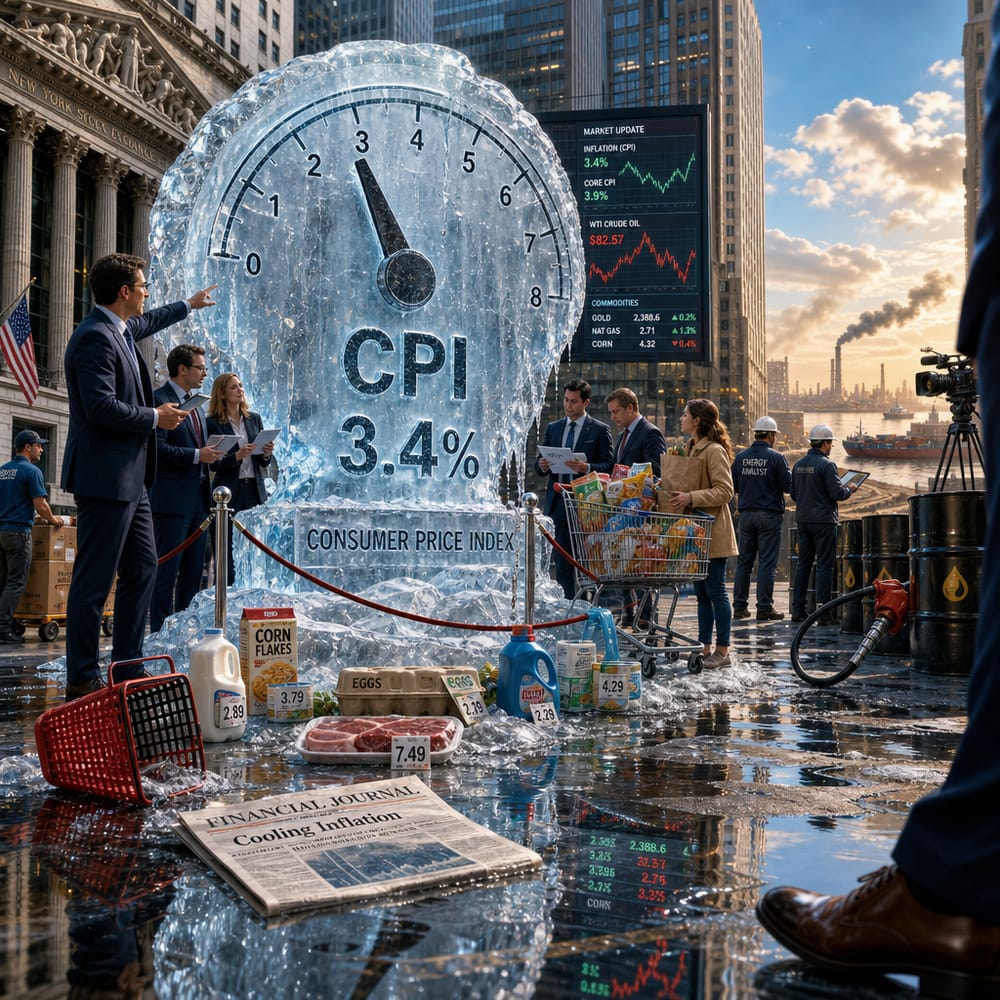
COOLING INFLATION IN JULY: CPI SLOWS TO 3.4%, BUT IRAN WAR CHALLENGES LINGER
Inflation, that sneaky little vampire draining your wallet one latte at a time, has finally shown signs of slowing in July. But don't pop the champagne just yet because geopolitical tensions, particularly the Iran war, are putting a potential twist in this tale. The U.S. Consumer Price Index (CPI) rose 3.4% year-over-year, a slight ease from June's number. So what's the catch? It seems there's always one, right?
Here’s the scoop: while the CPI is taking its foot off the gas, the tension in Iran is like a pressure cooker ready to explode, and these geopolitical fireworks are rippling across the global economic stage, affecting everything from your gas station receipts to the Federal Reserve's interest rate antics.
The Federal Reserve, the puppet master of interest rates, has been grappling with how to control inflation without sending the economy into a nosedive. They’ve been hiking rates like it's their new favorite hobby, but now they're eyeing the CPI numbers like a hawk. A drop in inflation suggests they might take a breather on raising rates. However, the Iran war is like the unpredictable guest at a party — always ready to stir the pot.
HOW DOES THE IRAN WAR AFFECT INFLATION EXPECTATIONS?
Let's talk geopolitics — not to bore you, but because the Iran conflict isn't just about tactical moves on a map. It's a wild card for inflation expectations. Iran sits on a black gold mine, better known as oil, and any tension in this region can cause oil prices to do a cha-cha on the global market. When oil prices jump, transportation and production costs skyrocket, and guess what that means for consumer goods? That's right, everything from your grocery bill to your energy costs feels the pinch.
Add to this the psychological impact: traders and investors get jittery, and fears of supply disruptions can amplify market fluctuations. This means despite the current CPI easing, the Iran conflict holds the potential to throw future inflation expectations into a tailspin. So, while the CPI meter currently reads “cooling,” geopolitical risks are the gnawing headache that won’t go away.
WHAT ARE THE IMPLICATIONS FOR THE FEDERAL RESERVE'S RATE DECISIONS?
Wielding the magic wand of interest rates, the Federal Reserve has been trying to strike a balance between taming inflation and not squashing economic growth. The recent CPI figures might offer a sigh of relief, but the Iran factor is like that annoying pebble in your shoe — it can't be ignored.
If the Fed sees sustained easing in inflation, they might decide to ease off the rate hikes. But if the Iran situation leads to a spike in oil prices, the Fed could be forced to keep their foot firmly on the rate hike pedal to prevent runaway inflation.
For the everyday investor, this spells a bit of uncertainty. If the Fed slows down on rate hikes, borrowing costs might not skyrocket as feared, potentially boosting consumer spending and business investment. But if they have to maintain or accelerate rate hikes, expect more expensive mortgages and potentially slower economic growth.
WHAT DOES THIS MEAN FOR STOCKS AND SECTORS?
If you're the type who loves watching the market like a thriller movie, gear up for some action in the consumer goods and energy sectors. Consumer goods might get a breather if the Fed plays nice with rates, translating to healthier margins and possibly more stable stock performances.
But energy stocks are where the real drama could unfold. If oil prices spike due to the Iran conflict, energy stocks could become the rockstars of the market. Conversely, if tensions ease and oil prices stabilize, we might see a different story.
FINAL THOUGHTS
As you scroll through your investment app, remember that while the CPI slowdown is a glimmer of hope, the looming shadow of Iran's geopolitical drama is something we can't brush off. Keep a sharp eye on how the Fed interprets these signals because their next moves could have a significant impact on which sectors thrive and which might take a hit.
Stay tuned, stay informed, and as always, invest wisely. Because let's face it: in the world of finance, there's never a dull moment, especially with inflation, geopolitics, and the Fed sharing the stage.
This article is for informational purposes only and is not investment advice. Always do your own research or consult a licensed financial professional before making investment decisions.
© Copyright 2024. All Rights Reserved.
© Copyright 2024. All Rights Reserved.