

Cooling Commodities and Yields Propel Wall Street Toward Records
Tuesday, September 22, 2026
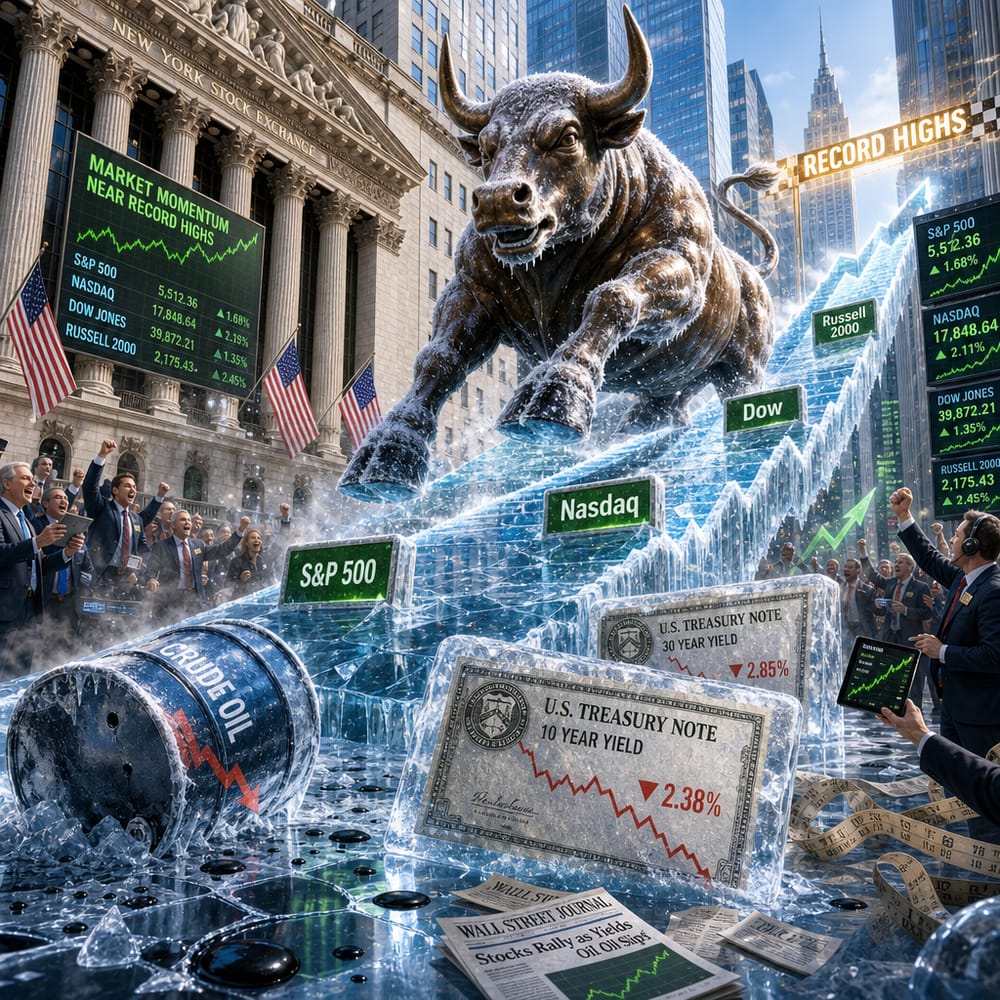
COOLING COMMODITIES AND YIELDS PROPEL WALL STREET TOWARD RECORDS
Picture this: Wall Street's indexes are eyeing records like they're kids staring at the world's biggest candy store. The S&P 500 and Nasdaq are practically ready to explode with excitement, while investors are rubbing their hands with glee. So, what's sparking this sugar rush? A surprising one-two punch: tumbling oil prices combined with retreating Treasury yields. It's like the market just got a giant sigh of relief, and investors are loving it.
Now, don't get me wrong—markets aren't just whimsically up one week and down the next. Behind this euphoric rally, there's been a shift in the economic winds that's got investors feeling like they've finally spotted a light at the end of a long, dark tunnel. With oil prices calming down and yields taking a break from their upward march, the pressure cooker that was the stock market is being relieved of some serious stress.
OIL PRICES AND YIELDS: THE STORY SO FAR
Let's talk oil, that slippery black gold that's been dominating headlines for months. Prices have been on a rollercoaster, driven by geopolitics, supply chain chaos, and every other drama you can think of. For now, though, they seem to be skidding to more palatable levels. After a series of meetings and some intense international diplomacy, even President Trump had a good old chinwag with Iran—leading to a dip in oil prices. Lower oil prices mean less pressure on inflation, which calms investors who have been sweating over the price of everything from their morning coffee to filling up their car.
Then there are Treasury yields. Think of them as the quiet giants of the financial world—when they move, everyone notices. Recently, they've been retreating like a timid cat, which is music to investors' ears. Lower yields suggest that perhaps, just perhaps, the Federal Reserve might ease up on the interest rate hikes. That means cheaper borrowing and a little more breathing room for businesses and consumers alike.
WHO'S BENEFITING FROM THIS MARKET MOOD SWING?
Tech stocks are throwing the biggest party. The Nasdaq's all-time highs are driven by investor confidence in big tech's ability to power through any economic weather. Giants like Apple, Microsoft, and Amazon are essentially the cool kids of Wall Street right now. It’s not just about their hefty balance sheets—these companies are also at the forefront of innovation, which is particularly attractive when there’s a hint that borrowing might not cost an arm and a leg anymore.
Beyond tech, the S&P 500 is also feeling the buzz. Investors are rallying around sectors previously bruised by high material costs and inflationary pressures. Think consumer goods and manufacturing—industries that take a direct hit when oil prices skyrocket. With some relief on that front, these sectors are getting a fresh breeze in their sails.
CAN THE RALLY LAST?
Here's the million-dollar question: Is this just a short-lived rally or the start of a new chapter? If oil prices and yields continue to stabilize, markets could very well maintain this positive momentum. But, and there's always a but—any unexpected geopolitical tension or surprising economic data can throw a wrench in the works. Investors are cautiously optimistic, but everyone knows that market predictions can be as fickle as a cat in a room full of rocking chairs.
The Federal Reserve's moves will be crucial. If they signal a more dovish approach or pause interest rate hikes, markets might continue to bask in this newfound optimism. But if inflation rears its ugly head again, expect investors to start feeling the jitters.
In the meantime, let's enjoy the ride. Markets are up, and investors are hopeful. But as we've learned time and time again, staying nimble is the name of the game. Keep an eye on those economic indicators, because in the world of investing, things can change in the blink of an eye.
This article is for informational purposes only and is not investment advice. Always do your own research or consult a licensed financial professional before making investment decisions.
© Copyright 2024. All Rights Reserved.
© Copyright 2024. All Rights Reserved.