

Consumer Sentiment Index Shows Unexpected Decline
Thursday, August 06, 2026
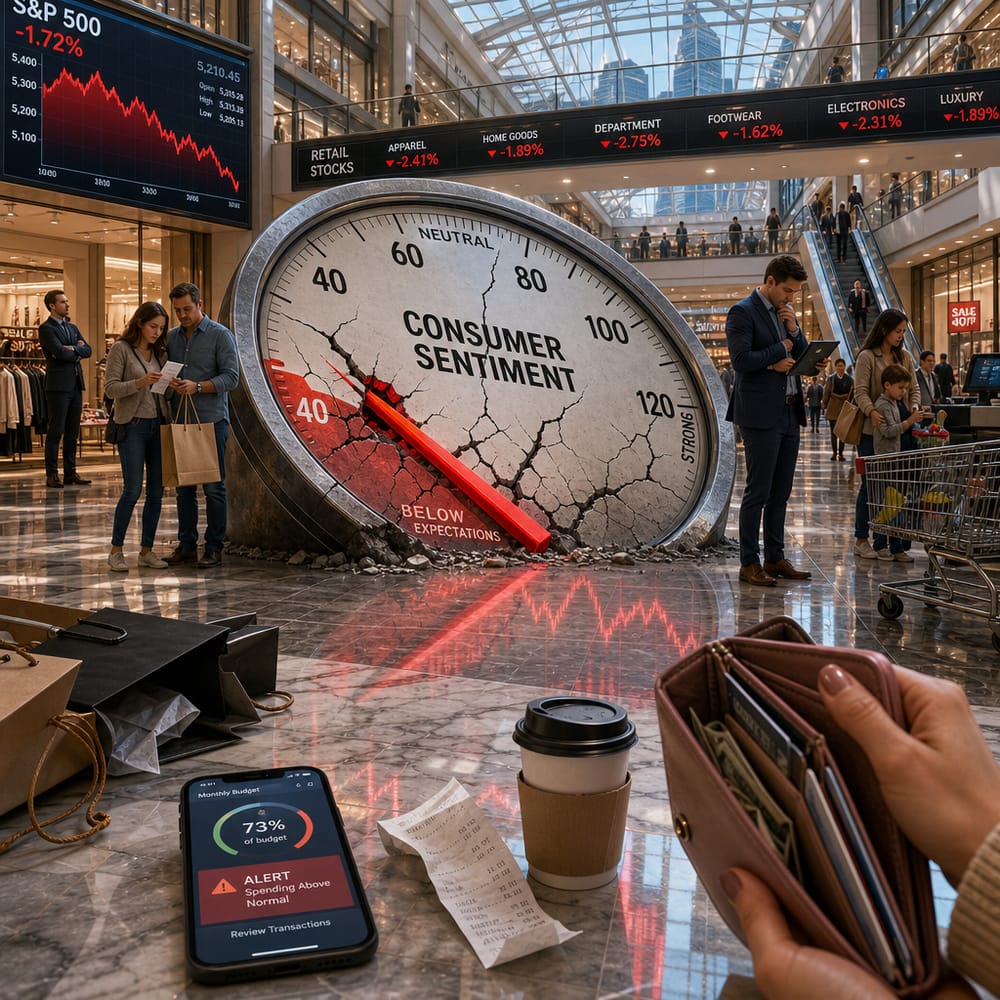
CONSUMER SENTIMENT INDEX SHOWS UNEXPECTED DECLINE
Here’s a fun cocktail party fact: consumer sentiment is like a crystal ball for the economy. It’s a mystical gauge of how you and your fellow folks feel about your bank accounts and future shopping sprees. So, when the latest numbers showed a dip in national optimism, economists sat up straight, and you might want to too. It turns out that the trusty Consumer Sentiment Index has thrown a curveball, and it’s not just a shot in the dark. This index matters, and here’s why you should care.
So, what sent the consumer mood into a nosedive? Let’s play detective. For starters, high interest rates are lurking like a shadowy villain in a noir film. The Federal Reserve has been hiking rates in its ongoing quest to combat inflation — a villain in its own right. But what does that mean for you? Simply put, borrowing costs are through the roof, making everything from your mortgage to your next shopping spree feel like a splurge.
Now sprinkle in a little job market jitteriness. Sure, unemployment numbers aren’t exactly skyrocketing, but job security? Well, that’s a different story. Major companies across sectors — we’re looking at you, Big Tech — have been flexing their layoff muscles, and that uncertainty is trickling down. It’s hard to feel confident about the future when you’re not sure if your office desk will still be yours next week.
Let’s not forget the cost of living drama. Despite some cool-offs, food and housing prices are still playing hard to get, staying stubbornly high when everyone just wants them to come back down to earth. With the cost of your favorite brunch spot's avocado toast inching upwards and rent taking ever-bigger bites out of paychecks, even the most enthusiastic spenders are tightening their purse strings.
So, what’s the domino effect of this dip in sentiment? Consumer spending might take a hit, and here’s why that’s a big deal. Picture the U.S. economy as a colossal, bustling mall. Consumer spending is the anchor store — the Macy’s or Nordstrom pulling in foot traffic. When shoppers decide to pass on the ‘buy one, get one free’ deal, the entire mall feels the pinch. Retail giants, small businesses, the coffee shop you love — everyone’s sweating.
Here’s where the plot thickens. If consumers clutch their wallets tightly, the S&P 500 and retail stocks could feel the heat. Investors are already twitchy over leverage levels that even JPMorgan’s Jamie Dimon has warned about. Toss in a shake-up in spending habits, and you’re looking at some shaky hands on the stock trading floor. High leverage and shaky consumer confidence? That’s a cocktail that could trigger market ripples — or worse, waves.
And how about this for irony? While U.S. consumers are feeling the pinch, Asian tech stocks are taking their own tumble. As AI-hyped stocks face a rollercoaster ride, global markets are on high alert, bracing for possible disruptions. This contrast between consumer sentiment domestically and tech stock volatility abroad paints a vivid tapestry of global economic interconnectedness.
So, what’s a savvy investor to do amid this swirl of sentiment dips and market speculation? Some are looking to long-term plays, like SpaceX — yeah, the company Jim Cramer thinks you should buy for your grandkids. While the short-term might look shaky, there’s an argument to be made for keeping your eyes on the horizon. Long-term growth prospects, especially in tech and innovative sectors, might weather these consumer sentiment storms.
In conclusion, the unexpected drop in consumer sentiment might seem like just another blip in the economic radar, but it’s a blip with big implications. As consumers weigh their spending decisions, the ripples extend far and wide, painting a more complex picture of the economic landscape. It's time to keep a close watch on consumer confidence because it might just hold the key to what's next for both the economy and your investment portfolio. So, stay sharp and maybe hold off on splurging for that extra avocado toast — for now.
This article is for informational purposes only and is not investment advice. Always do your own research or consult a licensed financial professional before making investment decisions.
© Copyright 2024. All Rights Reserved.
© Copyright 2024. All Rights Reserved.