

Consumer Inflation Steady but Above Fed Target
Friday, August 14, 2026
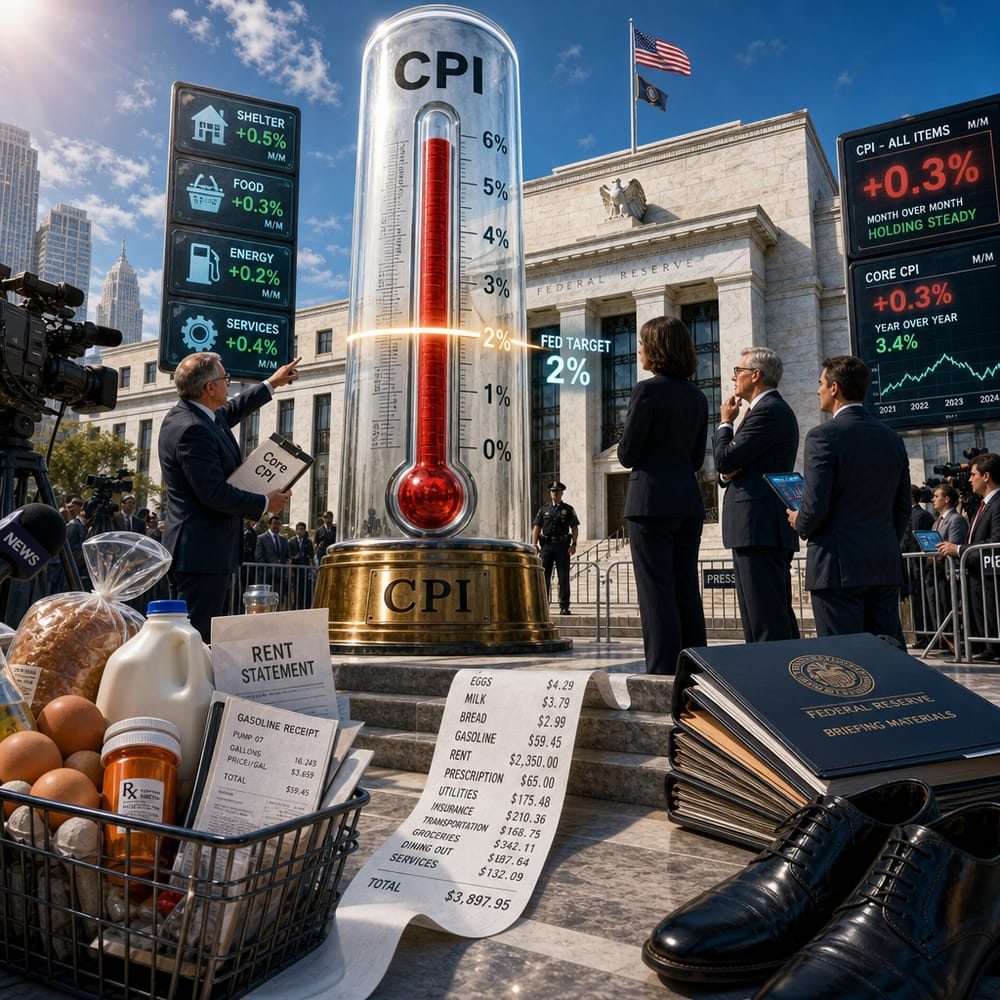
CONSUMER INFLATION STEADY BUT ABOVE FED TARGET
Ladies and gentlemen, hold onto your hats because the latest Consumer Price Index (CPI) report just hit the scene, and it’s holding steady like a stubborn mule. While it might seem like a yawn to some, this steady CPI, especially the core CPI, is hanging out above the Fed's favorite number: 2%. And when inflation can't take a hint, it means the Federal Reserve has some head-scratching to do about the future of interest rates.
For those who don’t spend their nights reading central bank memos (and really, who does?), here’s why you should care: when inflation is above the Fed's target, it messes with borrowing costs and the overall economic vibe. Imagine it like a DJ at a wedding who refuses to play the couple's favorite song. Everyone’s waiting, and no one's sure what happens next.
WHAT DOES THE STEADY CPI MEAN FOR FUTURE RATE HIKES?
With inflation being like that guest who doesn’t know when to leave, the Fed might feel the heat to keep interest rates high or even hike them further. That’s because raising rates is like telling inflation to simmer down. But there’s a catch. Higher rates can put a brake on economic growth because borrowing becomes more expensive. So, it's a bit like trying to decide if you need a hot coffee to wake up or a soothing chamomile tea to relax—tricky, right?
The Fed’s in a spot where it has to figure out if the cooling trends in prices are the real deal or if they’re just taking a quick water break. If the former, maybe they can chill on further rate hikes. If the latter, they might need to get their monetary policy hiking boots back on.
HOW MIGHT THIS INFLUENCE THE FED'S COMMUNICATION STRATEGY?
The Federal Reserve has its big annual shindig in Jackson Hole coming up, where central bankers from all over gather to talk shop. Think of it as the Davos of monetary policy but with fewer Swiss ski slopes. This year, Fed Chair Jerome Powell will have to channel his inner Nostradamus and give us a glimpse of what the Fed’s crystal ball says about inflation and interest rates.
The Fed’s communication strategy is like a carefully balanced cocktail—it has to be just right. Too dovish (meaning soft on inflation), and markets might go wild thinking easy money is coming back. Too hawkish (meaning aggressive on inflation), and they risk scaring everyone into a corner. It’s a delicate dance, and Powell’s got to lead without stepping on anyone’s toes.
WHAT ARE THE IMPLICATIONS FOR ECONOMIC GROWTH?
The economy is like a house of cards where every card counts. High inflation can lead to higher interest rates, which can make growth wobble like a flamingo on a tightrope. But, if the Fed tightens the monetary screws too much, it risks suffocating the economy’s growth potential.
Here's the kicker: financial markets are already jittery about what might happen next. Stocks have been on a roller coaster lately, dealing with everything from weak retail sales data to tech stock fervor. Investors are watching, and they don’t want any unexpected plot twists.
Moreover, sectors sensitive to interest rates like housing are on the edge. Higher borrowing costs can mean fewer folks lining up for mortgages, which can put the brakes on housing market exuberance. And who wants to see a housing market sobbing into its overpriced avocado toast?
In conclusion, the steady CPI might seem like it’s all calm and collected, but it's keeping the Fed on its toes. The next few months will see policymakers playing a game of economic chess, trying to avoid a stalemate. Investors, keep your eyes peeled and your ears to the ground. The Fed’s next moves could determine whether we get a slow waltz or a quickstep in economic growth. Either way, get ready for some financial drama worthy of a summer blockbuster.
This article is for informational purposes only and is not investment advice. Always do your own research or consult a licensed financial professional before making investment decisions.
© Copyright 2024. All Rights Reserved.
© Copyright 2024. All Rights Reserved.