

Consumer Inflation Expectations Surge in New York Fed’s September Survey
Wednesday, October 07, 2026
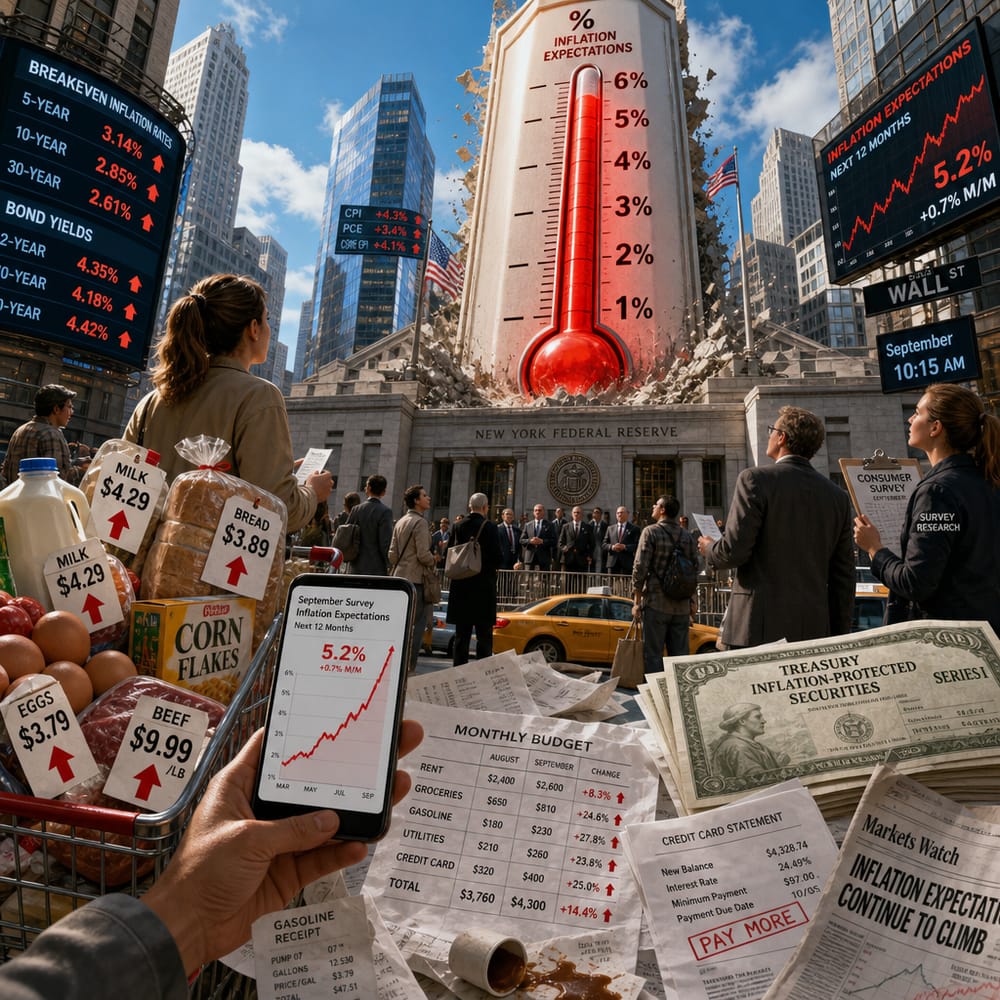
CONSUMER INFLATION EXPECTATIONS SURGE IN NEW YORK FED’S SEPTEMBER SURVEY
Get ready to tighten your belt a little more, folks, because inflation isn't just a ghost of the past—it’s rearing its head in full view. That's the latest signal coming from the New York Fed's September survey, where consumer inflation expectations have risen faster than a TikTok dance craze.
The survey showed that the median view for inflation over the next year popped up to 3.9%, marking the highest level since the flowers were blooming in May 2023. What's moving the needle? A cocktail of economic factors, spicy with global uncertainty, and a dash of consumer apprehension.
But here’s the kicker: this isn't just about numbers going up and down on a spreadsheet. Inflation expectations have a sneaky habit of becoming self-fulfilling prophecies. Consumers think prices will rise, so they spend more now to beat the future hike, which—surprise, surprise—actually pushes up prices. It's like trying to outrun a treadmill.
What’s really stirring the pot? Well, despite the Fed's careful dance to keep inflation in check, recent data throws a wrench—or maybe a spanner—in the works. Even with some relief in the August inflation numbers, September's survey has consumers feeling like they're in a pressure cooker.
The implications are potentially seismic for the Federal Reserve and its monetary policy maneuvers. The central wizards over at the Fed, led by Chair Jerome Powell, have been eyeing inflation like a hawk. They’ve been incrementally raising interest rates to rein inflation back to their preferred 2% target. But with consumers expecting higher inflation, the Fed might have to rethink its strategy, perhaps even tightening the screws further.
If the Fed decides to pump the brakes on economic growth by jacking up interest rates, you can expect a ripple effect. Higher rates might mean your car loan or mortgage just got a tad pricier. Businesses facing steeper borrowing costs might pull back on investments, potentially stymieing economic growth. Not exactly good news if you’ve been hoping for a raise.
And let’s not forget about the Fed’s beloved inflation-indexed bonds, which are now looking more attractive. These bonds offer returns that rise alongside inflation, making them a hot ticket item if consumer fears about inflation pan out.
So, what's the bottom line? If inflation expectations keep rising, it’s like an alarm bell for the policymakers. They need to ensure that these expectations don't lead to a wage-price spiral, a scenario where workers demand higher wages because they expect prices to rise, and employers hike prices because costs are up—rinse and repeat. That’s the inflationary merry-go-round nobody wants a ticket to.
But before we sound the doom-and-gloom gong too loud, remember that not all inflation is bad. Moderate inflation is like a gentle breeze—encouraging spending rather than hoarding cash under the mattress. It's when that breeze turns into a gale that things get tricky.
So, how should you, the everyday retail investor, navigate this upswell of expectations? Keep an eye on the Fed’s next moves and consider diversifying your portfolio with inflation-hedged assets, like those inflation-indexed bonds we mentioned. Stay informed, stay nimble, and maybe keep that spending in check until the inflation dust settles.
In this topsy-turvy market, knowledge is your best ally. So, keep your eyes peeled for the Fed's next policy move, and watch how the inflation saga unfolds. It might just be the drama series of the season—no streaming subscription required.
This article is for informational purposes only and is not investment advice. Always do your own research or consult a licensed financial professional before making investment decisions.
© Copyright 2024. All Rights Reserved.
© Copyright 2024. All Rights Reserved.