

Consumer Confidence Surges Amid Falling Gas Prices and Tight Labor Market
Wednesday, November 25, 2026
CONSUMER CONFIDENCE SURGES AMID FALLING GAS PRICES AND TIGHT LABOR MARKET
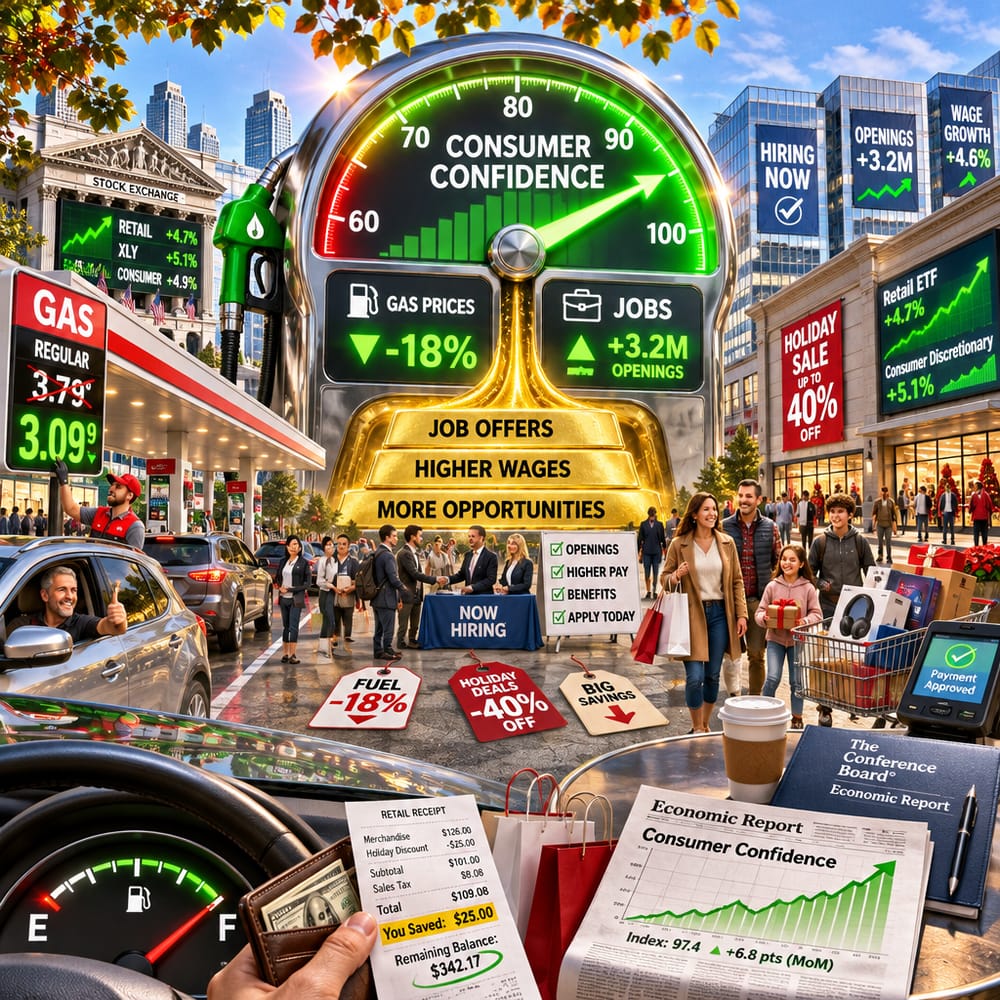
You know that feeling when you find a $20 bill in an old jacket? Well, that’s how U.S. consumers are feeling right now, only on a much grander scale. In November, the Conference Board’s consumer confidence index did a happy dance upwards, and the culprits? Lower gas prices and a sizzling-hot labor market. It’s like the universe handed shoppers a discount code for optimism.
Let's talk about those gas prices. They’ve been sliding down the slippery slope faster than your uncle on a Black Friday TV deal. The average price per gallon dropped by 56 cents through November, providing a welcome relief at the pump. This price drop is a big influencer because when Americans aren't emptying their wallets at the gas station, they’ve got more cash for, say, that extravagant holiday turkey or another round of margaritas.
So, how much of this consumer confidence boost is thanks to cheaper gas? Quite a bit. The drop in fuel prices has not only improved the mood of drivers but also had the incredible superpower of beefing up spending elsewhere. With less spent on gas, there’s more green in consumers’ pockets, ripe for spending or saving. And with the holiday season knocking at the door, let’s bet a good chunk is earmarked for splurging.
This burst of consumer optimism is like a shot of adrenaline to the economy's heart, potentially setting the stage for a shopping frenzy this holiday season. Retailers are already rubbing their hands in anticipation—think consumer discretionary stocks like Amazon and Target, which have been eyeing this opportunity like a kid spotting cookies before dinner.
Now, what does this mean for Q4 consumer spending? It's like adding extra cheese to an already loaded pizza. Expect spending to rise as people feel more confident to open their wallets, support the economy, and maybe even get that way-too-expensive designer scarf they’ve been eyeing. An uptick in spending during Q4 could send ripples across the economy, heightening GDP growth figures and making financial analysts nod in approval.
But before you blow your savings on holiday decorations, consider this: the Federal Reserve is watching. Inflation has been the Fed’s uninvited dinner guest for too long, and rising consumer confidence could play a role in the central bank's future moves. If spending increases significantly, the Fed might feel the need to tighten the reins on monetary policy sooner rather than later—a potential consequence of people feeling too good about their finances.
However, this isn’t quite a paved road to Fed tightening. Rising consumer confidence could actually delay more restrictive measures if it aligns with stable prices and continued job growth. The labor market remains tight, with jobs seemingly more abundant than pumpkin spice lattes in October. This balance is crucial; too much confidence too fast could stoke inflation, but a measured increase could keep the Fed off the tightening trigger for a bit longer.
In the broader picture, while the tech sector is having a minor meltdown—let’s not get started on Nvidia’s roller coaster ride or the tech sell-off blues—the consumer sentiment is serving as a stabilizing counterweight. It’s the kind of news that makes retailers and investors smile, even as they keep an eye on the volatile tech landscape.
So, what’s the takeaway here? The drop in gas prices has injected a newfound sense of optimism among consumers, fueling spending as we head into the most wonderful (and expensive) time of the year. This increased confidence could be a boon for the economy, but all eyes will be on how it influences the Fed’s future policy decisions. In the meantime, enjoy the cheaper gas and let your spending spree be guilt-free—just remember to save a little for the rainy days lurking in the economic forecast.
This article is for informational purposes only and is not investment advice. Always do your own research or consult a licensed financial professional before making investment decisions.
© Copyright 2024. All Rights Reserved.
© Copyright 2024. All Rights Reserved.