

Consumer Confidence Hits Seven-Month Low
Tuesday, August 25, 2026
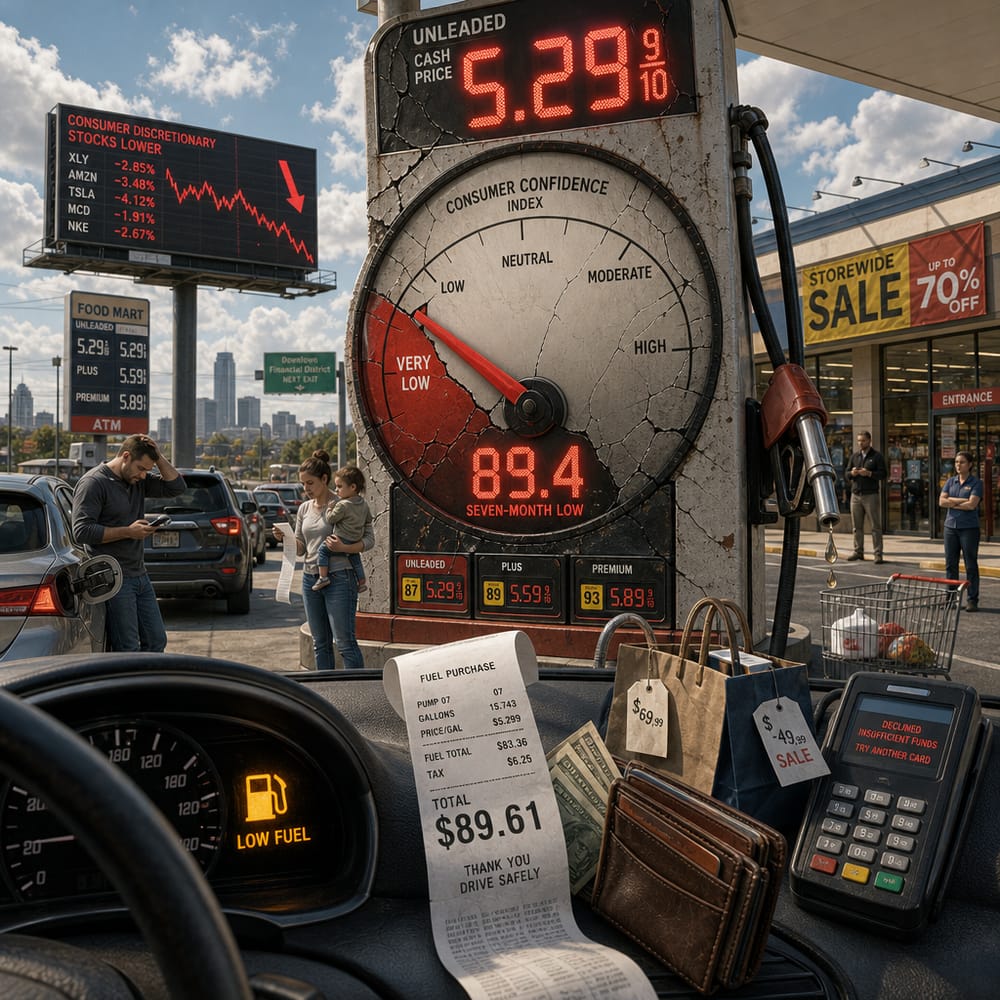
CONSUMER CONFIDENCE HITS SEVEN-MONTH LOW: IS YOUR WALLET IN TROUBLE?
Feeling unsure about whipping out the credit card lately? You're not alone. The U.S. consumer confidence index just nosedived to a seven-month low of 89.4 in August. Why the gloom? Let's dive into the nitty-gritty of why those feel-good vibes might be taking a back seat, and what it means for your next shopping spree.
GASOLINE: THE PRICEY PARTY-POOPER
First things first: let's talk about gasoline prices. They're the party crasher no one invited but everyone has to deal with. As gasoline prices stubbornly hover in the upper stratosphere, wallets across America are clutching their pearls. When filling up your tank feels like an expensive night out, it's no wonder people are feeling jittery. High gasoline prices are like that friend who insists on going to the most expensive restaurant—they make everything else seem way pricier too.
The ripple effect is real. When gas costs a pretty penny, it leaves less room in the budget for other expenses, from groceries to gadgets. This, in turn, might cool down consumer spending—especially on non-essentials like the latest smartphone or that tempting designer jacket. And if people start cutting back, that's a red flag for consumer discretionary stocks, which include companies selling luxury items and services.
WHAT THIS MEANS FOR YOUR WALLET
Let's be real: when consumer confidence dips, people tend to clutch their wallets a little tighter. This is not just about your personal finance blues; it could spell trouble on a larger scale. If consumers start spending less, retailers could see less foot traffic and leaner profit margins, potentially leading to sales and discounts in an attempt to lure back shoppers. So, if you've been eyeing an expensive TV or a new pair of sneakers, patience might pay off with a better deal down the road.
The cascading effect might also make its way to inflation rates. If consumers close their purses, demand drops, and prices may stabilize or even decrease. This could be a double-edged sword—good news for inflation control but potentially bad news for companies that thrive on consumer purchases.
A WHISPER IN THE FED'S EAR
Here's where things get a bit more complex: declining consumer confidence could catch the eye of the Federal Reserve. While the Fed doesn't lose sleep over every hiccup in consumer sentiment, sustained drops like these can influence monetary policy. Lower consumer confidence might bolster the case for more cautious rate hikes, or even a pause, in an effort to stimulate spending and avert a slowdown.
Why should you care? Well, the Fed's decisions trickle down into everything from mortgage rates to the interest on your credit card. So, while you might not see immediate changes, the broader impact could sneak up on your financial landscape.
WHAT TO WATCH NEXT
So, what should savvy investors and everyday folks keep an eye on in the coming months? For starters, keep tabs on gasoline prices—those bad boys have a way of stirring the economic pot. If they continue their upward march, we could see consumer confidence dip even further.
Watch consumer discretionary stocks, the first to feel the pinch when people tighten their belts. If you have investments in these sectors, now might be a good time to reevaluate your strategy. Consider diversifying your portfolio or holding off on new purchases until the dust settles.
Lastly, stay tuned to the Fed's moves. As they navigate the tricky balance between taming inflation and encouraging spending, their next steps will be crucial. Any hints of policy changes could impact everything from your savings account to the cost of that dream home you've been eyeing.
THE BOTTOM LINE
Consumer confidence might be down, but it's not out. High gasoline prices are throwing a wrench in the works, but that doesn't mean we're in for a financial apocalypse. Keep your ear to the ground and your eyes on the market—you might just find some silver linings in those economic clouds. And hey, if nothing else, maybe it's time to start carpooling. Your wallet—and Mother Earth—will thank you.
This article is for informational purposes only and is not investment advice. Always do your own research or consult a licensed financial professional before making investment decisions.
© Copyright 2024. All Rights Reserved.
© Copyright 2024. All Rights Reserved.