

Constellation Brands Earnings Beat Amid Demand Concerns
Wednesday, October 07, 2026
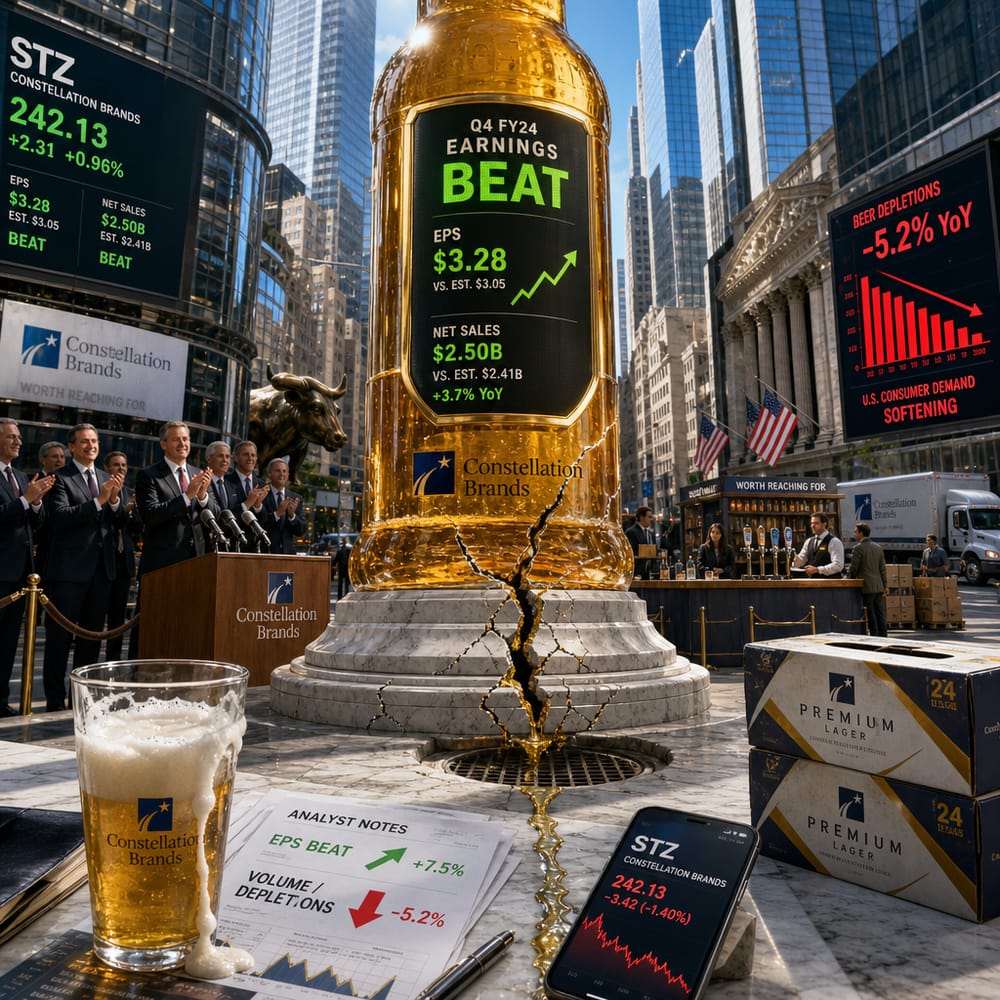
CONSTELLATION BRANDS EARNINGS BEAT AMID DEMAND CONCERNS
When's the last time a beer company made you feel like you were watching a high-stakes thriller? Well, grab your popcorn—or perhaps a cold Corona—because Constellation Brands just delivered an earnings report that's part victory lap, part cliffhanger, and all business drama.
Let's start with the good news: Constellation Brands smashed Wall Street's expectations like a piñata at a backyard party. The maker of beloved brands like Corona, Modelo, and Pacifico served up a juicy fiscal second-quarter adjusted earnings of $3.74 per share. Revenue hit a hearty $2.63 billion, both numbers leaving analysts in their wake. For a moment, it felt like a fiesta as beer revenue bubbled up by 5%, with shipments growing by 5.5%. Investors probably felt like it was time to pop a bottle and celebrate.
But hold the lime, friends. Not all is sunshine and suds in the world of Constellation. The company also dropped a cautionary note that could put a damper on this beer-soaked parade: beer depletions, the not-so-sexy term for sales from distributors to retailers, have slipped. Translation? Demand might be softer than it appears when you're just looking at the stock numbers.
CEO Nicholas Fink explained that they've been busy replenishing distributor inventories, which may have made those shipment numbers sparkle more than the reality down the line. It's like stuffing a turkey with breadcrumbs and claiming you've got a bigger bird.
So, what gives? Why the paradoxical combo of eye-popping earnings and a sheepish future outlook? In a world where inflation anxiety is as common as a hangover after too many lagers, consumers seem to be tightening their purse strings. With high food and fuel prices, beer drinkers are maybe having that extra round at home instead of the bar. The classic effect where more cautious spending habits start rippling through the market.
Constellation isn't blind to this. They're diving into creative strategies to court back those elusive beer drinkers. Think special promotions, leveraging big occasions, and maybe even some new beverage diversifications to keep their offerings fresh. But here's the kicker: none of these are sure bets. It’s a tightrope walk between keeping that market share growing and preventing a future where those earnings fall flat.
Now, on to Wall Street, the place where these mixed signals create a frenzy equivalent to a rock-paper-scissors tournament with real stakes. The investors in consumer staples—everyday items like food and beverages—are nervously watching to see how this plays out. Constellation’s news flashes a warning like a neon sign in a dim bar, highlighting the tension between strong financial performance and teetering consumer demand.
For retail investors, this means taking a hard look at what's behind the curtain of those glowing earnings. Can Constellation keep riding the high of those revenue numbers, or will the subtle signs of demand weakening eventually catch up like a hangover after all the fun is over?
In the meantime, the share price might twitch this way and that as market watchers debate the future of beer sales amid fluctuating consumer confidence. Mix in some broader economic jitters and inflation fears, and it's clear that this balancing act isn’t just about Constellation—it’s a snapshot of the consumer staples sector at large.
While we digest this heady blend of financial exuberance and cautionary tales, the bottom line for investors is to stay sharp, perhaps with a keen eye on the wider economic landscape. Constellation’s earnings tale is a microcosm of broader market dynamics: strong numbers today don't automatically guarantee a smooth sail tomorrow.
So, what’s your next move? Grab the popcorn, stay informed, and perhaps, have a beer on standby. After all, Constellation’s next earnings report might just be the sequel we didn’t know we needed.
This article is for informational purposes only and is not investment advice. Always do your own research or consult a licensed financial professional before making investment decisions.
© Copyright 2024. All Rights Reserved.
© Copyright 2024. All Rights Reserved.