

Consensus Builds Around December Rate Hike
Tuesday, November 10, 2026
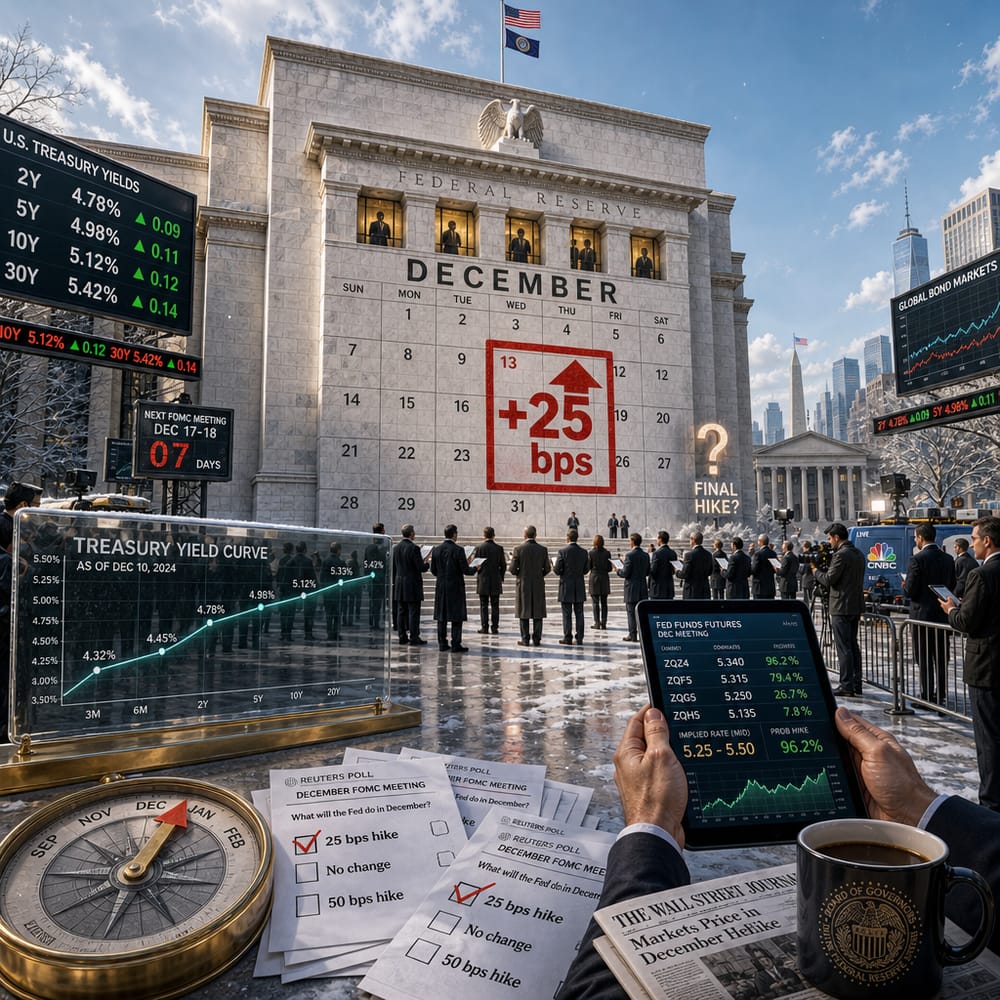
WHEN ECONOMISTS AGREE: THE RARE CONSENSUS OF A DECEMBER RATE HIKE
There’s a saying in economics: if you put a group of economists in a room, you're bound to end up with a dozen conflicting opinions. But right now, those economists are singing in harmony like a barbershop quartet, unanimously expecting the Federal Reserve to pop the interest rate by 25 basis points this December. It’s a rare sight, like a unicorn or a politician refusing a photo op. But what’s driving this surprising consensus, and why should you care? Let’s dive in.
THE FACTORS AT PLAY
First off, let's talk about inflation, the Fed's perpetual arch-nemesis. October's consumer price index (CPI) numbers came in hotter than expected—up 0.4%—giving inflation hawks more ammo in their quest for tighter monetary policy. Just like that one friend who insists on ordering spicy food everyone else knows will end badly, the Fed seems ready to dial up the heat.
The narrative among the monetary moguls is clear: inflationary pressures are sticking around like gum on a shoe. With inflation refusing to beat a retreat, the Fed is under more pressure than a college student during finals week to act decisively. The consensus for a December hike is a call to arms against this persistent economic foe.
THE MARKET MOOD SWINGS
Now, let's imagine for a moment that the Fed signals it's not done after December and hints at more hikes in 2027. Picture the market throwing a fit akin to a toddler deprived of screen time. Stock futures could wobble, Treasury yields might spike like a caffeine-fueled insomniac, and investors’ hopes for rate stability would dissolve faster than sugar in hot coffee.
Investors love predictability, almost as much as they love prime dividends. So, the mere whisper of additional hikes beyond December could send shockwaves through the market. It would mean recalibrating portfolios, reassessing risks, and possibly reaching for that stress ball you've stashed in your desk drawer.
HISTORY LESSONS: UNANIMITY IN THE PAST
The current consensus is as rare as a solar eclipse, but it's not without precedent. Take a time machine back to early 2000s after the dot-com bust, or to 2018 when trade tensions were at a boiling point—periods when the economists’ choir sang in unison. In both cases, the Fed's decisive actions were applauded (or at least begrudgingly accepted) as necessary steps to curb economic turbulence.
Yet, history also teaches us that predictions can be about as reliable as a weather forecast. Economists might be in agreement now, but the economic landscape is as changeable as a soap opera storyline. One unexpected geopolitical tantrum or a major shift in consumer behavior, and that consensus could shatter like a dropped smartphone.
WHY IT MATTERS FOR YOU
For everyday investors, understanding the Fed’s rate plans isn’t just about flexing at cocktail parties. It’s about steering your financial ship through both calm seas and stormy weather. A rate hike means more than just a higher credit card bill or a pricier mortgage. It can reshape entire sectors, shift investment strategies, and alter the trajectory of your 401(k).
If you're eyeing U.S. Treasury yields or pondering a leap into equities, keep a close watch on the Fed’s next moves. Will they toe the line and stick with a single December hike, or will they adopt a more aggressive approach? The answers to these questions could define the market's path in 2027.
THE WAITING GAME
As the December meeting approaches, all eyes will be on the Fed like fans watching the clock in a tied basketball game. Whether they choose to follow through on this much-anticipated hike or pivot in response to new data remains to be seen.
So, dear investor, hang tight and keep your ears to the ground. In the world of economics, where change is the only constant, being informed is your best hedge against uncertainty. After all, in this high-stakes game, knowledge is not just power—it’s potential profit.
This article is for informational purposes only and is not investment advice. Always do your own research or consult a licensed financial professional before making investment decisions.
© Copyright 2024. All Rights Reserved.
© Copyright 2024. All Rights Reserved.