

Conflicting Analyst Signals for Workday
Thursday, August 20, 2026
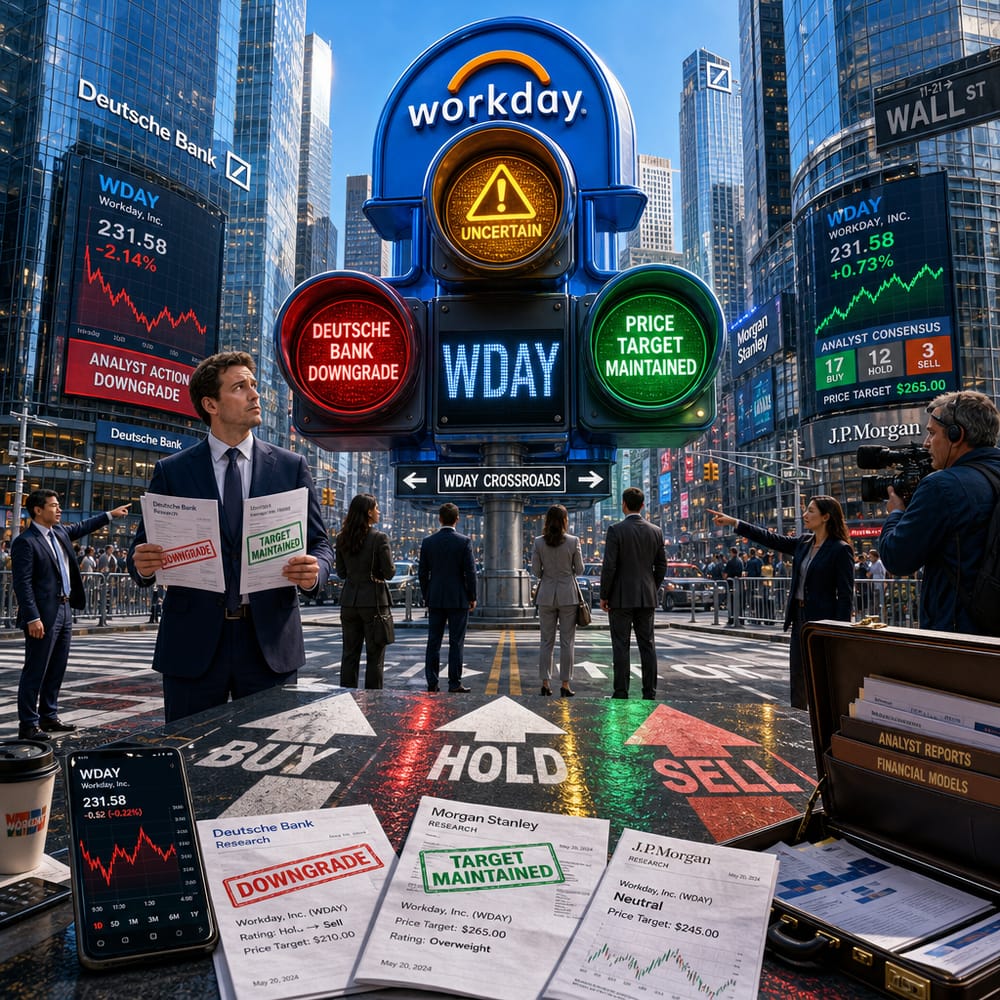
WHEN ANALYSTS DISAGREE: WHAT'S A WORKDAY INVESTOR TO THINK?
Picture this: you’re in the middle of a chaotic friendship debate. One friend says, "Try the green smoothie," while the other insists, "Go for the classic cheeseburger." You're left wondering who to trust. That’s pretty much the scene for Workday investors right now, with analysts playing the roles of indecisive friends.
This week, Deutsche Bank decided to rain on Workday's parade, downgrading the stock and slapping a grumpy "sell" sticker on it. Before you grab the umbrella—or the tissues—let’s dig into why they rained on the parade in the first place. Deutsche Bank cited concerns over Workday’s valuation. In plain English, they’re saying the stock might just be too expensive for what’s on the table right now. Think of it like paying designer prices for a plain white tee. Achieving growth expectations that justify the current price might be a tall order.
But here’s where it gets spicy. Not all analysts are singing the same tune as Deutsche Bank. Other firms such as BMO Capital Markets and Barclays are holding steady with their price targets, hinting at a different outlook. What's their angle? They’re optimistic about Workday’s consistent performance and potential in cloud-based enterprise software. Workday has been chugging along nicely with a strong customer base and a sweet spot in the human capital management space. So, for them, it's more like investing in a solid pair of jeans—timeless, reliable, and likely to weather market storms.
So, what’s an investor to do when analysts can’t make up their minds? These clashing viewpoints can send ripples through investor sentiment. Imagine being on a seesaw with Deutsche Bank pushing down on one side while BMO and Barclays lift the other. One moment you’re up, the next you’re down. The result? Volatility—a real rollercoaster for Workday's stock.
Let’s talk about what this could mean for investors. When analysts downgrade a stock, it can spark fear or frustration, especially for those hoping for a quick buck. But hold your horses—or your stocks. Mixed signals like these mean investors need to dig deeper, not dive headfirst into panic.
Deutsche Bank’s downgrade may weigh on the stock in the short term, especially with those headlines stealing the spotlight. If enough investors heed their call to sell, stock prices might dip. On the flip side, the steadfast price targets maintained by others suggest that Workday’s long-term prospects might still offer promising returns, especially if it continues to innovate in the enterprise software arena. It’s like buying concert tickets for a band with one hit single but a loyal fanbase—you’re betting they’ll drop another chart-topper soon.
In the end, Workday’s stock performance will likely be a tug-of-war between these mixed messages. If you’re an investor, consider this your cue to dive deeper into financials, keep tabs on quarterly performances, and weigh those analyst opinions with a healthy dose of skepticism. In the volatile world of stocks, sometimes you need to channel your inner judge from The Voice—listen to the pitches, then make your own decision.
So, what’s the verdict? Deutsche Bank’s downgrade definitely throws a shadow over Workday, but it’s not an automatic curtain call. With others standing firm, Workday could still offer a show worth watching. The key is not to let headline hype wobble your investment plans. As always, in the stock market’s version of musical chairs, it pays to keep an eye on the game and an ear to the ground.
In the meantime, keep your investment portfolio balanced and your expectations grounded. Because in the unpredictable theater of Wall Street, not even Shakespeare could pen a more suspenseful plot twist.
This article is for informational purposes only and is not investment advice. Always do your own research or consult a licensed financial professional before making investment decisions.
© Copyright 2024. All Rights Reserved.
© Copyright 2024. All Rights Reserved.