

Coldcard Wallet Vulnerability Triggers Retail Bitcoin Sell-Off
Sunday, August 16, 2026
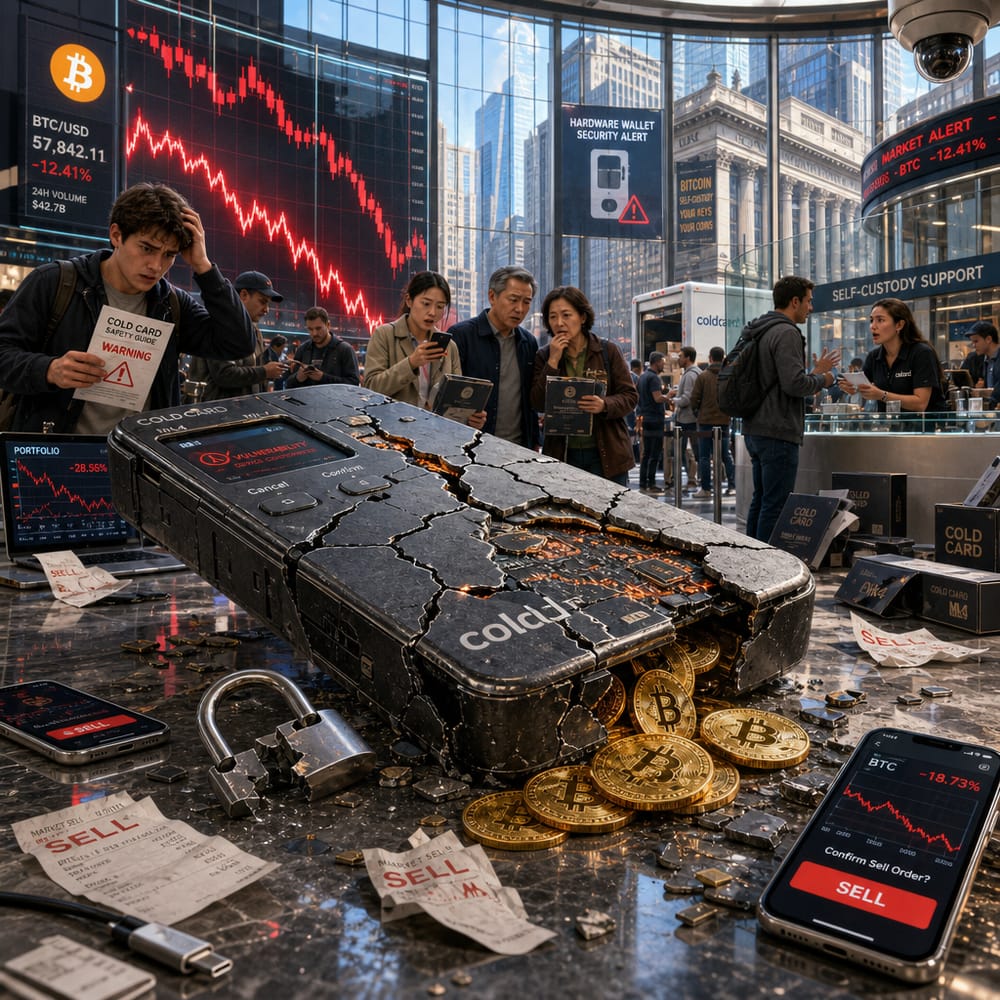
BITCOIN HOLDERS GET ICED BY COLD WALLET VULNERABILITY
Imagine waking up to find that your wallet has a hole in it. And not just any wallet—your secure fortress of digital treasure, a hardware wallet designed to keep your Bitcoin safe from the hands of hackers. If this sounds like a nightmare, brace yourself: this is precisely the rude awakening that sent retail Bitcoin holders scrambling, leading to a sell-off that had more bite than a crypto winter.
In an event that could only be described as “hardware horror,” a security flaw was detected in Coldcard hardware wallets, a trusted name among crypto enthusiasts who prize security above all else. The flaw triggered a sell-off frenzy that left the digital asset landscape looking like a post-apocalyptic wasteland. But before we dive into this drama, let’s talk about why on Earth this matters.
For the uninitiated, hardware wallets are like Fort Knox for your crypto. They're pocket-sized devices designed to be impervious to digital threats, safeguarding private keys, and ensuring that your Bitcoin remains more out of reach than the last cookie in a jar. The catch? If these devices aren’t as secure as advertised, it undermines the entire concept of self-custody—a cornerstone of the crypto ethos where you are the king or queen of your digital domain.
The broader implications of this Coldcard conundrum are chilling. First, it erodes trust in self-custody solutions. If your hardware wallet isn't bulletproof, users might think twice about holding their keys, potentially opting for exchanges or custodial services instead. This shift could alter the on-chain flow of Bitcoin, as wallets transition from individuals to institutions, fundamentally changing market dynamics.
Secondly, it sets off alarm bells in the regulatory arena. Governments and regulatory bodies, often wary of the Wild West nature of cryptocurrency, might use this as ammunition to push for more stringent oversight. If self-custody isn't the safe haven investors believed it to be, regulators could argue that more rules are needed to protect retail investors from themselves—or rather, from flawed tech.
But how did we end up here? The vulnerability in Coldcard wallets didn’t just appear out of thin air. It was identified by security researchers who found that, under specific conditions, the flaw could be exploited to extract private keys, the keys to the kingdom of Bitcoin. While there’s no indication of a widespread attack yet, the mere possibility was enough to send shivers down the spines of Bitcoin holders, spurring a wave of sell-offs as people rushed to protect their investments.
The incident also prompts a critical question: how might this affect trust in the broader adoption of cryptocurrencies? If you can’t trust your digital safe, how can you trust the currency it holds? This quandary could slow down the momentum cryptocurrencies have gained in recent years, as security concerns reemerge as a top priority for both new and seasoned investors.
For Coldcard, this is a wake-up call louder than a Bitcoin bull run. The company must act swiftly to patch the vulnerability and reassure its user base that their digital gold is safe once more. Transparency will be key—they need to roll out updates and communicate clearly and effectively with users about what went wrong and how they're fixing it.
Investors, on the other hand, need to reassess how they store their digital assets. Diversification isn’t just for portfolios; it’s crucial for storage solutions too. While hardware wallets still boast significant advantages, relying solely on one brand or type might not be the wisest strategy. Exploring multi-signature wallets or even custodial solutions, despite their imperfections, could offer a more balanced approach to security.
In the end, the Coldcard fiasco is a stark reminder that no matter how robust a system appears, there’s always room for human error—and room for improvement. For retail investors, it underscores the importance of vigilance and adaptability in an ever-evolving digital landscape.
As the dust settles, one thing is clear: in the world of crypto, security isn’t just an option—it’s non-negotiable. The Coldcard wallet vulnerability is a teachable moment for all, a lesson in the importance of both technological resilience and investor alertness. So, as we all do the digital dance with our crypto treasures, let's remember—even cold wallets sometimes need a little heat check.
This article is for informational purposes only and is not investment advice. Always do your own research or consult a licensed financial professional before making investment decisions.
© Copyright 2024. All Rights Reserved.
© Copyright 2024. All Rights Reserved.