

Coldcard Hardware Wallet Breach Escalates — $70M Stolen, Security Crisis Deepens
Wednesday, August 19, 2026
COLDCARD HARDWARE WALLET BREACH ESCALATES — $70M STOLEN, SECURITY CRISIS DEEPENS
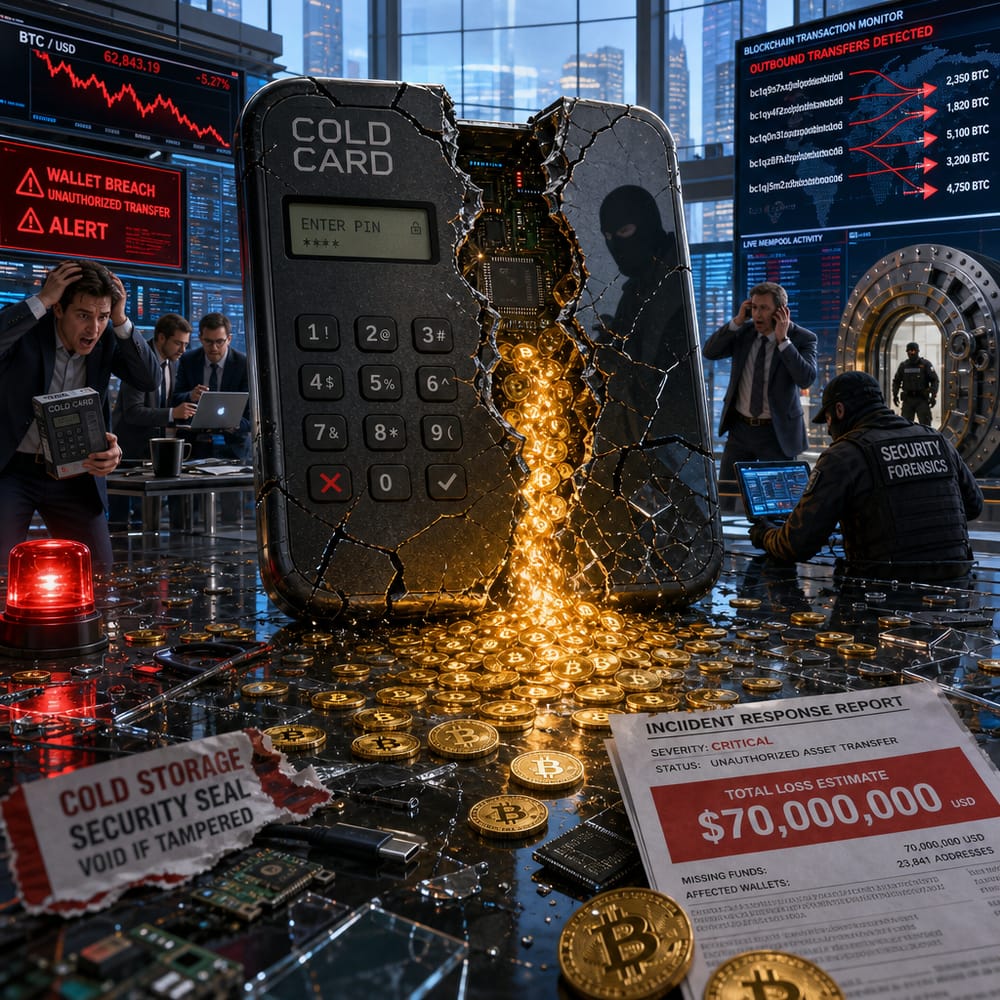
If you thought your Bitcoin was safer in a hardware wallet than under your mattress, you might want to rethink that strategy. There's a new cybersecurity nightmare unfolding, and it's got Coldcard hardware wallet users hot under the collar. Approximately $70 million in Bitcoin has vanished into the digital ether thanks to a security breach that's left the crypto faithful questioning their self-custody choices.
Let's face it, the landscape of Bitcoin ownership has always been peppered with risks: market volatility, regulatory rumblings, and now — the dreaded security breach. But what happened to those promises of security that made hardware wallets the gold standard for crypto storage? Coldcard’s breach reminds us that no technology, even one that came wrapped in the armor of self-custody, is infallible.
So, what does this mean for the hardware wallet faithful? As we peel back the layers of this crisis, it's clear the breach doesn't just hit users' pockets, it strikes at the very heart of trust in hardware wallets. For years, these little devices were hailed as the ultimate safeguard against digital theft, the Fort Knox of crypto, if you will — until now. With this breach, Coldcard isn't just nursing a financial wound; it's dealing with a PR catastrophe that could haunt the entire sector.
Could this be the moment when retail investors start turning their backs on self-custody solutions? The jury is still out, but there's a growing buzz around custodial solutions and Bitcoin ETFs — solutions that promise a safety net woven with regulation and professional oversight. While the idea of handing over your crypto keys to a custodial service might feel like a betrayal of Bitcoin’s staunchly independent ethos, the Coldcard debacle could tilt investor sentiment toward these more regulated shores.
Moreover, there's an intriguing side effect to this security breach: a potential boost in Bitcoin ETF inflows. ETFs, or Exchange-Traded Funds, offer a layer of security and regulation that might suddenly seem a lot more appealing. While ETFs don't let you hold actual Bitcoin, they do offer exposure to the cryptocurrency with the warm, fuzzy feeling of regulatory oversight. For risk-averse investors who’ve been sitting on the crypto sidelines, this might be the ticket they've been waiting for.
Of course, Bitcoin ETFs have their own drawbacks — they don't offer the same wild ride of ownership that comes with holding the actual coins. But in the aftermath of a security breach, the thrill of the old ways might no longer outweigh the allure of a safer bet.
So, where does this leave us in the big picture? Are hardware wallets dead in the water, destined to become tech relics gathering dust next to your old Walkman? Not quite. Despite the recent breach, there’s no shortage of crypto diehards who will continue to swear by self-custody solutions. However, the stakes have changed. The Coldcard breach could act as a catalyst for much-needed innovation in hardware wallets' security features — kind of like adding a moat to a castle after an attack.
In the end, whether this breach acts as a cautionary tale or a death knell for Coldcard will depend on how they handle the fallout. Will Coldcard rise from the ashes with enhanced security, or will this be the start of a mass exodus to more regulated solutions?
For retail investors, the message is clear: keep your eyes open and your wits about you. The world of cryptocurrency is as thrilling as a ride on a roller coaster, but it pays to remember — make sure you've got the seatbelt firmly fastened. As we watch the ripples of this breach continue to spread, one thing is sure: the cryptocurrency landscape is shifting, and it's anybody's guess where we'll land. Welcome to the wild, wild world of crypto. Buckle up.
This article is for informational purposes only and is not investment advice. Always do your own research or consult a licensed financial professional before making investment decisions.
© Copyright 2024. All Rights Reserved.
© Copyright 2024. All Rights Reserved.