

Coldcard Hack Drives Inflows to Bitcoin and Ethereum ETFs
Wednesday, August 19, 2026
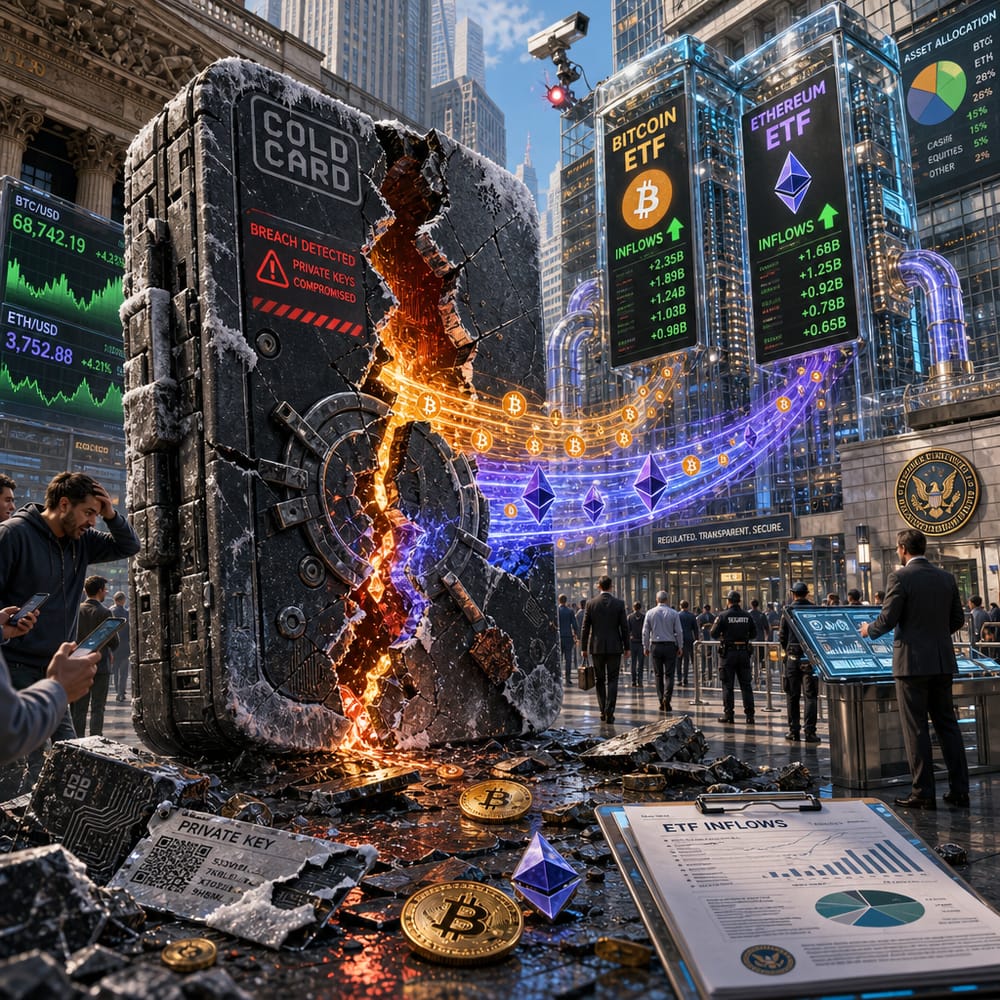
Another day, another cryptocurrency conundrum. Someone call up Satoshi Nakamoto and ask if he’s got a customer service line. The latest drama? A nasty little security breach has shaken Coldcard wallets — popular among the crypto faithful for their offline, hardware-based approach to storing digital dough. As it turns out, that approach is not as ironclad as some investors hoped. The fallout? A noticeable shift as investors move their digital gold into the more regulated vehicles of Bitcoin and Ethereum ETFs.
Let’s break it down: you’re an investor with a Coldcard wallet, feeling smug about your safe-keeping prowess. Then, bam! A security breach. Suddenly, your fortress feels more like a house of cards. As your blood pressure rises, you might start to wonder if a bank vault might be a tad more reassuring. Enter the allure of ETFs: exchange-traded funds, the Costco of investing, but for your crypto. They’re big, regulated, and some argue, a safer bet after what’s just happened with Coldcard.
This isn’t just a minor street corner spat in the crypto world. When wallets like Coldcard get hacked, it shakes investor confidence to its core. Let’s face it, managing your own crypto is like being your own IT department without the training, and it turns out, some folks are feeling a bit overwhelmed. They’re now on the hunt for something that offers a little more peace of mind, and ETFs are stepping up to the plate.
So, what’s the big deal with Bitcoin and Ethereum ETFs? Picture them as fancy baskets — they hold assets and trade on regular stock exchanges. You don’t need to worry about the nitty-gritty of digital keys or losing your entire fortune because you forgot a password. Sounds dreamy, right? For many, the focus has shifted: they want the gains but without the nail-biting stress about hacks.
This influx into ETFs isn’t happening in a vacuum. It’s a signal, loud and clear, that investors want to hedge against digital wallet risks. The Coldcard incident is a wake-up call — a reminder that while the blockchain is secure, not all access points are created equal. It’s a bit like having a castle with a drawbridge that’s stuck open. Your walls might be sturdy, but the entry point? Not so much.
But here’s where it gets juicy for the market. The demand for these ETFs is driving a wave of interest that didn’t just come out of nowhere. Many have been on the fence about diving into crypto waters, put off by tales of hacks and lost fortunes. Now, thanks to Coldcard’s misstep, these funds are starting to look like the life rafts they’ve been waiting for.
The ETF boom isn’t all roses and rainbows, though. Some traditionalists argue that the essence of crypto is decentralization and personal control. But let's be real — not everyone wants to worry about the tech. Many just want to invest without turning into computer whizzes.
This shift also highlights a crucial point: the broader financial ecosystem is adapting to investor needs. The ETF boom might be a temporary reaction or the start of a more long-term trend where security breaches in crypto wallets continue to drive demand for regulated products.
Ultimately, this Coldcard breach serves as a stark reminder: as thrilling as crypto can be, it also has its rough edges. For many, regulated ETFs offer a smoother ride — no need to fret over digital lockpicks trying to swipe your stash. It might just be the spark that propels the ETF market to new heights, as investors realign their priorities from pure control to a balanced blend of security and simplicity.
So, in the aftermath of Coldcard’s woes, the message to the crypto-curious is clear: you may not need to hold your coins directly to ride the crypto rollercoaster. ETFs are here to fill that gap, offering a sanctuary from the storm of security breaches. As for Coldcard, here’s hoping they’re taking notes — because the crypto landscape is changing, and it’s changing fast.
This article is for informational purposes only and is not investment advice. Always do your own research or consult a licensed financial professional before making investment decisions.
© Copyright 2024. All Rights Reserved.
© Copyright 2024. All Rights Reserved.