

CME Group Faces Downgrade Amidst Rising Options Activity
Friday, August 21, 2026
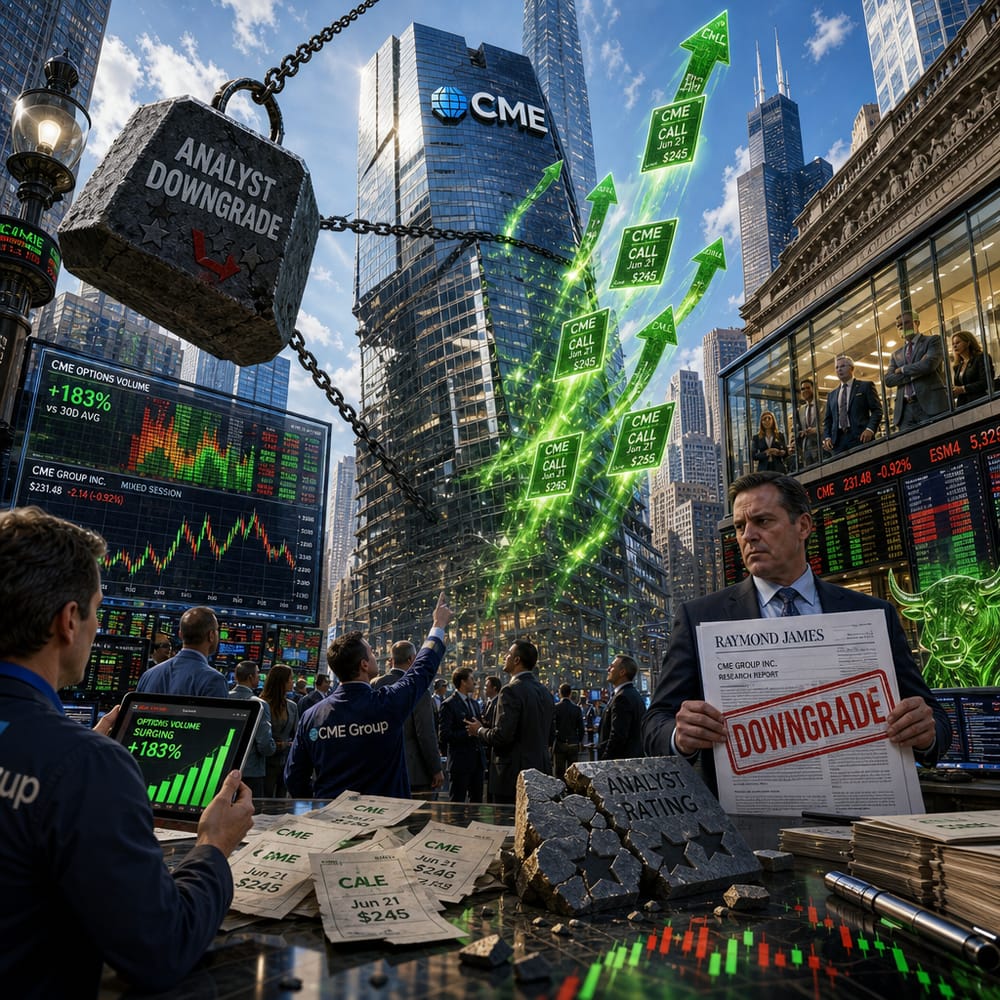
When you hear "CME Group," you might picture buttoned-up traders shouting on the Chicago Mercantile Exchange floor, frantically waving their hands in the air. Well, buckle up, because the CME Group is now navigating some choppy waters. And by choppy, I mean a downgrade from Raymond James that's got investors doing a double-take.
So, what gives? Why the downgrade? In their latest report, Raymond James cited shifts in CME's derivatives franchise as a primary reason. For those not fluent in financial-speak, derivatives are essentially contracts that derive their value from an underlying asset, like stocks, bonds, or even cattle. They're like financial side-bets with potentially big payouts — or big losses. It appears that CME's derivatives tank was running a little low on gas, so they got hit with a downgrade. Analysts are notorious for being the weather-forecasters of finance: sometimes they’re eerily spot-on, other times, not so much. But when they speak, the market listens, and in Wall Street’s high-stakes poker game, a downgrade is like showing you've got a pair of deuces when you need a royal flush.
Meanwhile, options activity is hinting at something else entirely: investor optimism. The options market is like the secretive club of finance — it's where the bold and the brave make bets on future stock movements. Lately, it’s been buzzing with bullish sentiment. Some investors are clearly betting on brighter days ahead for CME. But how does a flurry of options activity potentially influence CME's stock price? Good question, dear reader.
Picture a bunch of people at a horse race. They're not just betting on the nags; some are betting on the bets themselves. In the stock market world, that's what options traders do. When they feel bullish, they might start buying call options—essentially a bet that the stock price will rise. If enough folks do this, it can create upward pressure on the stock itself, driven by increased demand. It’s like financial hopscotch. The foot traffic around these call options can cause other investors to take notice, creating a self-fulfilling prophecy—driving the stock price up as the market reacts to the perceived optimism.
Of course, there's no guarantee that optimism in the options market will translate to actual stock price gains. Market sentiment is as fickle as a cat with new toys and old favorites. Not to mention, the broader stock market has been a rollercoaster lately—with soaring interest rates and geopolitical headwinds, everyone’s holding onto their hats.
But, hold on. This isn't just about numbers on a screen or analyst notes; it’s about what the future holds for CME Group. They're the epicenter for trading everything from weather derivatives to cryptocurrency futures, acting as a bellwether for broader economic trends. If options activity suggests bullish sentiment, perhaps the market is whispering that CME is poised to weather its current storm.
Investors, though, should take a holistic approach. The downgrade doesn't necessarily spell doom, but it does advise caution. Keep an eye on CME's ability to innovate and adapt. Are they leveraging technology to bolster their derivatives offerings? Are they expanding into new markets or products that could offset any current downturns? Remember, investing is about balance—like walking a tightrope while holding a tray of martinis.
In the end, the narrative surrounding CME Group is a tapestry woven with threads of caution and optimism. The Raymond James downgrade invites a closer inspection of CME's strategy, while options activity suggests a market itching for a comeback. So, as you sip your morning coffee and scroll through the latest market updates, keep an eye on this saga. Because, in the world of finance, the only constant is change, and the most successful investors know when to ride the waves and when to batten down the hatches. Happy investing!
This article is for informational purposes only and is not investment advice. Always do your own research or consult a licensed financial professional before making investment decisions.
© Copyright 2024. All Rights Reserved.
© Copyright 2024. All Rights Reserved.