

Cleveland Fed's Hammack Warns of Inflation Mindset
Sunday, September 27, 2026
CLEVELAND FED'S HAMMACK WARNS OF INFLATION MINDSET
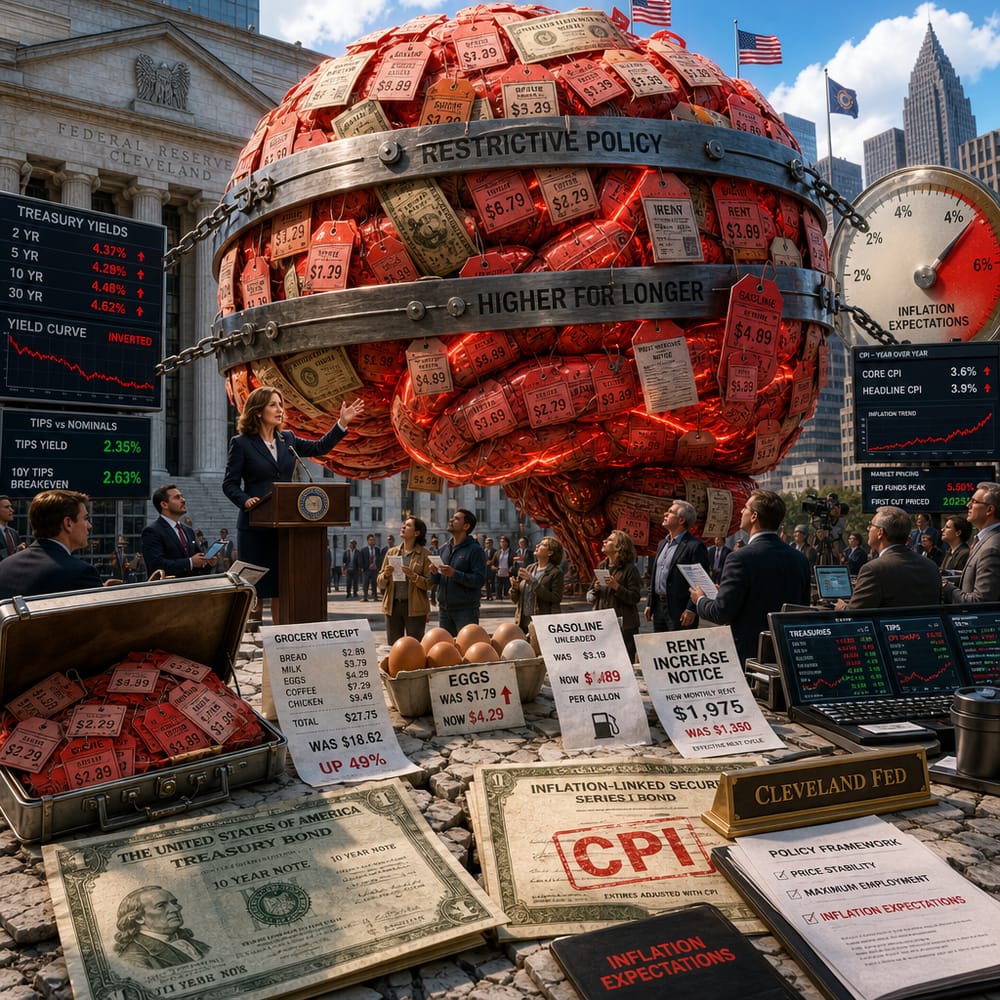
Imagine waking up, grabbing your morning coffee, and realizing the price has doubled. Now, picture that happening so often that it doesn’t even surprise you anymore. Welcome to the inflation mindset — a world Cleveland Fed President Beth Hammack is determined to prevent. And she’s sounding the alarm louder than a toddler with a toy trumpet.
Hammack wants you, me, and everyone else with a wallet to understand that when inflation becomes the new normal, it’s a one-way ticket to financial chaos. She's waving the caution flag, urging the Federal Reserve to adopt a hawkish policy stance faster than you can say "interest rate hike." But why should you care? Because the Fed's decisions ripple through markets like a pebble in a pond, affecting everything from the price of avocados to the interest rate on your mortgage.
CENTRAL BANK WHISPERERS
So, how does the Fed control this narrative? They're like the maestro of an economic orchestra, using their language and policy hints to steer market sentiment. Hammack's latest tune is about inflation expectations — the belief that prices will keep rising. If everyone starts expecting higher prices, businesses ramp up costs, workers demand more pay, and voila, you’ve got a self-fulfilling inflation prophecy.
This is where U.S. Treasury bonds and inflation-linked securities come into play. Investors closely watch the Fed's narrative to gauge the direction of future interest rates. If the Fed signals that it will keep a tight lid on inflation by raising rates, bond prices might drop, but yields could rise, making them more attractive and stabilizing the inflation beast.
THE PRICE OF IGNORANCE
But let’s dig deeper — why is an inflationary mindset so dangerous? Picture this: your paycheck's buying power shrinks while prices continue to inflate. No one wants to play that game. It creates a vicious cycle where everyone anticipates price hikes, leading to more spending now rather than saving for later, which, spoiler alert, drives prices even higher.
For the Fed, it's like playing chess in a hurricane. If they raise interest rates too aggressively, they risk stalling economic growth and triggering a recession. On the flip side, if they’re too soft, inflation could spiral out of control. They’re caught between a rock and a heated economy.
AFFECTING THE FUTURE
Now, let's talk about the elephant in the room: future interest rate decisions. The Fed's current dance involves balancing inflation with employment and growth. Hammack's firm stance increases the odds of rate hikes, possibly sooner than we might like. Aiming to curb the inflation mindset means not just stopping the inflation train but also making sure it doesn't start chugging along again soon.
But here's the kicker — this isn’t just about numbers on a spreadsheet. It’s about confidence. If investors think the Fed’s got a handle on things, markets stay calm. If not, buckle up for a rollercoaster ride. So, while you might not be sitting in the boardroom with Hammack, her decisions will eventually filter through to your grocery bill and maybe even your 401(k).
CONCLUSION
In a world swirling with uncertainty — think geopolitical tensions, trade wars, and rogue AI — understanding the Fed's focus on inflation expectations is your secret weapon. It helps you anticipate potential policy moves and prepare for the market’s reaction.
Beth Hammack is like a financial lifeguard blowing the whistle on inflation risks. So, next time you hear the Fed dropped another hint about interest rates, remember: their narrative is shaping the financial landscape. Keep your ear to the ground, your eyes on your investments, and maybe leave a little room in your budget for that more expensive cup of joe.
This article is for informational purposes only and is not investment advice. Always do your own research or consult a licensed financial professional before making investment decisions.
© Copyright 2024. All Rights Reserved.
© Copyright 2024. All Rights Reserved.