

Cleveland Fed Nowcasts Show Sticky Inflation, No Monthly CPI Drop in Sight
Friday, November 27, 2026
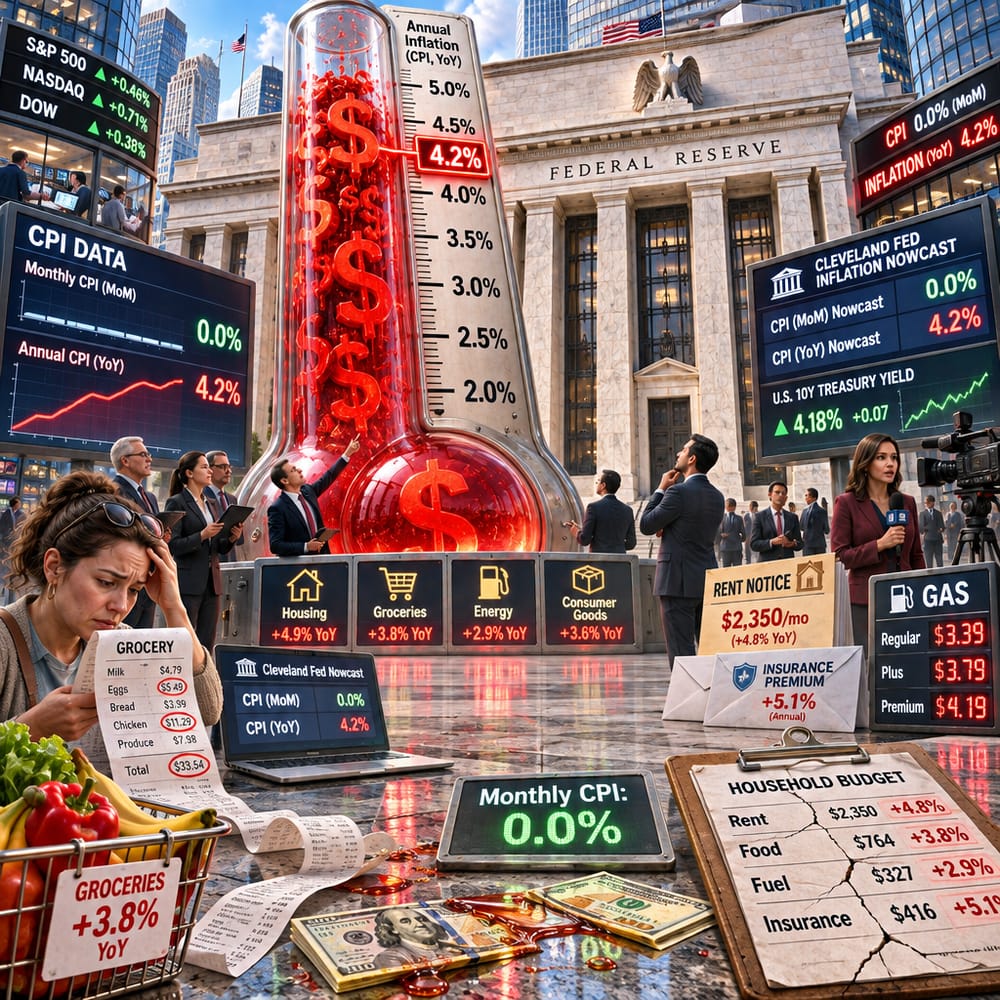
CLEVELAND FED NOWCASTS SHOW STICKY INFLATION, NO MONTHLY CPI DROP IN SIGHT
Think inflation was done with us? Think again. If the Cleveland Fed's crystal ball — their trusty nowcasting model — is anything to go by, November's Consumer Price Index (CPI) report might make those hoping for a dovish turn from the Federal Reserve reach for an extra shot of espresso. While this spooky season isn’t bringing us any monthly CPI gains, high annual inflation rates are sticking around like a particularly stubborn pumpkin stain, signaling that inflationary pressures are here to crash the party a little longer.
Why should you care? Because these persistent inflation rates are the monetary equivalent of a clingy ex that just won’t let go, seriously cramping the Fed's style. This ongoing inflation saga speaks volumes: it’s not giving the Fed a whole lot of wiggle room to start playing nice and cut interest rates anytime soon. And that has everyone from business magnates to your neighbor with the crypto side hustle watching closely.
But let’s back up a smidge. What exactly are these nowcasting models? Think of them as the weather app for inflation — they use real-time data to predict economic indicators. They’re generally pretty good at getting the big picture right, but like any forecast, they’re not always spot on. Over the past couple of years, these models have had a respectable track record. They missed the mark during the pandemic (didn’t we all?), but since then, they’ve sharpened their pencils and have been more accurate in calling the inflation shots.
So, what’s the big deal with this projected no gain on the monthly CPI? It sounds like good news, right? Well, sort of. The absence of a monthly gain doesn’t mean prices are coming down. Instead, they’re just not going up as quickly as before. Meanwhile, on an annual basis, we’re still looking at rates that would make anyone trying to stretch a dollar cringe.
Persistent inflation doesn't just give the Fed a headache — it can be a real buzzkill for the broader economy. When inflation's high, your paycheck doesn't stretch as far. Prices rise, consumer confidence dips, and the cost of borrowing goes up. For businesses, higher costs can squeeze profit margins, leading them to raise their prices or, worse, lay off workers. It’s a vicious cycle that feeds into itself.
Investors, meanwhile, are caught on the horns of a dilemma. A high-inflation environment can be a tricky playground for your 401(k). Stocks in inflation-sensitive sectors like tech, which has been riding high lately, could be more volatile. On the flip side, sectors like energy or materials might offer a bit of a safe haven, as they often pass increased costs on to consumers. Bonds? Not exactly the belle of the ball when inflation’s eating into those fixed returns.
So, what’s a savvy investor to do? It’s all about balance, my friend. Diversifying portfolios to include a mix of inflation-sensitive assets might be a wise move. Consider inflation-linked bonds, or TIPS, which adjust their worth in line with inflation. Precious metals, like gold, often shine brighter in inflationary times too.
Meanwhile, holding onto some cash might not be the worst idea, despite its eroding value in an inflationary environment. Having liquidity can give investors the flexibility to pounce on opportunities and cushion against volatility.
As we sprint towards the end of the year, eyes will be on the Fed’s December meeting. While hopes for rate cuts have dwindled with these sticky inflation numbers, the Fed's next moves will dictate how markets position themselves into 2027. What's clearer than ever is that while inflation’s grip might be loosening ever-so-slightly, it hasn’t let go yet.
The savvy investor will keep their ear to the ground, their portfolio varied, and their eye on the economic horizon. Because in this financial funhouse, those who can pivot quickly and strategically are the ones who come out on top — and maybe with fewer pumpkin stains, too.
This article is for informational purposes only and is not investment advice. Always do your own research or consult a licensed financial professional before making investment decisions.
© Copyright 2024. All Rights Reserved.
© Copyright 2024. All Rights Reserved.