

CleanSpark's Strategic Shift: From Bitcoin Mining to AI Infrastructure
Tuesday, August 18, 2026
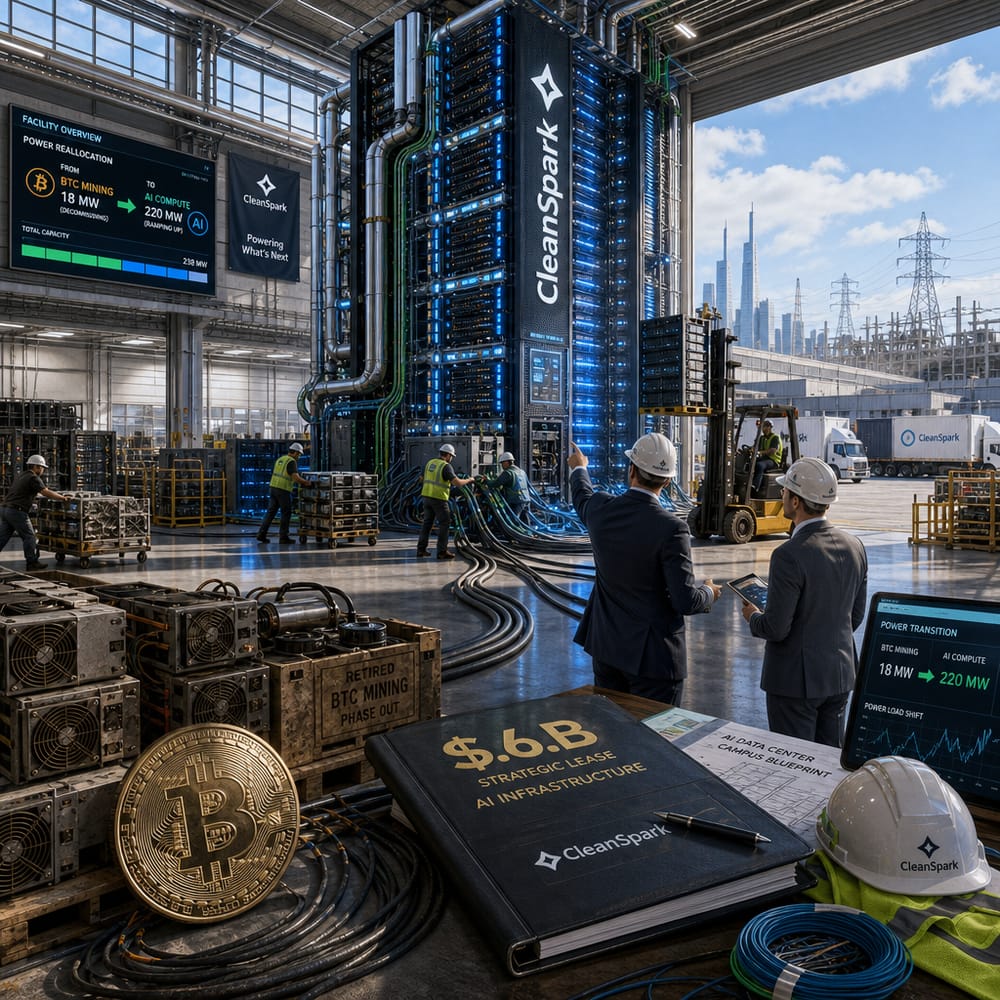
CLEANSPARK'S STRATEGIC SHIFT: FROM BITCOIN MINING TO AI INFRASTRUCTURE
If you blinked, you might've missed it. CleanSpark, a company that once swung its pickaxe mining Bitcoin, has now pivoted to something a bit more...cerebral. Enter a $6.6 billion lease deal to dive headfirst into AI infrastructure. From the dizzying highs and dreadful lows of crypto to the promising horizons of artificial intelligence, CleanSpark's maneuver is catching everyone's attention. But is this a genius pivot or a risky gamble? Let's break it down.
For those not in the know, CleanSpark has been a known player in the Bitcoin game. Mining crypto isn't just a digital treasure hunt; it's also an electricity-guzzling monster that feasts on power like a kid in a candy store. Profits can be as volatile as the coins they mine, with fortunes flipping faster than a pancake at a diner. So, it's understandable why CleanSpark's got its eyes on greener pastures or, in this case, the shiny new pasture that is AI infrastructure.
Now, what exactly does this shift mean? Picture it as CleanSpark moving from the digital gold rush to building the roads for the AI information superhighway. Instead of just mining for digital coins, they're leasing space to build AI infrastructure—think of it as the skeletal frame of our future tech-centric world. This move reflects the broader industry trend where companies are looking to get a slice of the AI pie, which is forecasted to be worth, well, a staggering amount in the coming years.
Before we start popping the champagne, let's weigh the scales here. On the risk side, AI isn't without its own set of challenges. Unlike crypto mining, which is like playing the stock market on caffeine, AI infrastructure is a slow and steady investment game. It's building, maintaining, and waiting for returns. Not exactly a quick buck. And there's the competition—everyone and their grandma wants a piece of AI. Google, Microsoft, Amazon; they’re all throwing their hats in the ring. CleanSpark needs to ensure it doesn't get trampled by the giants.
But with risk comes potential gold. The benefits of this pivot could be massive. AI has applications across nearly every industry from healthcare to finance, and demand is only going up. With this shift, CleanSpark is not just moving away from the volatile crypto market; it's aligning itself with a sector that promises growth. If they play their cards right, they could become a major player in the AI field, carving out a niche before the market becomes too saturated.
Now, how does this impact CleanSpark's financial stability? In the short term, there's bound to be a bit of turbulence as they transition. Think of it like a pit stop in a racing game; there's a pause, maybe a hiccup, but it could lead to a stronger finish. The $6.6 billion lease is a colossal investment, and whether it's a stroke of genius or a shot in the dark will depend heavily on execution. But if CleanSpark can effectively leverage this new path, it could stabilize their revenue streams, providing more predictable returns than the crypto rollercoaster.
CleanSpark's journey is a microcosm of what a lot of crypto-related companies might be considering. With Bitcoin revenues being as unpredictable as the weather, diversifying into AI infrastructure could be a way to hedge against those volatile fluctuations. It’s a testament to the resilience and adaptability required in today's fast-evolving tech landscape.
So, will this pivot catapult CleanSpark into the AI elite, or will it backfire like a bad sci-fi sequel? Only time will tell. But one thing’s for sure—CleanSpark’s shift away from the stormy seas of Bitcoin mining in favor of building the future's digital backbone is a move worth watching. Keep your eyes peeled; the next chapter in the CleanSpark story promises to be a page-turner.
This article is for informational purposes only and is not investment advice. Always do your own research or consult a licensed financial professional before making investment decisions.
© Copyright 2024. All Rights Reserved.
© Copyright 2024. All Rights Reserved.