

Choked Off: How U.S. Export Controls on Advanced AI Chips Are Rattling TSMC, Samsung, and Alibaba
Saturday, November 21, 2026
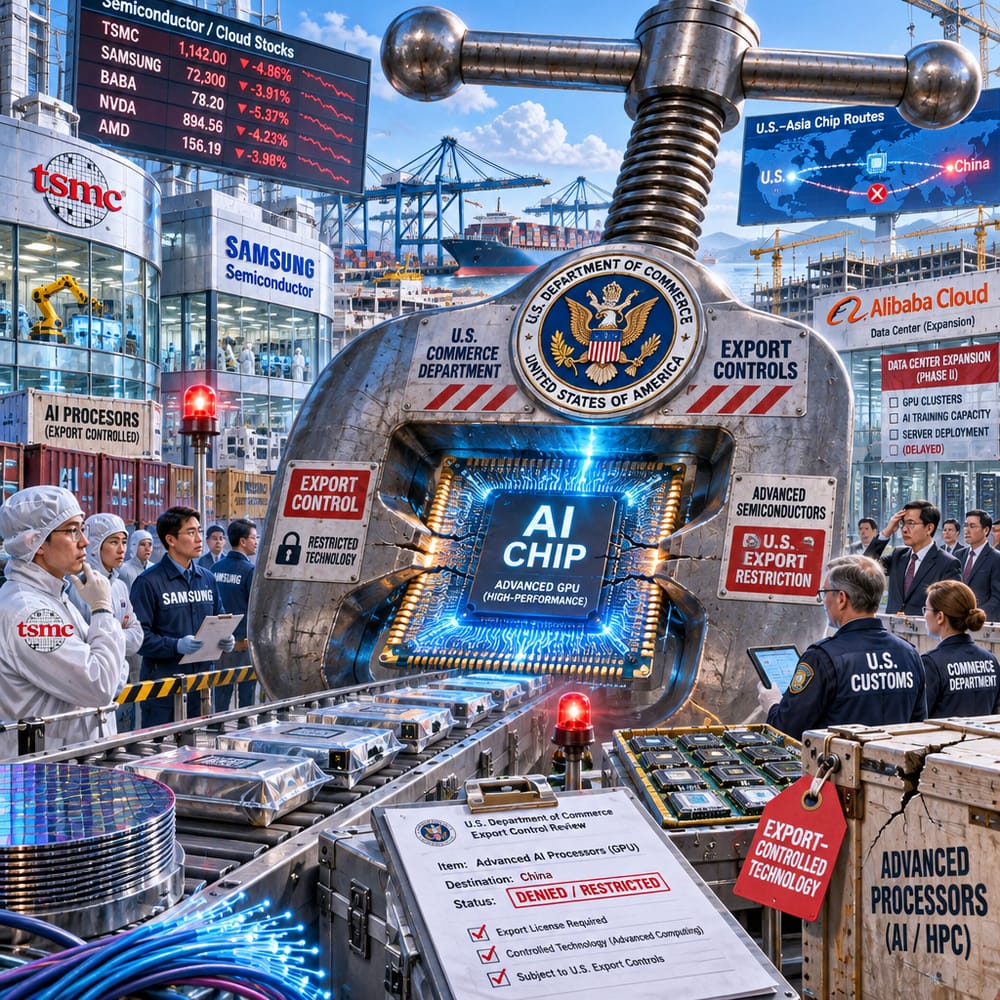
CHOKED OFF: HOW U.S. EXPORT CONTROLS ON ADVANCED AI CHIPS ARE RATTLING TSMC, SAMSUNG, AND ALIBABA
In a world where tech reigns supreme, a small piece of silicon is creating seismic shifts in global trade. Picture it: semiconductors, the unsung heroes of our digital age, are now at the heart of an international chess game. The latest move? The U.S. slapping export restrictions on advanced AI chips, leaving industry giants like TSMC, Samsung, and Alibaba caught in the crossfire. Buckle up, because this is a tale of geopolitics, economics, and high-tech drama that you won't want to miss.
THE CHIPS ARE DOWN
First things first—what's all the fuss about? The U.S. Commerce Department has decided to draw a line in the silicon sand, imposing strict export controls on AI chips. You might ask, "Why the sudden crackdown?" Well, the aim is to limit China's access to cutting-edge technology that could be used for military purposes or, perhaps, to bolster its burgeoning AI sector.
These aren't just any chips we're talking about. We're talking about the brainpower behind AI systems, the chips that let machines learn, think, and make decisions. It's like trying to ban the sale of horsepower to Ferrari—it hits right at the core of high-performance operations.
TSMC AND SAMSUNG: HOLDING THE LINE
Now, enter stage left: TSMC and Samsung, two of the world's semiconductor Goliaths. With the new regulations, they've hit the brakes on shipments to China faster than you can say "supply chain disruption." TSMC, the pride of Taiwan and a crucial player in the semiconductor world, has frozen the movement of its advanced AI chips, awaiting further clarity. Samsung, with its sprawling empire from phones to fridges, has similarly paused, cautious of tripping over international red tape.
These companies are not just big fish—they're the blue whales of the chip ocean. Their products are the foundation of modern electronics, and their temporary halt in shipments to China sends ripples through the entire tech ecosystem.
ALIBABA’S DATA CENTER DILEMMA
Caught in this tech tug-of-war is Alibaba, China's e-commerce titan. Picture their gleaming data centers, halls of humming servers, engines of the digital economy. These centers need chips like a runner needs sneakers, and the U.S. export controls throw a wrench in Alibaba's gears.
Alibaba had ambitious plans to scale up its data centers, powering everything from cloud services to AI-driven applications. Now, those plans sit in the balance. Without the necessary AI chips, expansion could stall, crippling services that rely on their infrastructure. Imagine the ripple effects: delays in AI advancements, slower cloud services, and a potential blow to their competitive edge.
THE GLOBAL GAME
So, why should you, scrolling through this on your smartphone, care? Because this isn't just a tech issue—it's a geopolitical high-wire act. The U.S.-China tech rivalry is reshaping the global supply chain landscape. These restrictions could lead to a domino effect, affecting everything from your favorite tech gadgets to the stock market.
TSMC and Samsung are the canaries in the coal mine. Their response is a bellwether for how other tech behemoths might navigate the murky waters of international trade restrictions. Meanwhile, companies like Alibaba must rethink their strategies, potentially seeking new chip suppliers or ramping up domestic production.
For investors, this is a plot twist that requires vigilance. How these companies maneuver through regulatory challenges will impact their bottom lines and, consequently, their stock performance. It's like watching a high-stakes poker game with billions on the line, and everyone's waiting to see who blinks first.
POWER MOVES AND FUTURE IMPLICATIONS
As the chips are down, the world watches with bated breath. Will this be a temporary hiccup or a catalyst for a new tech regime? The answer rests on the decisions made in boardrooms and government offices worldwide.
In this high-stakes drama, the next moves are crucial. Governments might push for more tech sovereignty, investing in homegrown chip production. Companies could be forced to adapt, innovate, or consolidate to weather the storm. The tech sector, a powerhouse of growth, innovation, and job creation, stands at a crossroads.
So, as you ponder the implications, keep an eye on TSMC, Samsung, and Alibaba. Their dance with the new rules will shape the tech landscape for years to come. After all, in the world of semiconductors, the chips aren't just on the table—they're the table itself.
This article is for informational purposes only and is not investment advice. Always do your own research or consult a licensed financial professional before making investment decisions.
© Copyright 2024. All Rights Reserved.
© Copyright 2024. All Rights Reserved.