

Chips, Power Plays, and Silicon Strategy: Why Nvidia’s China Comeback Is More Than Just Business
Tuesday, July 22, 2025
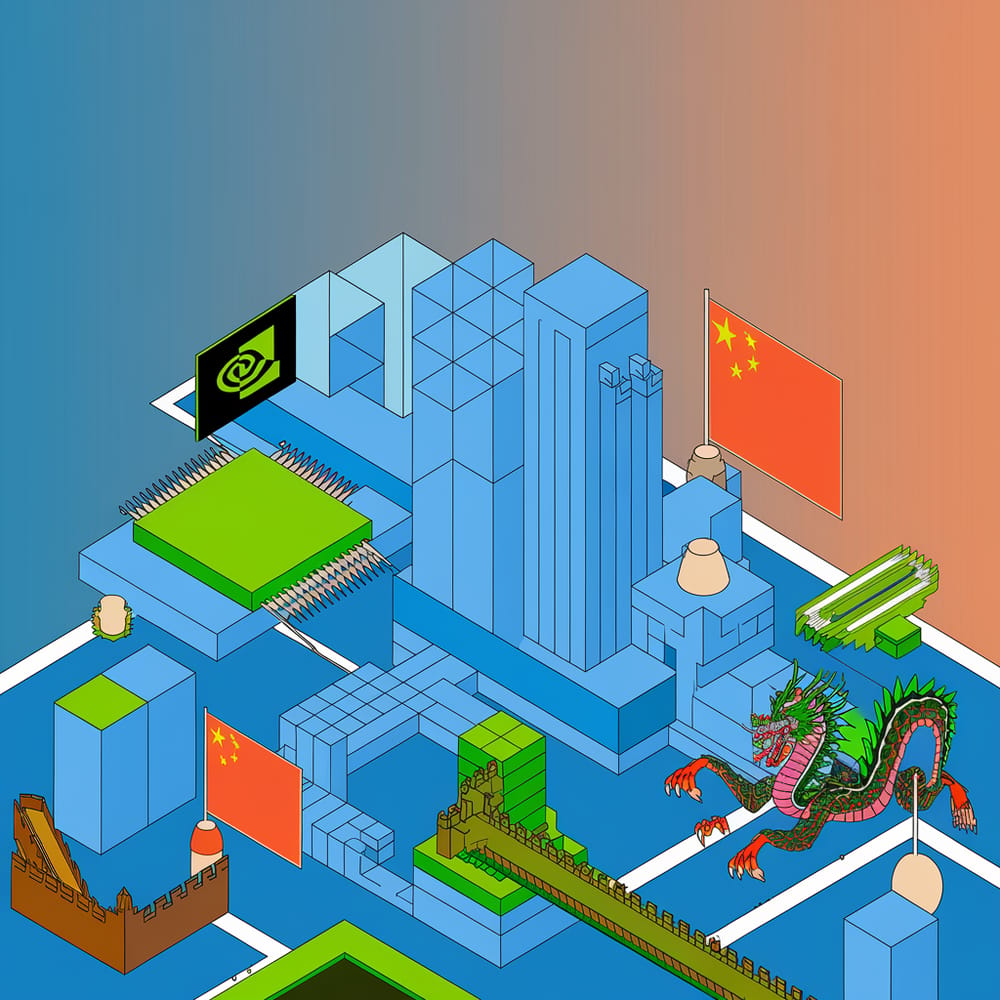
Nvidia’s back in China—and it’s not just business as usual. The AI chip giant’s return to its biggest overseas market has triggered a firestorm of analysis, applause, and side-eye from both Washington and Beijing. On the surface, it might look like a commercial reboot. But dig a little deeper, and you’ll see a geopolitical chess match playing out—one GPU at a time.
So, is this a strategic masterstroke or just a temporary détente in the U.S.-China tech cold war? Let’s decode it.
🎮 Game On: Nvidia’s Comeback Sparks New Round in the Tech Wars
After being benched by U.S. export restrictions, Nvidia is back in the Chinese market with its H20 chip—a slightly watered-down version of its AI firepower. This return comes with Uncle Sam’s blessing, and according to experts, it’s a double-edged move: it helps the U.S. maintain dominance in AI while simultaneously pressing pause on China’s chip ambitions.
For China, Nvidia’s presence is like buying time on the tech treadmill. It delays the need to sprint full-speed into homegrown chip development. But make no mistake—China’s endgame is still a fully domestic tech stack. Nvidia might just be a pitstop on that long road.
💥 Geopolitics Meets Silicon Valley
Let’s not pretend this is just about chips. It’s about control, influence, and who gets to run the AI show.
Washington’s concern? That Nvidia’s AI chips could power not just Chinese startups, but military applications as well. That’s why restrictions were slapped on, triggering a brutal $4.5 billion write-down for Nvidia on unsold inventory. CEO Jensen Huang didn’t mince words—he called the China freeze a “tremendous loss,” warning it would only speed up China’s push to fill the void with homegrown alternatives like Huawei.
And Huang may have a point. China isn’t sitting idle. A swarm of AI chip startups are emerging, but they haven’t yet matched the versatility—or dominance—of Nvidia’s CUDA-powered ecosystem.
🧠 The U.S. Strategy: Keep China Hooked on American Tech
Here’s the clever part: by letting Nvidia sell to China again, Washington ensures that Chinese developers remain tethered to U.S. technology for just a bit longer.
Commerce Secretary Howard Lutnick told CNBC that the goal is to keep Chinese AI models reliant on American tech stacks. Nvidia’s hardware, paired with its CUDA software, is like a sticky web that developers just can’t quit.
According to analysts, this not only gives the U.S. a revenue boost, but also strategic leverage. It’s the digital equivalent of holding the keys to the kingdom—because whoever controls the tools, controls the future of AI.
🧪 The Ripple Effect on China’s Chip Dreams
But what happens to China’s chip drive now? Some experts believe that with Nvidia chips back on the menu, Chinese firms might slow down or shelve their domestic hardware efforts. Capital might dry up, urgency might fade, and innovation might stall—at least for now.
Pranay Kotasthane of the Takshashila Institution said it best: China is Nvidia’s biggest market and home to half of the world’s AI developers. Cutting off that pipeline wouldn’t just hurt China—it’d sting U.S. firms too, limiting R&D budgets and future breakthroughs.
So while restricting the most advanced chips may make sense, going too far could backfire spectacularly.
⚔️ Can China Catch Up?
In the long run, China still has its sights set on silicon independence. And it’s not all about high-end chips for training AI—another opportunity lies in inferencing, the less-glamorous but massively important job of running AI models after training.
Here, cheaper, more efficient chips can shine—and Chinese firms could find their niche. According to Global X ETFs’ Tejas Dessai, custom chip programs from Chinese tech giants could eventually serve this growing demand.
Still, the reality today is clear: Nvidia’s software is king, and Chinese developers still prefer it over domestic options. Huawei’s development stack just doesn’t offer the flexibility or depth to compete—yet.
🧩 Final Take: Nvidia’s Return Is a Strategic Stall, Not a Surrender
This isn’t Nvidia surrendering to geopolitics—it’s the U.S. playing a long game. By strategically loosening the reins, America keeps Chinese firms entangled in its tech web, delays China’s chip rise, and gives its own firms a chance to grow.
China, meanwhile, gets breathing room—but not a break from its mission. The race is still on. It’s just gone into a slower, more tactical phase.
And in the world of AI warfare, that might be the most calculated move of all.
© Copyright 2024. All Rights Reserved.
© Copyright 2024. All Rights Reserved.