

Chip Selloff Mirrors Macro Heat: Can AI Infrastructure Weather Rate and Inflation Fears?
Thursday, October 15, 2026
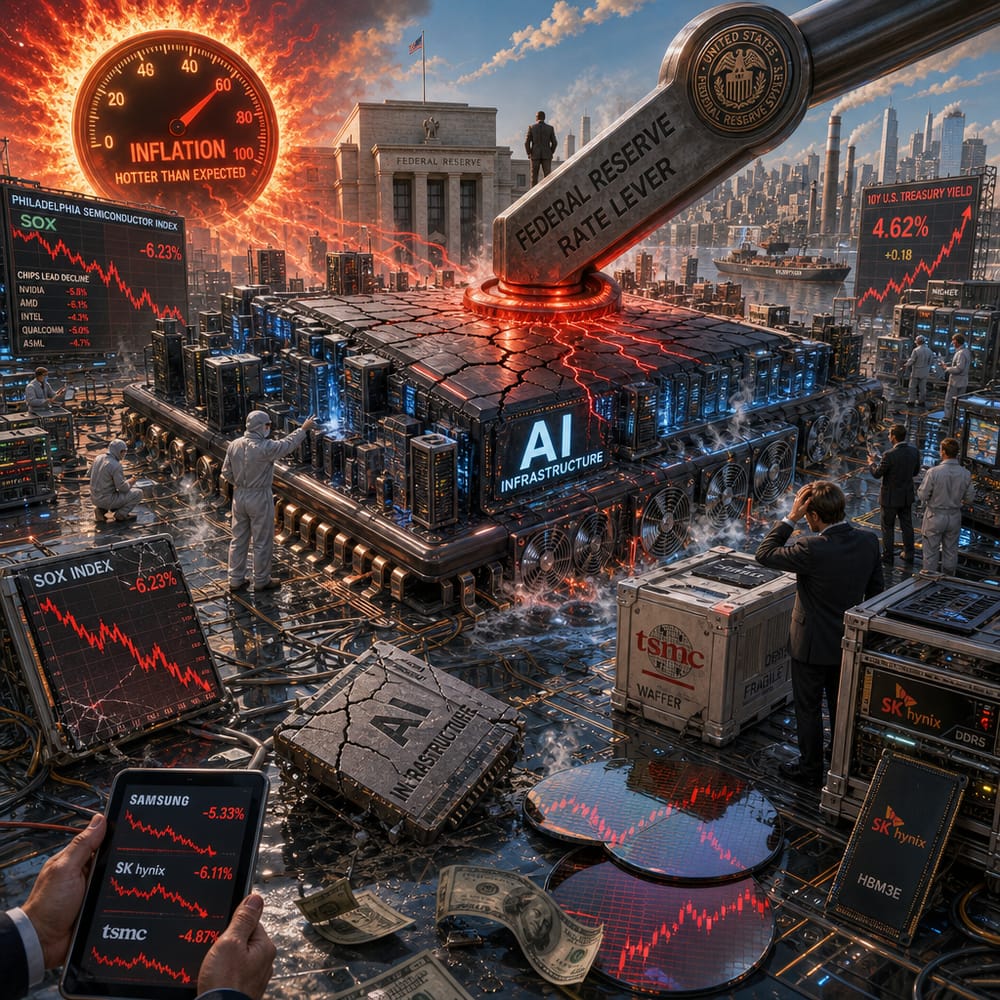
CHIP SELLOFF MIRRORS MACRO HEAT: CAN AI INFRASTRUCTURE WEATHER RATE AND INFLATION FEARS?
Investors, buckle up! The tech sector, darling of the pandemic era, has hit a major speed bump. Just when you thought AI was untouchable, along comes the very real world of inflation and interest rates to remind you that what goes up, can come down just as swiftly.
Inflation, that sneaky nemesis of stable markets, is rearing its ugly head again. This time, it's sending ripples through the semiconductor industry, the backbone of our beloved AI gadgets. The cause? A recent hotter-than-habanero inflation report that's got investors biting their nails and the Federal Reserve reconsidering its next move.
Cue the dramatic soundtrack: the Nasdaq slumped nearly 2%, with AI stocks taking a particularly hard hit. We're talking about the Philadelphia Semiconductor Index, aka SOX, which plunged a staggering 4.3%.
You might wonder, "Why should I care about the price of chips?" Well, these aren't your Saturday night movie snacks; we're talking about the very essence of AI infrastructure. Companies like Samsung, SK Hynix, and TSMC are feeling the pinch as inflation casts a shadow over tech’s gleaming prospects.
The semiconductor selloff is less about technology suddenly losing its mojo and more about good old-fashioned economics. Inflation has a way of making everything costlier, including the operations of these tech giants. Production, distribution, and raw material costs are all on the rise, and when you throw in the specter of increased interest rates, things start to look murky.
So, what role does inflation play in this tech market rollercoaster? It’s the catalyst. Higher inflation means higher costs, which tech companies might have no choice but to pass on to consumers. And when those price tags climb, consumer demand can wane faster than your enthusiasm for New Year's resolutions.
The Fed, our trusty economic watchdog, is now under pressure. The hotter-than-expected inflation figures have bolstered bets for more aggressive rate hikes. Higher rates make borrowing more expensive, which can cool off consumer spending and business investments, two crucial drivers of the tech sector's fabulous growth.
This leads us to an important question: How are investors adjusting their strategies in response to these macroeconomic pressures? Let's just say they're not diving in headfirst as they were during the AI mania. The mood is shifting from "gimme all the AI!" to "let’s talk about risk management." Investors are pulling back from high-flying tech stocks, recalibrating their portfolios to hedge against the unpredictability of inflation and interest rates.
Companies basking in the AI spotlight, like Nvidia and Marvell, are no longer the automatic picks. Instead, investors are playing it safe, giving the side-eye to those once-appealing growth stocks and considering more reliable, less volatile sectors—not exactly the stuff of headline-making growth, but hey, stability has its perks.
The AI infrastructure market's resilience is now on trial. Is the AI boom strong enough to withstand the macroeconomic storm? The jury's still out. While AI is set to revolutionize industries, its immediate fate is tightly knitted to these broader economic forces.
This isn’t a doomsday prediction for AI or the semiconductor industry. But in the Darwinian world of investing, adaptability is key. Tech aficionados, keep your eyes peeled on inflation numbers and Fed announcements. The dance of interest rates and economic data will likely continue dictating market moves—so maybe stash those AI dreams next to a couple of safe bets.
As with any market turbulence, there are opportunities for those with nerves of steel and a knack for timing. The tech sector might be wobbling, but it’s far from out for the count. Consider this the market's polite nudge to remind us: invest with caution, diversify smartly, and always keep an eye on the bigger economic picture.
This article is for informational purposes only and is not investment advice. Always do your own research or consult a licensed financial professional before making investment decisions.
© Copyright 2024. All Rights Reserved.
© Copyright 2024. All Rights Reserved.