

Chip Selloff Looms Large: S&P 500 and Nasdaq Weaken Ahead of Nvidia Earnings
Monday, August 24, 2026
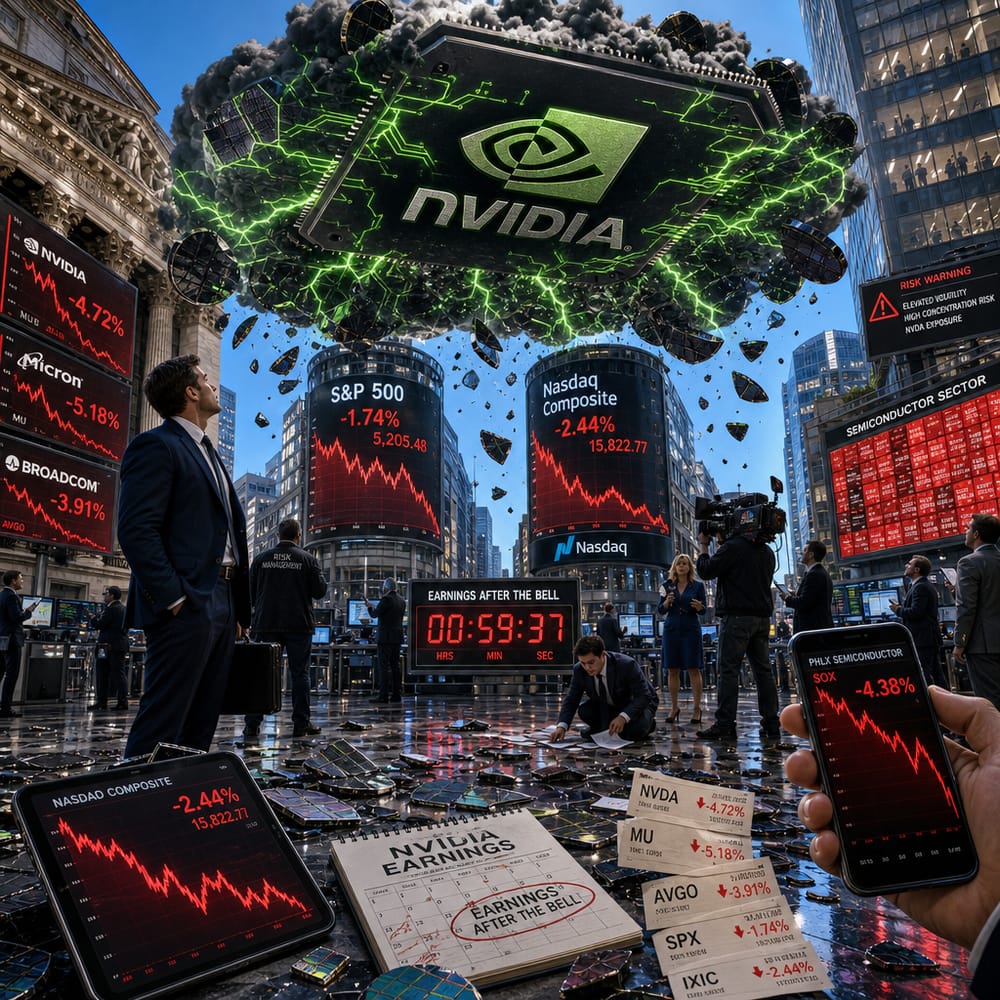
CHIP SELLOFF LOOMS LARGE: S&P 500 AND NASDAQ WEAKEN AHEAD OF NVIDIA EARNINGS
Brace yourselves, Wall Street: the tech rollercoaster is winding up for another thrilling descent, and it’s all thanks to the much-anticipated Nvidia earnings report. With the S&P 500 and Nasdaq trembling at the knees, investors are holding their breath, and here's why you might want to pay attention.
Picture this: Tech stocks have been the life of the party, the belle of the investment ball, all thanks to their dazzling promises of innovation, spearheaded by the AI revolution. But with great power comes great responsibility, and Nvidia — the chip champ that's been surfing the AI wave — is about to reveal whether it’s still leading the charge or starting to lag behind.
In case you've been living under a rock, Nvidia is the MVP of the chip stocks, especially with its juicy AI-related offerings. But even tech titans can feel the squeeze, and the company’s upcoming earnings report could be the proverbial canary in the coal mine. Are they selling enough AI chips to justify those sky-high valuations, or are investors in for a sobering dose of reality?
Here's the deal: If Nvidia’s report surpasses expectations, it could give tech stocks a nice little jolt of confidence — call it the financial equivalent of a double espresso. That’s because Nvidia’s fortunes are deeply entwined with the broader tech sector. A solid performance could signal that the AI hype isn’t just smoke and mirrors, and tech stocks might just have the ammo to keep firing on all cylinders.
On the flip side, if Nvidia's numbers don’t sparkle, it might be time for investors to buckle up for some turbulence. A disappointing report could ignite a selloff, sending tech stocks into a tailspin and dragging the S&P 500 and Nasdaq along for the ride. And let's be honest, nobody wants their portfolios to take a nosedive just as the fiscal year is in sight.
So, why does this matter for the S&P and Nasdaq? These indexes are the Wall Street heavyweights, teeming with tech darlings. When titans like Nvidia sneeze, the entire market catches a cold. A weak earnings report could sour investor sentiment, making traders jittery about tech's future prospects. That anxiety could ripple through the broader market, affecting everything from consumer confidence to investment strategies.
Of course, Nvidia isn’t in this alone. The chip sector itself is feeling the heat. Companies like Micron and Broadcom are also waiting in the wings, gearing up to face investors' scrutiny. If Nvidia's performance disappoints, it could spell trouble for these fellow chipmakers, adding more fuel to the selloff fire. The domino effect could be spectacularly unpleasant.
Investors would do well to keep a hawk-eyed watch on the developments. Are Nvidia’s sales figures enough to justify its valuation? Is the AI craze really paying off in cold hard cash, or are we witnessing a bubble on the verge of bursting? These are the million-dollar questions, literally.
And let's not forget the bond market — always lurking in the background like a silent yet powerful reminder of other financial forces at play. Rising interest rates could introduce another layer of complexity, making equities less attractive and amplifying the effects of any tech stock tremors.
In the grand scheme of things, Nvidia's earnings report is more than just another quarterly update. It's a bellwether for the tech sector and a potential harbinger for the broader market sentinels, the S&P 500 and Nasdaq. The stakes are high, and the drama is palpable.
So, whether you're an investor glued to your trading app or a curious bystander munching popcorn at the spectacle, keep your eyes peeled on Nvidia's performance. Will it be a dazzling display of tech prowess, or will it trip on its own shoelaces? As the market braces for impact, only time will tell.
This article is for informational purposes only and is not investment advice. Always do your own research or consult a licensed financial professional before making investment decisions.
© Copyright 2024. All Rights Reserved.
© Copyright 2024. All Rights Reserved.