

Chinese Yuan Strengthens Amid Fiscal Stimulus and EM FX Rally
Wednesday, August 26, 2026
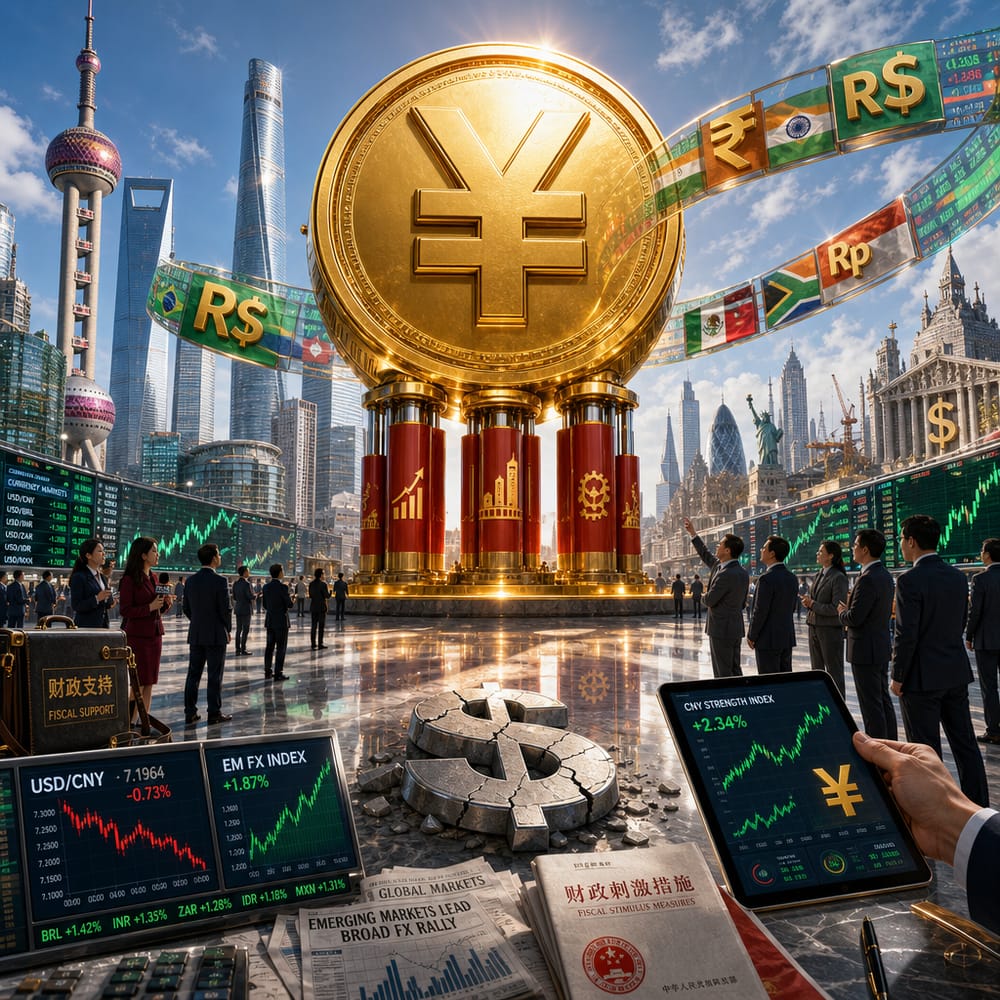
CHINESE YUAN MUSCLES UP: WHY IT MATTERS FOR THE GLOBAL ECONOMY
The Chinese yuan is on a power trip, flexing its muscles to the strongest levels we've seen in years. It's not doing this alone; it's got some pumped-up pals in the form of fiscal stimulus and a global rally in emerging market currencies cheering it on. But like everything in life, too much of a good thing can get complicated. Let's dive into why this matters and what it means for the rest of us, shall we?
WHAT’S COOKING IN CHINA?
China, never one to shy away from making economic waves, has been rolling out a series of fiscal measures that have market watchers buzzing. Think of these measures as the country's economic booster shots. They include infrastructure spending, tax breaks, and consumer incentives designed to inject some much-needed adrenaline into their post-pandemic recovery. It's like China's economic chefs are in the kitchen whipping up a storm to keep the growth dinner party going strong.
The idea? To keep the wheels of the world's second-largest economy not just turning, but zooming into the future. And guess what? It's working. The yuan's newfound strength is a testament to that.
YET ANOTHER STRONG YUAN?
So, how's the yuan pulling off this flex? It's benefiting from a cocktail of strong domestic policies and a broader trend of investors eyeing emerging markets with renewed interest. The yuan, along with its comrades in the emerging market currency index, is riding the wave of this sentiment.
But here's the catch: a stronger yuan can be a double-edged sword. Sure, it signals investor confidence and a robust economy, but it can also mess with China's trade balance. A strong currency makes Chinese exports pricier abroad, which, in turn, could put a damper on demand. For an economy that thrives on shipping goods worldwide like a pro, that's a bit of a dilemma.
TRADE BALANCE DANCE
The big question is whether China's trade surplus can maintain its rhythm in this new currency climate. It’s a bit like trying to keep a dance floor packed when the DJ suddenly switches from pop hits to slow ballads. A stronger yuan means that those famous "Made in China" products could start to feel like premium goods, and not all buyers are into that upgrade.
It's a delicate balance because while a strong currency might look good on paper, it can strain the pockets of those reliant on selling goods overseas.
RISKS OF THE STRONGMAN APPROACH
Now, let's talk risks. A yuan that’s too strong could make China's exports less competitive, potentially slowing economic growth—a scenario that Beijing would rather avoid. Plus, there's the added pressure on companies that are already feeling the pinch from global inflation and supply chain disruptions.
The Dragon knows that keeping its fire breath in check is vital. Overdo it, and it risks scorching its own economic landscape.
WHAT THIS MEANS FOR YOU AND ME
But wait—there's more! What happens in China doesn't stay in China. The yuan's muscle-flexing has implications for global markets. Investors outside of China are keenly watching for any spillover effects on currency valuations, trade dynamics, and even inflation trends around the globe.
For U.S. investors, a stronger yuan could mean volatility in sectors that rely heavily on Chinese imports and exports. Companies that source materials or products from China may see their costs rise, potentially impacting stock prices. Conversely, U.S. companies exporting to China might face stiffer competition.
THE BOTTOM LINE
In the world of finance, nothing exists in a vacuum. China's fiscal stimulus and the yuan's strength are shaking up the global currency playground, and everyone—from Beijing to Wall Street—is taking note.
As the yuan continues its strength training, we'll be watching to see whether it can keep its balance on the economic tightrope. If you're an investor or just someone who enjoys a good financial drama, buckle up. The yuan's strength has set the stage for an intriguing act in the world economy, and this is one show that's just getting started.
This article is for informational purposes only and is not investment advice. Always do your own research or consult a licensed financial professional before making investment decisions.
© Copyright 2024. All Rights Reserved.
© Copyright 2024. All Rights Reserved.