

Chinese Yuan Pulls Back Slightly from 3½-Year Peak After PBOC Guidance
Monday, August 24, 2026
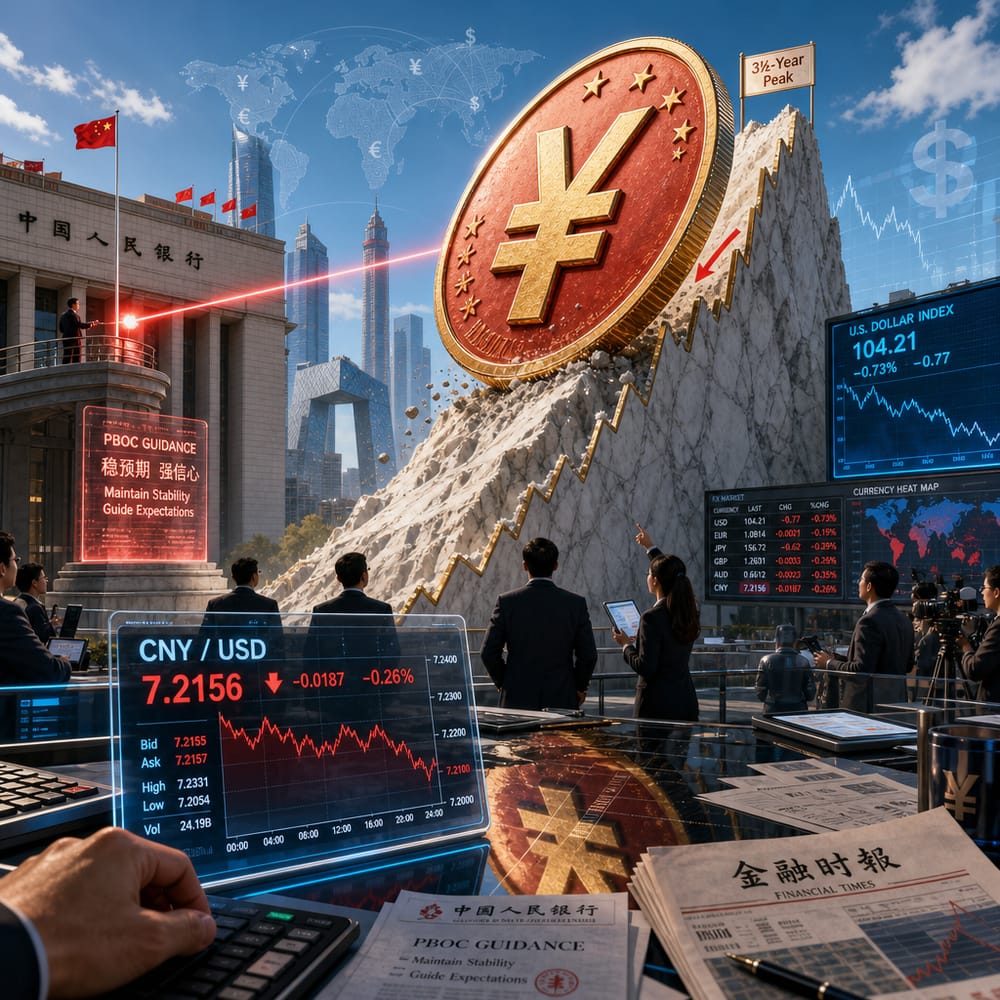
CHINESE YUAN: A SNEAKY PULLBACK WITH A WINK FROM THE PBOC
Imagine you're playing a game of Jenga. The tower is as tall as it can be, and the next move is crucial. That’s the Chinese yuan right now, easing back from its 3½-year peak, like a savvy player slipping out a block, all while keeping the tower standing. This delicate dance is orchestrated by none other than the People's Bank of China (PBOC), with the world's currency watchers hanging on to every move.
So, what’s the big deal with the yuan taking a step back after touching its highest level since the last time you were really into your kale smoothie phase? On the surface, it might seem like just another day at the foreign exchange market, but dig a little deeper, and you’ll find the PBOC’s fingerprints all over this move. They're the ones keeping the yuan from running away like a sprinter who’s just discovered a turbo button.
THE PBOC'S ROLE: THE GRAND MASTER
The PBOC isn’t just playing a spectator sport here. They’ve been nudging the yuan with a gentle touch, like a parent carefully steering their kid away from the cookie jar before dinner. With the dollar showing weakness, the yuan naturally wanted to flex its muscles. But the PBOC stepped in with some guidance that whispered, “Not so fast.”
By adjusting the yuan's midpoint - think of it as the central bank’s suggested retail price for the currency - the PBOC is managing not just the currency but a whole host of economic factors, from keeping exports competitive to controlling inflation. It’s a balancing act worthy of Cirque du Soleil, and they're pulling it off while maintaining just enough flexibility to adapt as the global economic winds shift.
IMPACT ON GLOBAL TRADE AND INVESTMENT
So, how does this all play out in the grand scheme of global trade and investment? Well, imagine if the yuan were left unchecked to float high and mighty. It could make Chinese goods pricier internationally, potentially putting a dent in China’s export dominance. That’s not just something for China to worry about, but for anyone who’s recently bought anything with a “Made in China” label. Spoiler alert: that’s most of us.
And let’s not forget about foreign investment. A stronger yuan might deter some investors looking for a bargain in China’s vast market. But a controlled yuan, one that gently retreats after a peak, keeps the door open for both imports and investments to flow freely, ensuring China remains a key player in the bustling global market.
HOW TRADERS ARE REACTING
With the PBOC’s tactical management, forex traders are on high alert. Every whisper of guidance from the PBOC sends ripples through the forex market like a pebble plunked in a pond. Traders are poised, ready to respond to the next wink or nudge from the PBOC that might shift the yuan’s course.
Some traders might see this as a cue to play it safe, opting for stability over risk. Others, however, are scanning for signs of where the PBOC might steer the yuan next, ready to pounce like a cat on a laser dot. It’s a game of anticipation and strategy where fortunes can be won or lost with a single, deft move.
A DANCE OF ECONOMIC DIPLOMACY
At its core, the yuan’s recent pullback is a lesson in economic diplomacy, expertly maneuvered by the PBOC. They’re not just managing a currency; they’re maintaining a balancing act that keeps China’s economy humming while ensuring it stays in tune with global rhythms.
For everyday investors like you and me, it’s a reminder of just how interconnected the world’s economies are. The yuan’s movement isn’t just a headline—it’s a signal of broader trends in trade, investment, and global financial strategy. So, next time you see the yuan making waves, remember: it’s not just about currency. It’s about an intricate dance where every step counts, and the PBOC is leading with a smooth, confident stride.
This article is for informational purposes only and is not investment advice. Always do your own research or consult a licensed financial professional before making investment decisions.
© Copyright 2024. All Rights Reserved.
© Copyright 2024. All Rights Reserved.