

China’s Chip Crackdown: Beijing Boots Foreign AI from Its Data Centers
Wednesday, November 05, 2025
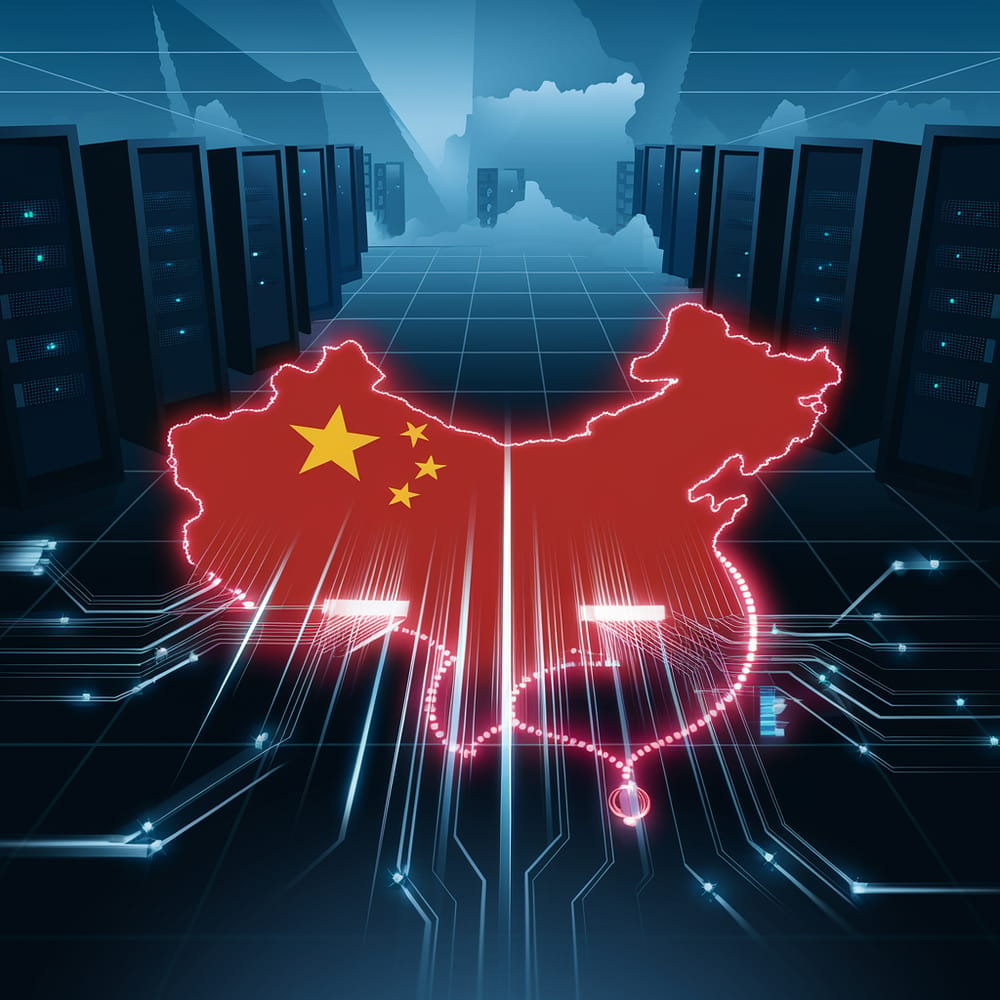
Beijing’s New Tech Wall
China has drawn a sharp new line in the silicon sand. The government has ordered that all new state-funded data centers must use only domestically produced AI chips, marking one of its toughest efforts yet to purge foreign technology from its digital infrastructure.
According to people familiar with the move, regulators have instructed projects that are less than 30% complete to rip out all existing foreign chips or cancel plans to buy them. Projects that are further along will be reviewed case by case.
The goal: reduce reliance on U.S. technology and accelerate Beijing’s campaign for AI chip self-sufficiency.
The decision arrives just days after renewed talks between President Donald Trump and President Xi Jinping, where Washington agreed to let China continue dealing with Nvidia — but only for “less advanced” chips. Beijing’s response appears to be, essentially, thanks, but we’ll build our own.
The Nvidia Fallout
Nvidia, once the uncontested king of China’s AI chip market, is now the biggest casualty. The company held an estimated 95% market share in 2022 — today, that figure has plunged to zero. Beijing’s order hits Nvidia’s H20 chips, which were already the most advanced processors the U.S. allowed for sale to China. Even though Nvidia’s higher-end B200 and H200 chips are barred from export under U.S. sanctions, they’ve continued to trickle into China via grey-market channels.
Now, even that loophole is closing. Projects receiving government funding — a pool that has funneled over $100 billion into AI data centers since 2021 — can no longer buy or deploy foreign chips at all. That’s a massive blow to Nvidia, AMD, and Intel, whose China operations are already under strain.
Meanwhile, Nvidia CEO Jensen Huang has reportedly been lobbying Washington for permission to resume broader sales, arguing that China’s reliance on U.S. hardware ultimately serves American interests. But for now, the door looks firmly shut.
Homegrown Winners and New Challenges
The big beneficiaries are China’s own chipmakers — led by Huawei Technologies, as well as Cambricon, MetaX, Moore Threads, and Enflame. These companies have been racing to fill the performance gap with Nvidia’s GPUs, offering increasingly powerful alternatives.
Still, China’s domestic chip surge comes with growing pains. Developers remain hesitant to abandon Nvidia’s well-established CUDA software ecosystem, which makes building and scaling AI systems far easier. And though local chips are improving fast, manufacturing constraints remain severe due to U.S. export bans on high-end semiconductor equipment.
That means even as China builds more data centers powered by its own chips, it could still lag behind the U.S. in sheer AI computing power.
Beyond the Trade War: A Digital Cold War
This isn’t just about technology — it’s about control. By banning foreign AI chips from its state-backed infrastructure, Beijing is fortifying a digital wall to ensure strategic autonomy. The move mirrors earlier crackdowns, like its 2023 ban on Micron memory chips, which drove the U.S. company to withdraw from the Chinese server market entirely.
For China, the path forward is clear: dependence is weakness, and self-reliance is the new doctrine. For American chipmakers, it’s another warning that the world’s largest market for AI infrastructure may soon be off-limits — not because of tariffs or sanctions, but because Beijing has simply decided it no longer needs them.
The Bottom Line
China’s latest directive is a seismic shift in the global chip war. It tightens the divide between the world’s two tech superpowers — one driven by open markets and global supply chains, the other by national strategy and self-preservation.
The AI race isn’t slowing down. It’s just splitting in two.
© Copyright 2024. All Rights Reserved.
© Copyright 2024. All Rights Reserved.