

China Trade Data Flash AI Hardware Demand—How Long Will It Last?
Tuesday, July 14, 2026
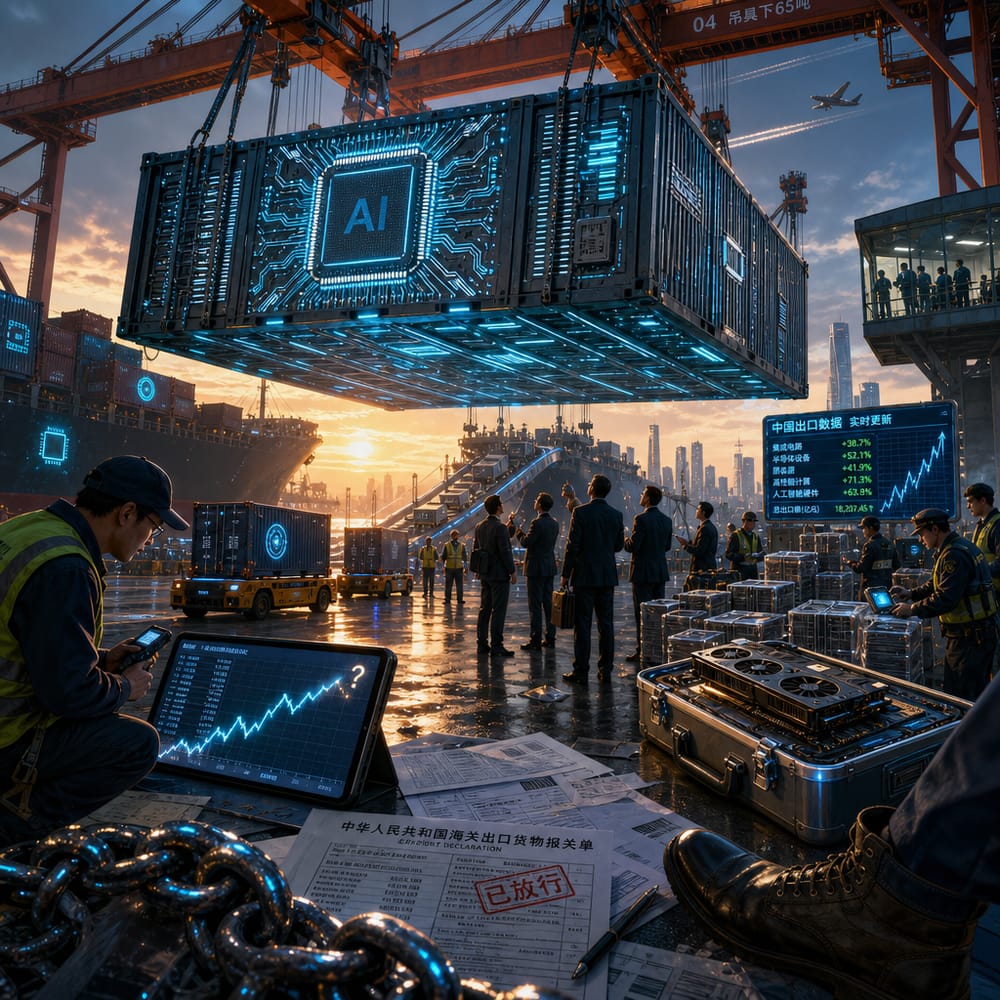
China's got a new BFF, and its name is AI hardware. In the world of global trade, where data is king and every percentage point counts like gold, China's latest export figures have struck a chord louder than a gong at a temple. The country has seen its exports skyrocket, and the catalyst is none other than the insatiable demand for AI hardware.
Let's dive into the juicy bits. In June, China's exports rose at their fastest pace since 2021, a scorching 27% jump compared to the previous year. It's like China's trade balance downed a turbocharged energy drink. The headliner? AI hardware. Think semiconductors, components that get AI systems thinking, and rare minerals that make tech companies drool. This is not just a trade story; it's the modern-day equivalent of a gold rush.
But before you start popping champagne bottles, let's talk sustainability. Is this surge built on a solid foundation, or is it more of a house of cards ready to flutter away with the next breeze? Can Uncle Sam's wrath in the form of tariffs slow this speeding juggernaut?
Let’s dig deeper. First off, President Donald Trump has made clear his penchant for tariffs. With whispers of fresh duties swirling around like a particularly juicy bit of office gossip, there's a rush to ship goods before the tariff hammer falls. While this could mean a temporary spike, the looming tariffs could also throw a wrench in the works.
Now, imagine mountains of AI chips piling up, waiting for willing buyers. That’s the risk of inventory buildup, the trade world's version of having too much cake and not enough eaters. If demand cools down quicker than your coffee on a cold winter morning, we might see a glut of unsold goods, forcing prices down and dragging profits with them.
Then there's the matter of supply chain resilience, particularly with Taiwan playing a starring role in this AI hardware play. Taiwan's chipmakers are integral, yet geopolitical tensions are always lurking in the shadows. With the U.S. leaning more on its Asian allies to counterbalance China, any hiccup—be it a natural disaster or political tension—could hit the supply chain like an unexpected plot twist in your favorite TV series.
Yet, if you're a retail investor with stakes in companies like NVIDIA, AMD, or ASML, you're probably wondering: Is now the time to cash in or sit tight? These companies are riding high on the AI wave, and their stocks have been hotter than a summer day in Death Valley. However, riding high also means a potential fall could be just around the corner if the AI fervor falters.
And what about the broader picture? With AI hardware currently the belle of the trade ball, sectors like consumer goods and raw materials are sulking in the corner. It's a classic David versus Goliath scenario, where AI hardware is the soaring Goliath, hoisting up China's trade numbers almost single-handedly.
So, dear reader, here's the million-dollar question: Is this AI hardware demand a fleeting fad or a long-term trend? The technology is undeniably transformative, and demand is expected to grow as AI continues to weave itself into the fabric of modern life. Yet, the fickle nature of global politics, tariffs, and supply chain uncertainties keep the crystal ball cloudy.
In the fast-paced world of global trade, nothing is certain except uncertainty itself. China's AI hardware boom might just be the opening act to an ever-evolving narrative. It’s a market, after all, that thrives on innovation, where yesterday’s tech superstar can become today’s has-been faster than you can say “artificial intelligence.”
For now, savvy investors should keep an eye on the horizon—AI may be the bright star today, but remember, even stars can fade. Grab your popcorn and buckle up; this show is far from over. Stay sharp, because in the words of a well-informed friend: In markets as in life, fortune favors the prepared mind.
This article is for informational purposes only and is not investment advice. Always do your own research or consult a licensed financial professional before making investment decisions.
© Copyright 2024. All Rights Reserved.
© Copyright 2024. All Rights Reserved.