

China’s Yuan Strengthens on Weaker USD and Firm Fixing Confirmation
Friday, August 21, 2026
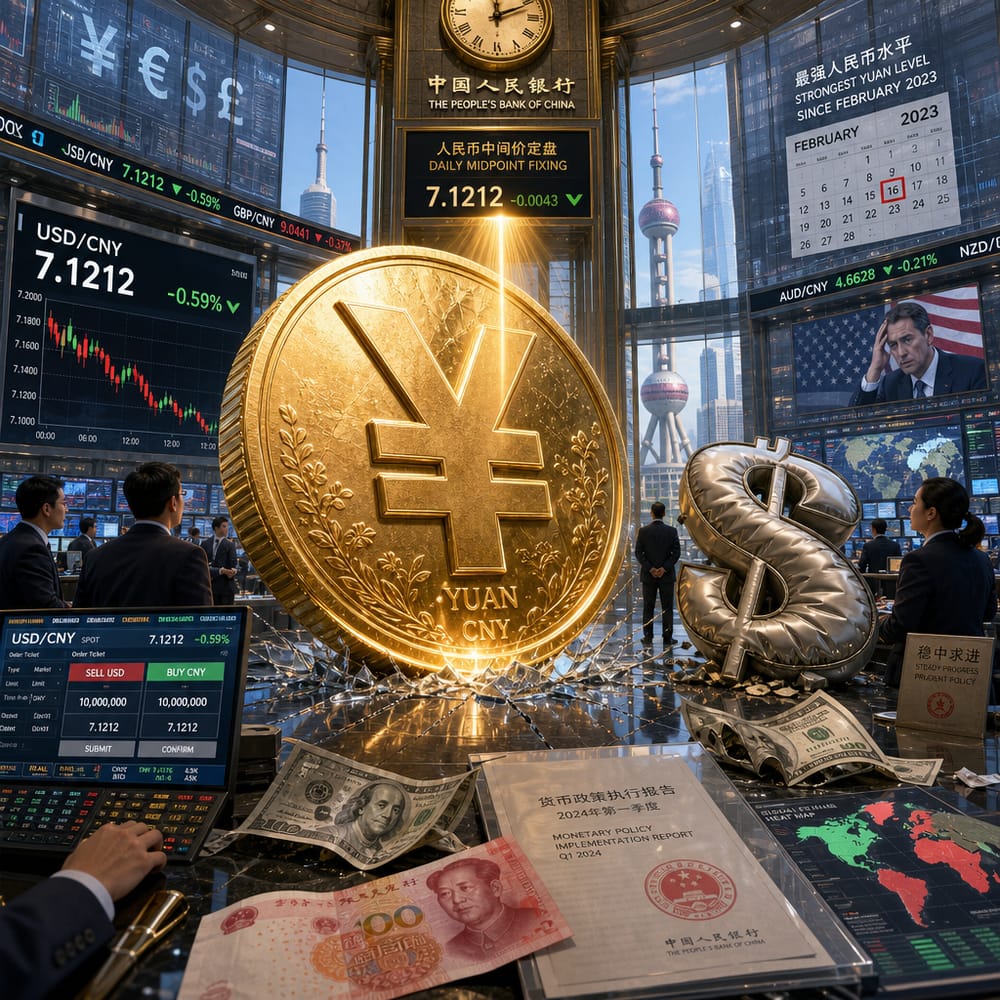
China's yuan is flexing its muscles, and it’s doing so with the kind of swagger you might expect from a currency determined to make a statement. As the yuan strengthens against the U.S. dollar, reaching its firmest level since February 2023, it's more than just a blip on the forex radar. It’s a deliberate, strategic maneuver crafted by Beijing to shape global trade dynamics and keep the financial markets on their toes.
WHY YOU SHOULD CARE: THE GLOBAL RIPPLE EFFECT
When the yuan gets stronger, it sends ripples across the world's economic pond. For global trade, it means that Chinese exports could become pricier for foreign buyers. However, it also makes imports cheaper for the Middle Kingdom. This shift could see a rebalancing act where China imports more goods, a boon for countries looking to sell into the massive Chinese market.
It’s not just about goods, though. A robust yuan could make China's financial assets more attractive to global investors. With the U.S. dollar softening, thanks in part to some recent Treasury market antics, the yuan’s appeal grows even more.
THE PBOC'S STEALTHY MOVES
In the world of foreign exchange, the People's Bank of China (PBOC) plays chess while the rest of us play checkers. The bank doesn’t just react to the market; it shapes it with strategic precision. A key tool in its arsenal is the daily midpoint fixing, essentially the rate set by the PBOC around which the yuan is allowed to fluctuate. By setting a firmer fixing, the PBOC signals its intentions to keep the yuan strong and stable.
This fixing isn't just a number; it's a message. It tells currency traders, "We're not backing down." And when the PBOC speaks, the market listens. With this deliberate fixing, the PBOC can manage the yuan’s value, treading that fine line between giving enough market freedom while maintaining control.
A WEAKENING DOLLAR: WHAT'S UP WITH THAT?
Meanwhile, back in the U.S., the dollar's weakness is partly a result of some recent domestic decisions. The U.S. Treasury’s intervention, doubling down on long-dated bond buybacks, has led to a dip in the dollar's strength. Investors are increasingly skittish about the national debt and the ongoing rates debate, causing the dollar to hover near a three-month low.
What does that mean for the world? A cheaper dollar often leads global investors to consider alternatives, and the yuan is right there, ready for its close-up. This shift could mean more investments flowing into Chinese markets as investors look for stability and returns amid the currency turmoil.
SO, WHAT'S THE BIG PICTURE?
China's currency management is more than just a behind-the-scenes operation; it’s a full-on theater production with global markets as its audience. A stronger yuan, supported by the PBOC's tactical fixing strategy, gives China more leverage in international negotiations and trade deals. It also sets the stage for a potential reordering of how currencies are weighed and balanced on the world stage.
For retail investors, understanding these moves is crucial. It’s not just about watching exchange rates; it’s about seeing how these strategies influence broader market trends. As China continues to wield its currency as a tool of economic strategy, expect to see shifts not only in forex markets but also in global trade balances and investment flows.
In a world where currency narratives often change faster than the weather, the yuan’s rise against a weakening dollar is a story worth following. It’s a tale of strategic management, global influence, and the ever-evolving dance between East and West. If you’re an investor, keep your eyes on the yuan. Its next move could very well change the game.
This article is for informational purposes only and is not investment advice. Always do your own research or consult a licensed financial professional before making investment decisions.
© Copyright 2024. All Rights Reserved.
© Copyright 2024. All Rights Reserved.