

China Restricts Exports of Critical Semiconductor Metals
Friday, November 27, 2026
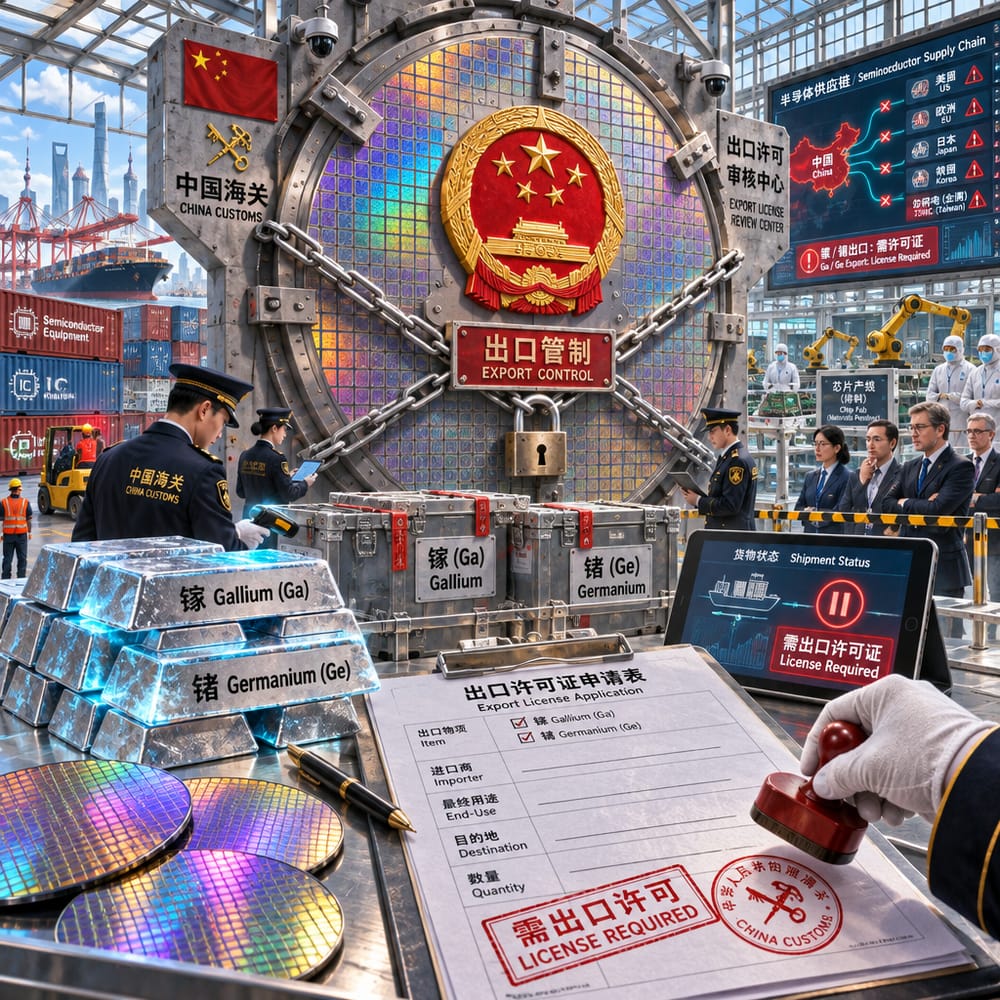
CHINA'S METAL LOCK: SEMICONDUCTOR SUPPLY CHAINS IN A BIND
Picture this: Your shiny new smartphone in hand, the pixel-perfect selfies, your favorite playlist on loop—now imagine a world where these gadgets might be harder to get. How? By hitting the pause button on the crucial semiconductor parts hiding inside. Welcome to the new tech reality, courtesy of China's latest export squeeze on gallium and germanium.
WAIT, CALL IT A METAL MUSIC BLOCK
If you're less about heavy metals and more about heavy beats, let’s break it down. Gallium and germanium might sound like abstract sci-fi elements, but they're the unsung heroes of the semiconductor world. After all, without these metals, producing semiconductors—a critical component for all the tech stuff we love—is like trying to bake cookies without flour.
China’s new rules mean anyone wanting to export these metals now needs to jump through hoops, like detailing the importer and explaining what they'll use them for. It's not quite the red tape of a government conspiracy thriller, but it’s close enough to make tech companies sweat a little.
SEMI-CONCERNED, SEMI-PANICKED
For those who don't eat, sleep, and breathe supply chain logistics, here’s the short and sweet: China’s move injects uncertainty into the already fragile global semiconductor supply chain. And when it comes to tech manufacturing, predictability is as vital as keeping the lights on. Without a steady stream of gallium and germanium, semiconductor production could stumble, leaving tech firms scrambling to keep pace.
So, who’s feeling the pressure from this metallurgical power play? Companies like Intel, NVIDIA, and AMD might soon find themselves in a tight squeeze if they can't secure these crucial ingredients. And let’s not forget about the big tech manufacturers like Apple and Samsung, whose end products depend heavily on these components.
A SPICIER, HOTTER TECH BATTLEFIELD
Geopolitically speaking, China’s sudden metal clampdown isn’t just a hiccup in metal shipments—it's a strategic chess move. It’s no secret that the U.S. and China have been in a bit of a tech cold war. From chip restrictions to trade tit-for-tats, this latest export limit is China’s way of flexing its muscles.
By turning off the spigot for gallium and germanium, China is not only tightening its grip on the critical tech supply chain but also potentially forcing global players to rethink their strategies. It pushes the West to look elsewhere, perhaps investing in domestic mining or forging new supplier alliances. It's a tech showdown where the stakes are higher than just the latest smartphone release.
CHASING RAINBOW METALS
Now, the million-dollar question: Is there a Plan B? Can tech companies pivot faster than a TikTok trend?
As companies navigate this new landscape, expect a mad dash for alternative sources. Nations rich in other mineral resources might suddenly find themselves courted like a Hollywood star during awards season. The race is on to develop synthetic or recycled versions of these precious metals. But remember, mining and lab innovations take time—a luxury not afforded when tech clocks tick faster than ever.
For the average Joe, this might mean more expensive or delayed gadgets. But if this game drags on, we might see tech giants innovate in more ways than one—finding new materials or enhancing efficiency in ways no one thought possible.
THE WRAP-UP
In the grand theater of global trade, every move, like China’s latest export restrictions, sends ripples across continents and industries. As companies and countries scramble to adapt, one thing’s for sure: the semiconductor supply chain saga is far from over. So next time you flip on that smartphone or laptop, spare a thought for the gallium and germanium making it all happen. Who knew metals could be so dramatic?
This article is for informational purposes only and is not investment advice. Always do your own research or consult a licensed financial professional before making investment decisions.
© Copyright 2024. All Rights Reserved.
© Copyright 2024. All Rights Reserved.