

China Exposure in Retail: Nike’s Greater China Slump a Warning
Wednesday, July 01, 2026
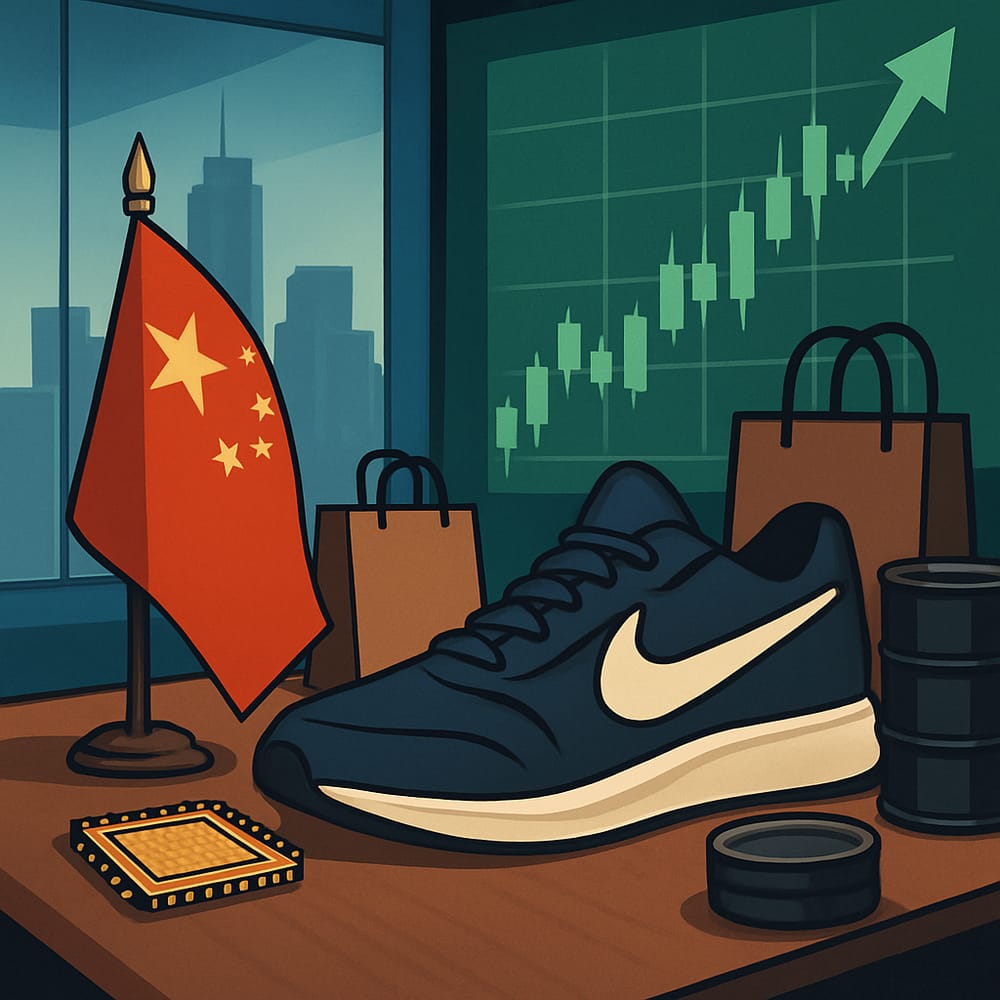
JUST DO IT... BETTER ELSEWHERE? NIKE'S CHINA BLUES AND WHAT THEY MEAN FOR RETAILERS
Nike’s just had a wardrobe malfunction in China, and it’s not the sort that can be fixed with double-sided tape. With a staggering 12% revenue drop in what was once their golden growth market, the sportswear giant has sent retail investors rummaging through their portfolios, wondering if any other of their beloved brands are also caught in a tight spot in the Middle Kingdom.
Nike's stumble is a stark reminder that China, the world's second-largest economy, is not an infinite gold mine for Western retailers. It's a tough market, with its own unique set of geopolitical hurdles, regulatory mazes, and consumer whims. Let’s dive into what this means for the retail sector at large and whether we're seeing a sector-wide trend or just a Nike-exclusive blip.
IS THIS TREND SECTOR-WIDE?
In short, it's complicated. Nike's slump isn't just a solitary bad hair day; it's part of a broader coiffure conundrum affecting other retail giants. Adidas, for instance, has also reported softer sales in China, a market previously responsible for plumping up their profit margins. It seems the VIP pass to Chinese consumer affections is harder to come by lately.
Geopolitical tensions, particularly between the U.S. and China, have fueled a rise in nationalism, nudging Chinese consumers to favor homegrown brands. The local competition is also running laps around the Western brands, serving up products that cater directly to Chinese tastes, often at a more attractive price point.
The economic slowdown in China isn't helping either. With consumers tightening their purse strings, even the savviest brands are feeling the pinch. The question is, how do you sell dreams when wallets are staying closed?
LONG-TERM IMPACT ON RETAILERS
The long-term impact on retailers with heavy China exposure is potentially seismic. Retailers need to reassess their love affair with China and start looking for new sweethearts—or at least consider a more diversified dating strategy.
For those who still want to court the Chinese market, innovation and adaptation will be key. Brands need to double down on local relevance, understanding that one size doesn’t fit all. More localized marketing, collaborations with Chinese influencers, and faster adaptation to local trends could turn the tide. However, these strategies require time and investment.
Brands also have to brace for a more fragmented global market. Beyond China, there's a whole world of untapped potential. India, Southeast Asia, and Latin America are waiting in the wings, offering new growth avenues. They may not have China's sheer scale, but their middle classes are expanding, and with it, their spending power.
STRATEGIES FOR MITIGATING EXPOSURE
So, what can retailers strapped into a bumpy China ride do? Well, for starters, avoid putting all their sneakers in one basket. Diversification is the name of the game. Spreading risk by expanding into emerging markets or doubling down where growth is still perky will help cushion any China-related blows.
Another strategy is to invest in digital transformation. An agile e-commerce platform can help brands reach consumers directly, sidestepping some of the challenges brick-and-mortar stores face in China. This also aligns with the global shift towards online shopping, a trend accelerated by the pandemic.
Furthermore, brands need to play nice on the geopolitical playground. Ensuring the company’s supply chain isn’t overly reliant on China is crucial. Diversifying manufacturing bases to other parts of Asia or even nearshoring to regions closer to home can reduce geopolitical risk.
THE BOTTOM LINE
Nike's misstep in China serves as a reminder and a warning. The days of relying on China as a surefire growth engine might be over. It’s time for retailers to adapt, innovate, and diversify.
Investors should keep a keen eye on how brands are responding to these changes. Are they playing the long game and investing in innovation and market diversification? If not, it might be time to reconsider how much you want to bet on brands still wedded exclusively to the China dream.
In this ever-evolving retail landscape, the winners will be those who can not only just do it but do it differently, smarter, and with a keen understanding of where the next opportunity lies.
This article is for informational purposes only and is not investment advice. Always do your own research or consult a licensed financial professional before making investment decisions.
© Copyright 2024. All Rights Reserved.
© Copyright 2024. All Rights Reserved.