

Chevron Will Power Microsoft's Massive Texas AI Data Center for the Next 20 Years
Monday, June 22, 2026
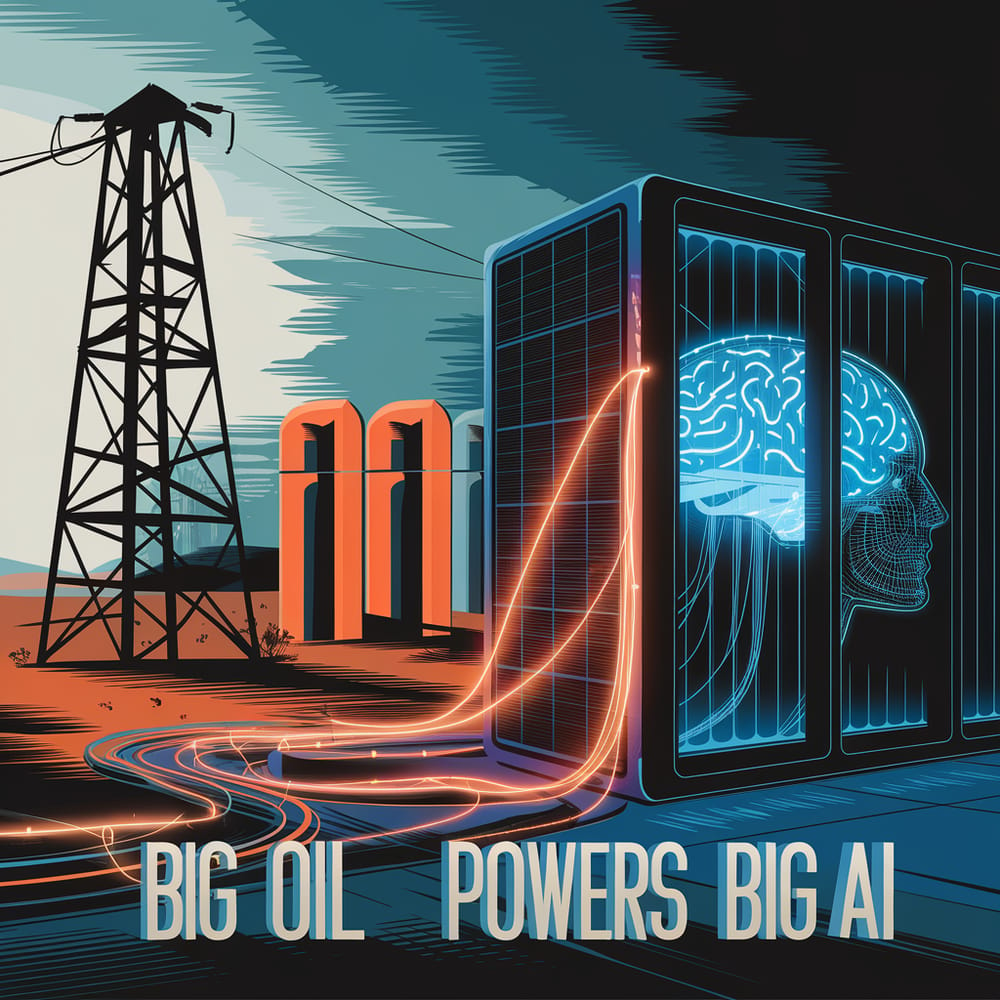
The worlds of Big Oil and Big AI just collided in the West Texas desert. On Monday, Chevron and Microsoft announced a 20-year deal in which the oil giant will generate the electricity for one of the largest artificial-intelligence data centers ever planned in the United States. It is a striking pairing - a 146-year-old crude producer becoming the long-term power utility for the most valuable software company on Earth - and a clear sign of just how hungry the AI boom has become for raw energy.
The Deal in a Nutshell
Chevron has signed a 20-year power purchase agreement to supply electricity to Microsoft's new data center campus in Reeves County, deep in the Permian Basin. The project, code-named Project Kilby, will span more than 2,000 acres and is being built in phases so capacity can scale up over time. First power is targeted for 2028, with Chevron handling generation while Microsoft runs the computing.
A Staggering Amount of Power
Kilby is designed to deliver roughly 2.67 gigawatts of electricity - close to 2.7 GW at full build-out. To put that in perspective, that is enough juice to power about 2 million homes, all funneled instead into racks of AI chips. The scale underscores a problem the entire industry is racing to solve: training and running advanced AI models consumes electricity on a scale that today's grids simply were not built to handle.
Why Natural Gas, Why Now
Rather than wait years for grid hookups or new transmission lines, Chevron will burn natural gas pulled straight from its own nearby Permian fields to spin the turbines. The company is partnering with Joulent, an energy developer launched by activist investment firm Engine No. 1, and sourcing equipment from GE Vernova and Caterpillar's Solar Turbines unit. For Chevron, it turns cheap local gas into a steady, two-decade revenue stream - and a new identity as an AI-era power supplier.
What It Means for Investors
For Microsoft, the deal locks in dedicated power for its AI ambitions without leaning entirely on stressed public grids - a competitive edge as rivals scramble for the same scarce electricity. For Chevron, it is a fresh, predictable cash flow that does not depend on volatile oil prices. Both stocks traded roughly flat on the news, but the strategic message is loud: energy has become the real bottleneck in the AI race, and whoever controls it holds leverage.
The Bigger Picture
Project Kilby also lands as a major economic story for Texas, expected to generate more than $10 billion in state and local tax revenue and support nearly 2,000 jobs. More broadly, it marks a template other oil majors may copy - using existing gas reserves to feed data centers directly. The line between energy company and tech infrastructure company is blurring fast, and Monday's announcement may be remembered as one of the moments it broke wide open.
This article is for informational and educational purposes only and does not constitute investment advice. Always do your own research and consult a licensed financial professional before making investment decisions.
© Copyright 2024. All Rights Reserved.
© Copyright 2024. All Rights Reserved.