

Cheap drones are reshaping defense investing: old primes versus new battlefield tech
Monday, June 29, 2026
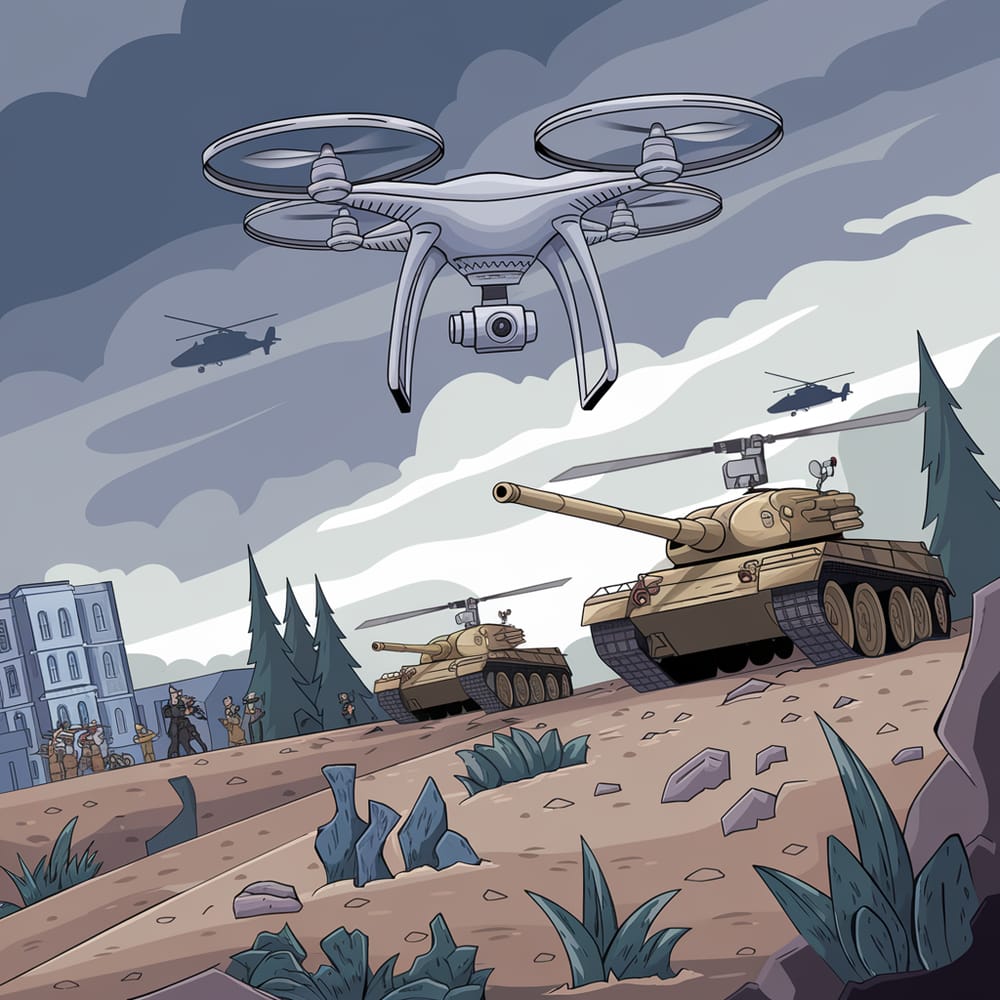
For decades, investing in the defense sector was remarkably straightforward: you bought a basket of the "Big Five" primes that built the loudest, heaviest, and most expensive machinery on Earth. But a recent report from Barron’s outlines how the brutal reality of modern conflict is upending that multi-billion-dollar playbook. The defining question of modern warfare is no longer who has the most sophisticated technology, but who can sustain the cost-exchange ratio.
As low-cost, mass-produced autonomous systems redefine the front lines, the Pentagon is aggressively shifting capital away from hyper-expensive, slow-to-build legacy platforms. For investors, this is triggering a profound structural migration from old-guard primes to a new wave of scalable battlefield tech.
The Economic Inversion of the Battlefield
The strategic shift is a direct response to a math problem that has terrified military planners from Eastern Europe to the Middle East. In today's conflicts, a $5,000 off-the-shelf quadcopter or a $20,000 loitering munition can effortlessly neutralize a $30 million main battle tank or a multi-million-dollar radar installation.
Worse yet, defending against these swarms has historically required firing interceptor missiles that cost upwards of $2 million each. This staggering cost disparity creates an economic trap: even the world's wealthiest superpower can quickly become a prisoner of its own defense costs if its stockpiles are depleted by cheap, disposable threats. The new guiding principle of global defense procurement is clear: counter cheap threats with cheap means.
The $55 Billion "DAWG" Tsunami
Washington is throwing unprecedented capital at fixing this vulnerability. The Pentagon's drone nerve center, now dubbed the Defense Autonomous Warfare Group (DAWG)—which absorbed the previous "Replicator" initiative—is poised to see its budget explode from $225 million to a staggering $55 billion proposed for fiscal year 2027.
Concurrently, the Department of Defense is executing a $1.1 billion "Drone Dominance" program aimed at amassing 300,000 low-cost disposable attack drones. Analysts estimate that the domestic market for soldier-portable and attritable drones could soon eclipse $100 billion annually. This is a massive, sudden pool of capital that is upending the traditional, decade-long procurement cycles that long protected legacy defense primes.
Pure-Plays vs. Legacy Primes
This tidal wave of capital is forcing a distinct divergence between established defense companies and agile newcomers:
The Pure-Play Innovators: AeroVironment ($AVAV) remains the undisputed heavyweight of tactical drones, with its battle-tested Switchblade loitering munitions and Puma reconnaissance systems commanding massive backlogs. Meanwhile, Kratos Defense ($KTOS) is pioneering high-speed, jet-powered autonomous aircraft like the XQ-58 Valkyrie, which serves as a low-cost "loyal wingman" for manned jets. Small-cap names like Red Cat Holdings ($RCAT) are rapidly locking down military contracts for short-range reconnaissance.
The Legacy Giants: Old-school primes like Lockheed Martin ($LMT), RTX Corporation ($RTX), and Northrop Grumman ($NOC) are far from obsolete, but they are playing catch-up. Because they cannot pivot as quickly as nimble, venture-backed startups, the old guard is functioning more like technology incubators—using their massive cash piles to fund internal venture arms or acquire smaller drone innovators to maintain relevance.
Are Drone Stocks Flying Too Close to the Sun?
However, the pure-play drone trade is not a guaranteed one-way ticket to wealth. Retail investors should look carefully at the staggering valuations currently holding up these equities, as many are already priced for absolute perfection.
Recent market entrants like Swarmer ($SWMR) and expanded tech players are trading at intense multiples of forward revenue. Furthermore, the drone sector is highly vulnerable to a unique "boom-and-bust" demand cycle. A significant percentage of small-cap drone revenues over the past year came from urgent, emergency exports to active war zones. As those foreign nations successfully transition from drone importers to domestic drone exporters, those sudden, high-margin revenue streams could dry up rapidly.
The Attrition Dilemma: Views that drones will entirely displace traditional manned platforms overlook entrenched political and institutional military structures. The most drone-savvy militaries globally are not abandoning tanks or jets; they are forcing them to adapt. The true winners won't be companies that build the absolute cheapest toy, but those who can weave cheap autonomy into rugged, high-end military networks.
The Takeaway for Investors
The democratization of lethal drone technology means the defense sector is no longer a monolithic utility trade. Sector ETFs like the iShares U.S. Aerospace & Defense ETF ($ITA) and the SPDR S&P Aerospace & Defense ETF ($XAR) are no longer just capturing steady, government-backed dividends; they are capturing a chaotic tech disruption.
While military institutions will never completely abandon manned stealth fighters or multi-billion-dollar naval ships, the hyper-growth vector of defense spending has firmly shifted to the edge. If you are building a defense portfolio for the current environment, relying solely on the old primes is a dangerous bet. The future belongs to the companies that can build physical artificial intelligence quickly, cheaply, and by the hundreds of thousands.
This article is for informational purposes only and is not investment advice. Always do your own research or consult a licensed financial professional before making investment decisions.
© Copyright 2024. All Rights Reserved.
© Copyright 2024. All Rights Reserved.