

ChatGPT Outage Exposes Just How Dependent Workplaces Are on AI
Wednesday, June 11, 2025
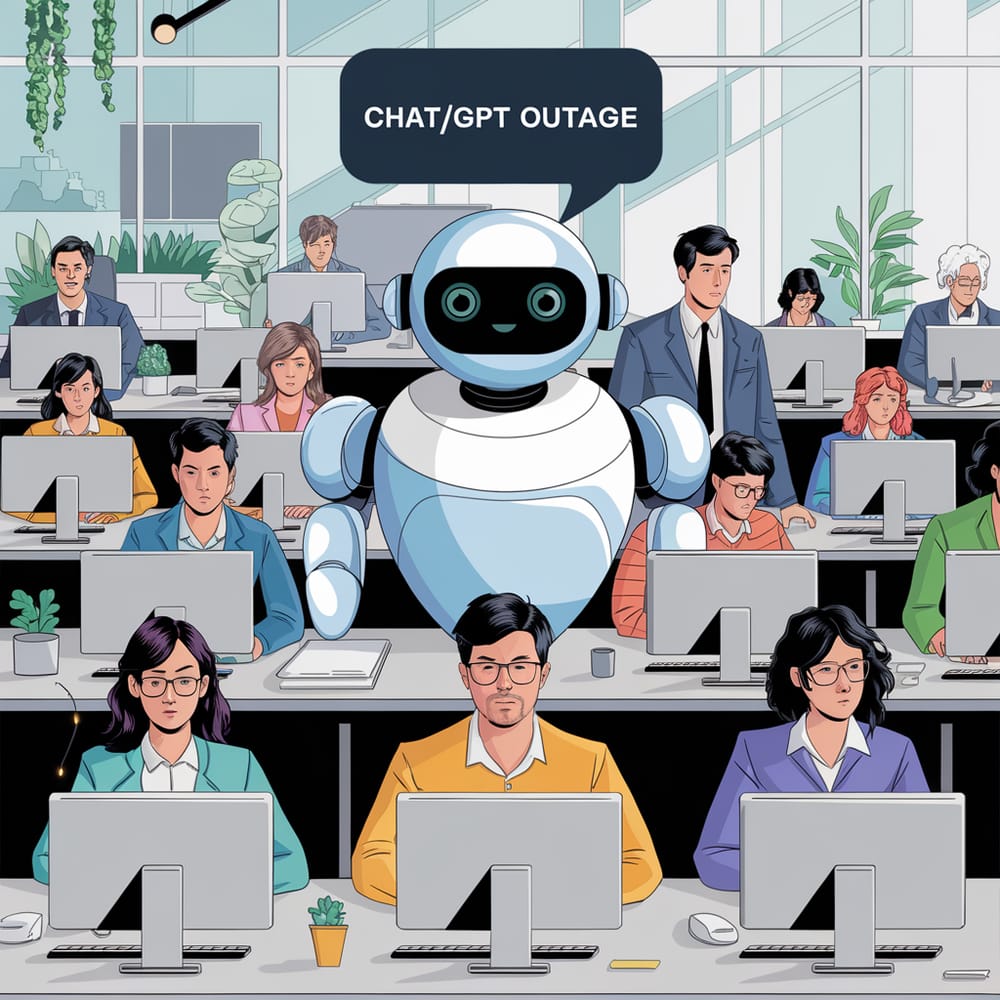
A global ChatGPT outage on Tuesday caused a wave of panic across workplaces, highlighting just how embedded AI tools have become in modern workflows.
OpenAI reported “elevated error rates” for ChatGPT, which disrupted the service for many of its 400 million weekly users. The incident quickly triggered over 500,000 Google searches about the outage, making it one of the most searched topics in the U.S. Thousands of users also turned to platforms like Reddit and X to vent their frustration. Some joked, others sounded more serious: “I no longer know how to work,” one X user posted.
The disruption underscored a striking shift: AI has become a daily work tool for millions. A recent global survey found that 58% of workers now use AI on the job, with about one-third relying on it weekly or daily. Many turn to ChatGPT for tasks like writing, research, and even project management. Interestingly, 70% of workers still rely on free, public AI tools rather than those provided through their employers.
The number of professionals using AI at work has doubled since 2022, and adoption is especially high among younger users. In fact, 26% of U.S. teens now report using ChatGPT for schoolwork, up from 13% just last year.
The outage also spurred a spike in search interest for rival AI tools—including Grok, Google’s Gemini, and DeepSeek—as users scrambled for alternatives.
By late Tuesday, OpenAI reported that API services had fully recovered, and ChatGPT itself was steadily coming back online. The hiccup came just a day after OpenAI announced it had reached $10 billion in annual recurring revenue, underscoring the growing business stakes around these AI tools.
Bottom line: The ChatGPT outage wasn’t just a technical blip—it revealed how deeply AI has woven itself into everyday work. As reliance on tools like ChatGPT grows, so too does the need for resilience and backup plans when AI goes offline.
© Copyright 2024. All Rights Reserved.
© Copyright 2024. All Rights Reserved.