

CFTC Positioning Shows Healthy Downtrend in DXY
Sunday, August 23, 2026
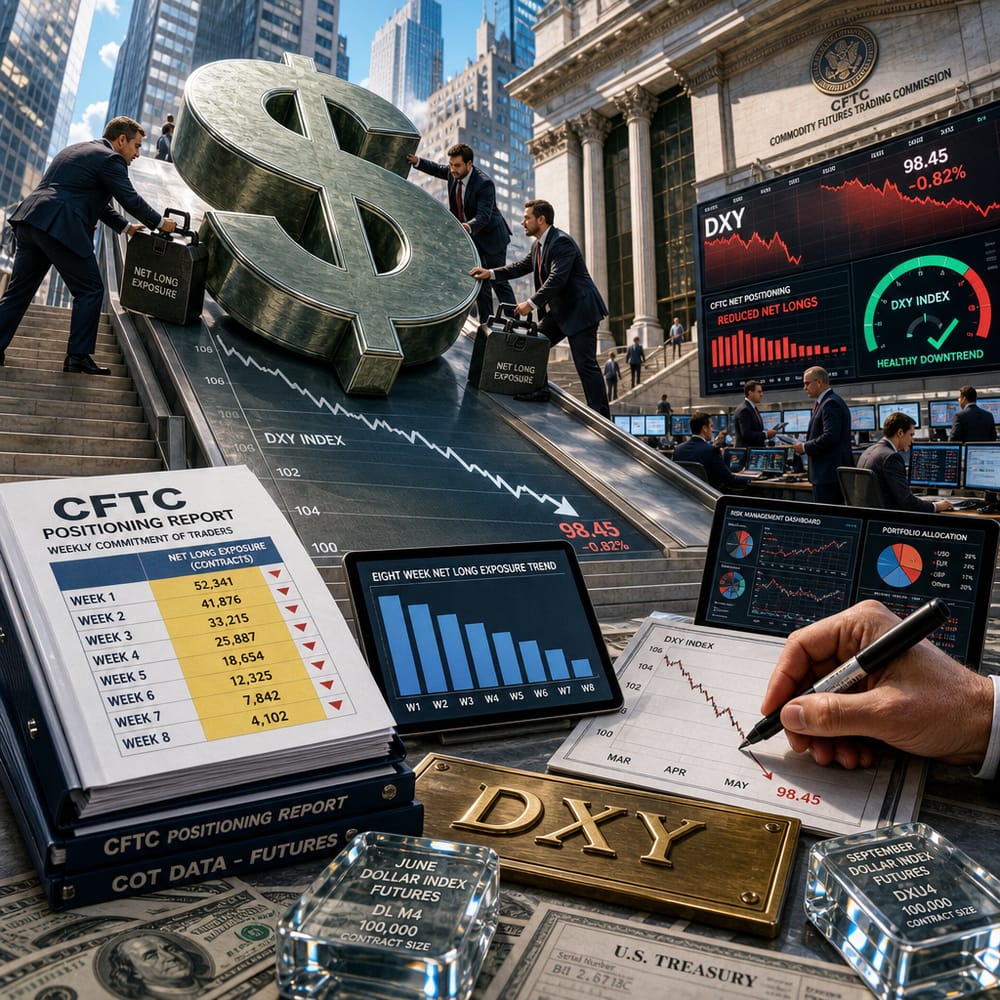
THE DOLLAR IS DROPPING: WHAT IT MEANS FOR YOU
The U.S. dollar is slipping, and it's not a banana peel that's been causing the tumble; it's the institutional heavyweights quietly reshuffling their positions like they're playing a high-stakes game of musical chairs. If the U.S. Dollar Index (DXY) were a celebrity, it would be trending down faster than the latest Twitter scandal, and everyone from trade strategists to global investors is taking notice.
So, what's driving this dollar drama? Well, over the past eight weeks, asset managers have been reducing their net positions on the DXY like someone on a sugar detox. The Commodity Futures Trading Commission (CFTC) reports a significant retreat in these positions, and this ain't just some casual spring cleaning. It's more like a Marie Kondo-style overhaul, suggesting a seismic shift in sentiment towards the mighty greenback.
FACTORS BEHIND THE DOLLAR DOWNTREND
Let's break down the factors causing this dollar dive. First up, there's the Federal Reserve's signaling about interest rates. With inflation pressures easing, the Fed's interest rate hikes are starting to look more like a distant dream, giving the dollar less pep in its step. When the promise of higher rates wanes, so does the attractiveness of holding U.S. dollars. It's like offering a caffeine-free coffee at a morning huddle—suddenly, it's just not that appealing.
Next, there's the global economic ballet. The euro, the yen, and other major currencies are looping their way back to stability after their own struggles, meaning the dollar's spotlight is dimming. Moreover, geopolitical rideshows—like the ongoing tensions with major trade partners—are making investors clutch their pearls and diversify their currency baskets faster than you can say "trade tariff."
THE RIPPLE EFFECT ON GLOBAL MARKETS
The dollar’s dip is not just an isolated U.S. event; it's a global ripple that could reshape currency markets everywhere. With a weaker dollar, U.S. exports become cheaper for foreign buyers, potentially boosting American industries that rely heavily on international sales. Imagine a Black Friday sale on American goods worldwide; that's the kind of opportunity a softer dollar presents.
But it's not all sunshine and rainbows. A less valuable dollar can spell trouble for nations with debts denominated in greenbacks. Suddenly, their financial obligations become more expensive, like buying movie popcorn when you've left your discount coupon at home. This shake-up could lead to tighter currency conditions globally and make emerging market investments as thrilling—and risky—as a rollercoaster ride.
IMPLICATIONS FOR U.S. ECONOMIC POLICY
Now, what does the dollar shuffle mean for U.S. economic policy? Well, a depreciating dollar could have policymakers scratching their heads and reconsidering their game plans. A weaker dollar might support domestic manufacturers and exporters, but it also fans the inflation flames, making imported goods pricier. If inflation starts to smolder again, the Fed might have to rethink its pause on rate hikes. The delicate dance of balancing growth with inflation could become trickier than a salsa routine.
As if that isn't enough, let's not forget the political narrative. A depreciating dollar could prompt a reshuffle of economic policies, turning them into campaign fodder faster than you can say "election cycle." Candidates might propose everything from new trade deals to tariffs, all while singing the praises of a booming domestic production.
THE BOTTOM LINE
So, what does this mean for you, the everyday investor, scrolling on your phone, latte in hand? As the dollar’s value simmers, keep an eye on sectors that stand to gain from increased exports. Tech and industrial companies that have a robust international footprint might just find themselves in the spotlight. Meanwhile, higher import prices could affect sectors reliant on foreign goods, raising some eyebrows—and commodity costs.
The dollar's descent isn't just a number on a chart; it's a living, breathing reflection of the shifting tides in global markets. As we watch this drama unfold, remember to size up your portfolio and make sure it’s ready to tango with whatever the global economy throws your way. After all, in the world of investing, being prepared is half the battle—and sometimes, a little humor doesn’t hurt either.
This article is for informational purposes only and is not investment advice. Always do your own research or consult a licensed financial professional before making investment decisions.
© Copyright 2024. All Rights Reserved.
© Copyright 2024. All Rights Reserved.