

Central Bank Divergence Resurfaces: USD Loses Ground Post-FOMC
Monday, August 17, 2026
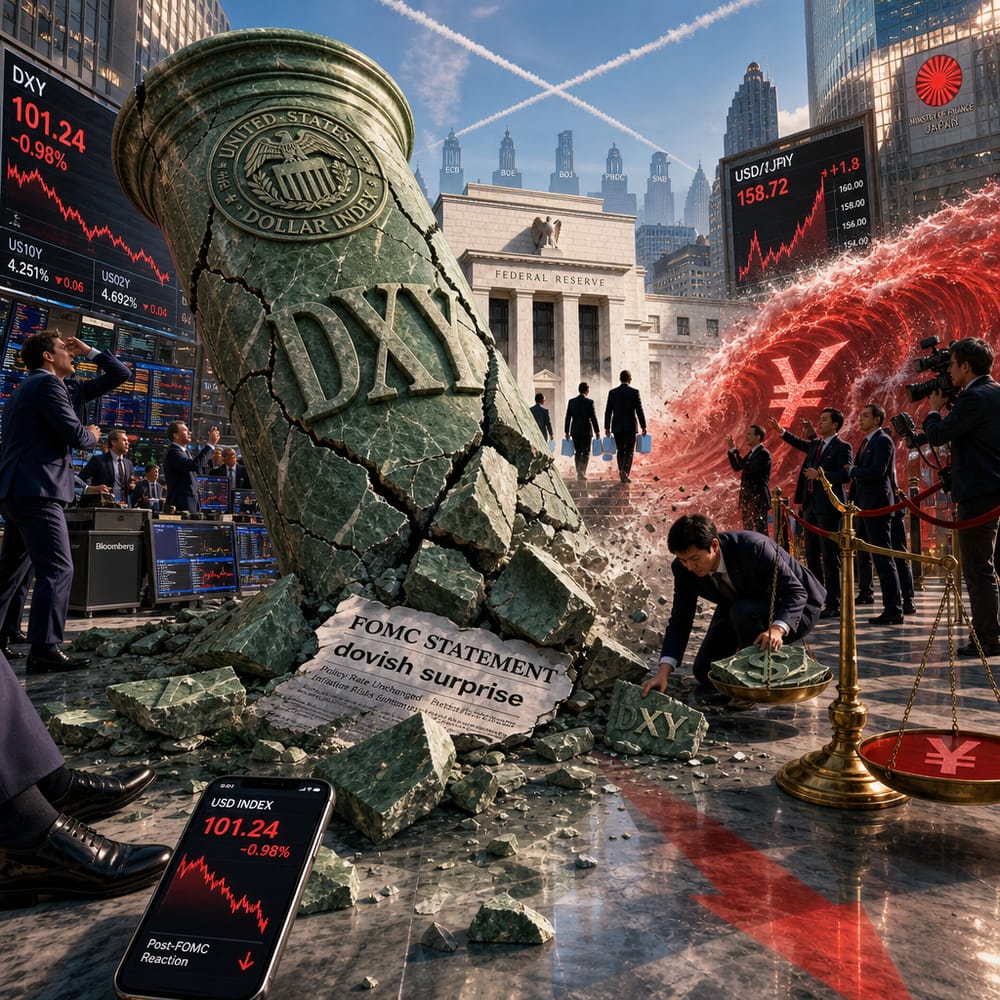
When it comes to central banks, the plot is never short on drama. The Fed orchestrates a surprise symphony, the Bank of Japan dances to its own tune, and the U.S. dollar, caught amid the cacophony, finds itself in a sudden selloff. Yes, folks, the U.S. dollar is taking a hit as central bank divergence resurfaces, shifting the global currency dynamics and leaving investors with one question: what's next?
Let's peel back the curtain. Recently, Jerome Powell and his crew over at the Federal Reserve jolted us with a dovish surprise. In simple terms, the Fed hinted that they're not in a rush to play the inflation-fighting superhero just yet. Cue the market reaction: the U.S. dollar slipped, causing the DXY—essentially a yardstick for the dollar's value against a basket of six other major currencies—to waltz downwards.
Meanwhile, over in the Land of the Rising Sun, the Bank of Japan is making waves of its own. For the first time in a while, they intervened to prop up the yen. It’s like the BOJ saw the Fed's dovish playbook and said, "Hold my sake; watch this." This has further nudged the dollar into a downward dance, leaving many to wonder whether we’re witnessing the start of a larger currency trend.
CENTRAL BANK DIVERGENCE: A NEW ERA?
Central bank moves are like the puppet masters of global finance—pulling strings that send ripples across markets. When banks like the Fed diverge from their typical paths, it’s more than just a headline; it’s a full-blown market narrative. For global FX markets—which essentially decide the value of currencies relative to each other—divergence can spell volatility. Central bank policies play the role of tuning forks, setting the tone for currency valuations.
So, what does this mean for the dollar? Well, the Fed's laissez-faire stance on inflation could suggest they're not as worried about inflation as before. But investors aren't buying it—quite literally—and this skepticism has raised questions about the Fed's credibility in curbing inflation. Historically, a central bank's hawkish or dovish behavior heavily influences its currency. A dovish Fed typically means a softer dollar, which is the current scenario playing out.
THE GLOBAL IMPLICATIONS
In the theater of global finance, each central bank's move has a domino effect. With the Fed going soft, the stage might be set for other central banks to take center stage—say hello to Europe and Japan.
The European Central Bank (ECB), for example, might not follow the Fed down this dovish path. If they tighten monetary policies while the Fed holds off, the euro could gain ground against the dollar. Similarly, Japan's recent intervention suggests a more aggressive stance could be on the horizon, setting the stage for more yen strength.
For retail investors, the implications are intriguing. A weaker dollar can boost U.S. exports by making them cheaper abroad, potentially bolstering U.S. companies with significant overseas sales. On the flip side, it can mean higher prices for imported goods, impacting consumers and sectors dependent on foreign supply chains.
LOOKING FORWARD: WHAT TO WATCH
So, what's ahead for the star-spangled banner of currencies? The key is keeping an eye on central bank chatter. Will the Fed stick to its guns, or will inflation pressures nudge them back toward hawkishness? Each phrase uttered by Powell and his contemporaries could be the trigger for the next market shift.
Moreover, with Japan’s recent steps, there's a fresh spotlight on whether they'll continue to uphold their currency. History teaches us that these interventions are often a hint of more to come. Add Europe's potential divergence into the mix, and it's clear that FX markets are set for a riveting ride.
For retail investors, this divergence isn't just financial theater—it's a call to action. Introspection into one's portfolio, re-evaluation of currency-related investments, and a keen eye on geopolitical shifts will be crucial.
THE BIGGER PICTURE
In the end, central bank divergence isn't just a series of isolated moves; it's an evolving narrative with real consequences. As investors, it's a reminder to remain agile, informed, and ready to pivot as the story unfolds. The world of finance is no monolithic entity—it's a living, breathing drama that we're all protagonists in. So, grab your popcorn, because this central bank saga is far from over.
This article is for informational purposes only and is not investment advice. Always do your own research or consult a licensed financial professional before making investment decisions.
© Copyright 2024. All Rights Reserved.
© Copyright 2024. All Rights Reserved.