

Castelion's $800M Series C Funding Round
Thursday, August 20, 2026
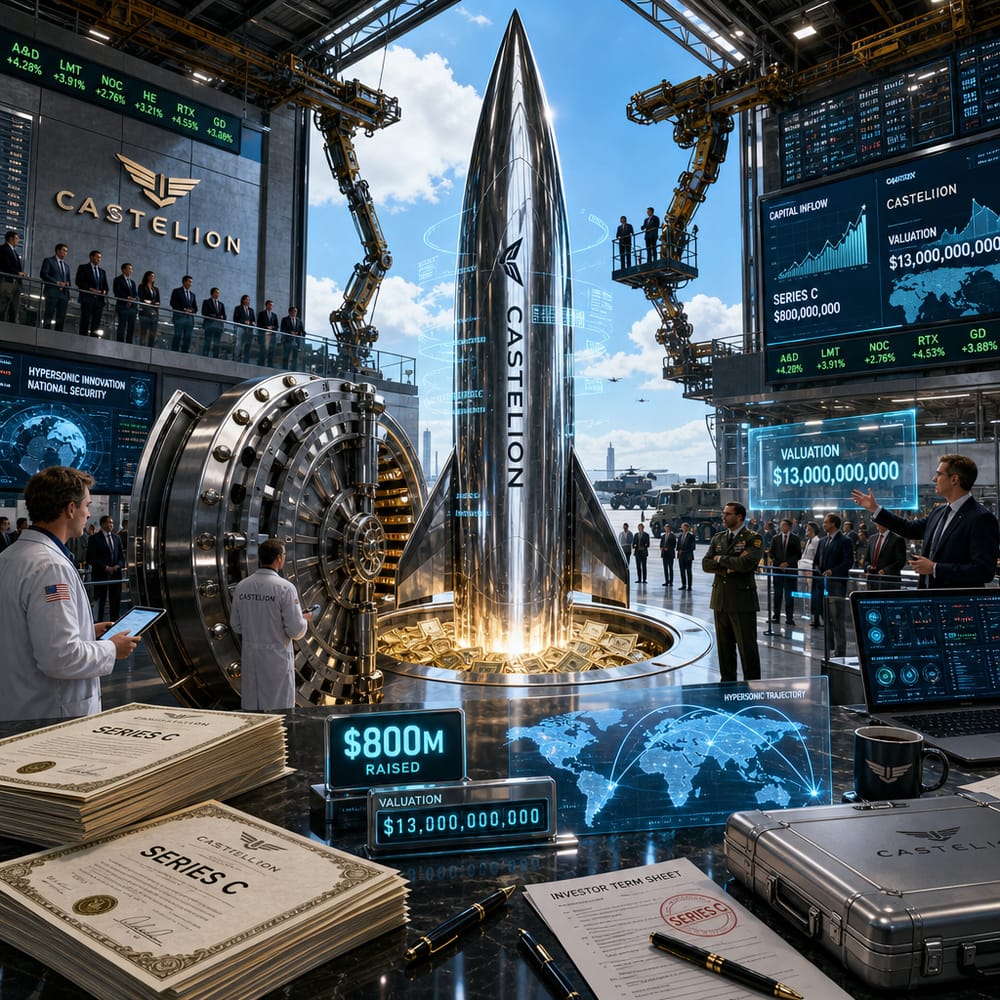
MISSILES AND MONEY: HOW CASTELION'S $800M ROUND SHIFTS TECH'S BATTLE LINES
Picture this: a company that launches hypersonic missiles faster than you can say "stock market crash" just rang the cash register for a cool $800 million. Yes, you read that right. Castelion, the brainy progeny in the defense tech family, just snagged a hefty Series C funding round, skyrocketing its valuation to a jaw-dropping $13 billion. That’s enough to make even the most jaded investors blink twice. But what does this mean for the tech world at large? Buckle up; we’re diving into the crossfire.
This surge in defense investment is the equivalent of telling every other tech company, "Step aside, kids, the adults are talking now." With more money flying into hypersonic missile development than a summer blockbuster, the message is clear: investors are seriously hot on defense tech.
Now, before you start envisioning a future where everyone has their own missile silo, let’s think about the bigger picture. The tech industry, particularly sectors like AI and biotech, has been the darling of investors for years. But Castelion’s $800 million bag of greenbacks is a flashing neon sign that the winds are shifting. With national security taking center stage, there’s a new sheriff in town, and its name is "defense innovation."
The allure? Hypersonic tech is a shiny new toy, and with geopolitical tensions high enough to give Mount Everest a run for its money, these missiles are more than just talk—they’re strategic insurance. So, what happens to the rest of the tech landscape when defense gets the lion’s share of the attention and dollars?
For starters, expect some tech trends to feel the pinch. AI-driven data centers and healthcare innovations might see their funding streams get a little less torrential. Investors, like magpies, are always attracted to the shiniest new objects, and right now, defense tech’s gleam is hard to ignore.
And then there’s the domino effect on innovation priorities. As more dollars funnel into defense, companies outside this sector might find themselves re-evaluating their pitches. If you’re not making something that flies fast or spies from the sky, you might need to highlight how your AI can predict the next stock market darling—or at least make a better burger.
But what about hypersonic missiles’ tech cousins—like AI and its data-hungry appetites? Well, they’re still in the game, but they might have to share more of the spotlight. AI is already having its moment, getting tangled up in everything from elections to your next shopping spree. Still, the pivot to defense could mean it needs to coexist with its high-speed brethren, finding new ways to support or integrate with defense tech developments.
Look, we’re not saying the tech sectors outside defense are heading for a drought. Tech investment, like a river, finds paths of least resistance and new opportunities. But with Castelion’s windfall, it's clear some of those paths are being rerouted towards the kind of tech that can survive the heat of a missile test.
In a world that’s increasingly on edge, where security is as important as the next big app, investors are making calculated bets. So, while we might not all end up with personal missile defense systems, it’s safe to say the broader tech landscape will feel the tremors of Castelion’s $800 million jackpot.
So there you have it: the changing tides of tech investment, where the name of the game is adaptability. Stay savvy, stay curious, and maybe hold off on buying that AI-cooled data center until you’re sure of who’s funding what. Because in this new era of defense tech dominance, the only thing traveling faster than a hypersonic missile might just be the speed at which investors change their minds.
This article is for informational purposes only and is not investment advice. Always do your own research or consult a licensed financial professional before making investment decisions.
© Copyright 2024. All Rights Reserved.
© Copyright 2024. All Rights Reserved.