

Carnival Delivers a Record Quarter — and the Stock Sinks Anyway
Tuesday, June 23, 2026
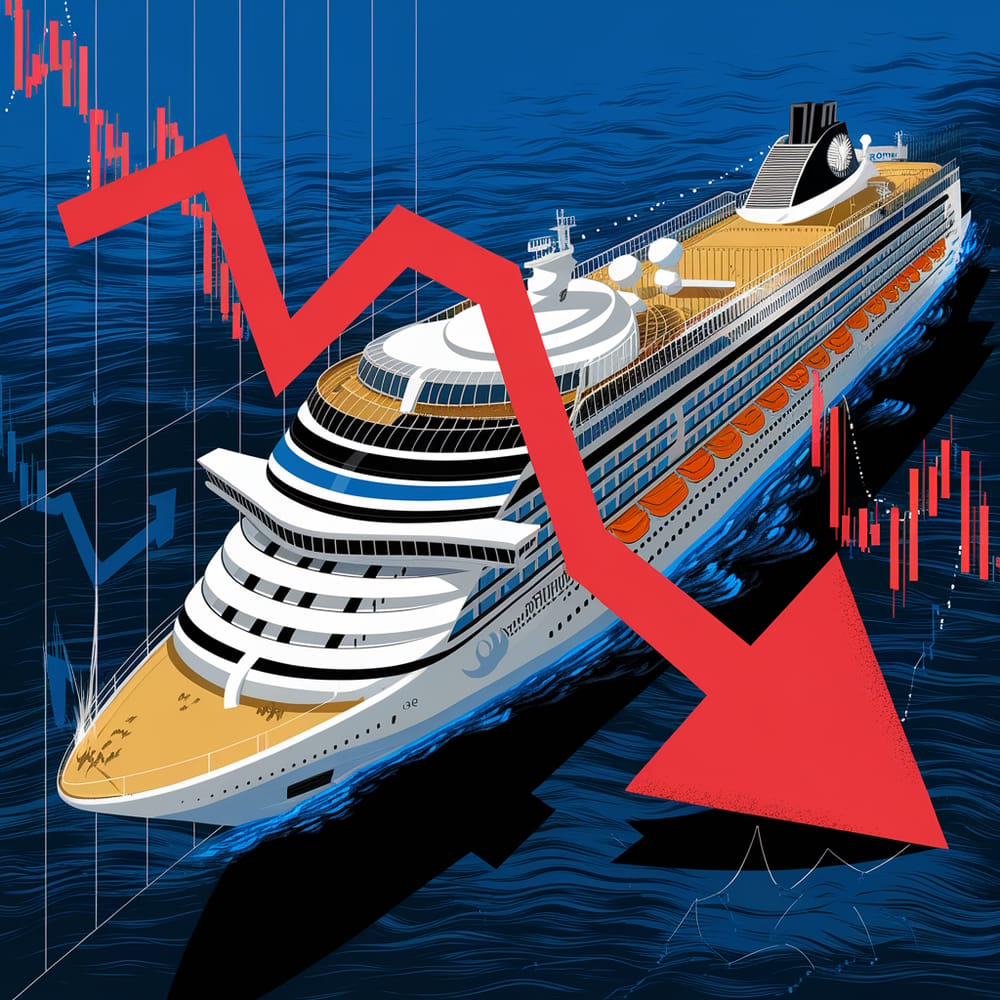
Carnival just put up the kind of quarter cruise investors have waited years for: record revenue, record yields, record customer deposits, and a profit that blew past Wall Street's forecast. And then the stock fell roughly 8%. If that sounds backwards, welcome to earnings season, where what a company already did matters less than what it tells you about tomorrow. Here is why a blowout report turned into a rough day for Carnival shareholders.
The Numbers Were Genuinely Strong
Carnival reported second-quarter revenue of $6.7 billion, an all-time high, alongside record net yields. Adjusted net income came in at $569 million, up more than 20% from a year ago, and adjusted earnings landed at $0.41 per share — comfortably ahead of the roughly $0.35 analysts expected. This was the company's twelfth straight quarter of record yields, a remarkable streak for a business that was fighting for survival just a few years ago.
Demand Is Still Booming
The booking picture stayed every bit as healthy as the headline profit. Carnival said customer deposits hit an all-time high of $9.0 billion, up more than $450 million from the prior record. The company is now about 93% booked for the remainder of 2026 at historically high prices, and demand for 2027 is already running ahead of last year. Management also leaned harder into shareholder returns, topping $450 million in stock buybacks during the quarter.
So Why Did the Stock Drop?
The catch was guidance. Carnival's outlook for the current quarter — adjusted earnings of about $1.35 a share — came in below the roughly $1.42 the Street was modeling. Full-year EBITDA guidance of about $7.11 billion at the midpoint also fell short of the $7.19 billion analysts wanted to see. When a stock has been priced for perfection, a guide that's merely good can read as a disappointment, and traders sold first and asked questions later.
Costs Are Creeping Back In
Underneath the records, margins told a more cautious story. Gross margin yields slipped 3.9% on higher fuel prices, and operating margin narrowed to 12.8% from 14.8% a year earlier. Carnival also flagged elevated logistics costs tied to ongoing Middle East disruptions, the same geopolitical backdrop that has rippled through energy markets all month. Record top-line growth is great, but investors want to see it fall through to the bottom line — and rising fuel and routing costs are nibbling at that.
What It Means for Investors
There is a glass-half-full and a glass-half-empty read here. The bull case: demand is durable, pricing power is real, the balance sheet keeps healing, and the company is buying back stock. The bear case: with the calendar nearly sold out for 2026, there is little room left to surprise to the upside this year, and cost pressures could squeeze margins further. Add a jittery, risk-off tape — the broader market spent the day digesting a global chip selloff — and it is not hard to see why even a record quarter struggled to find buyers.
This article is for informational purposes only and does not constitute investment advice. Always do your own research or consult a licensed financial professional before making investment decisions.
© Copyright 2024. All Rights Reserved.
© Copyright 2024. All Rights Reserved.