

Canada-U.S. Trade Talks: Implications for Investors
Monday, August 10, 2026
CANADA-U.S. TRADE TALKS: IMPLICATIONS FOR INVESTORS
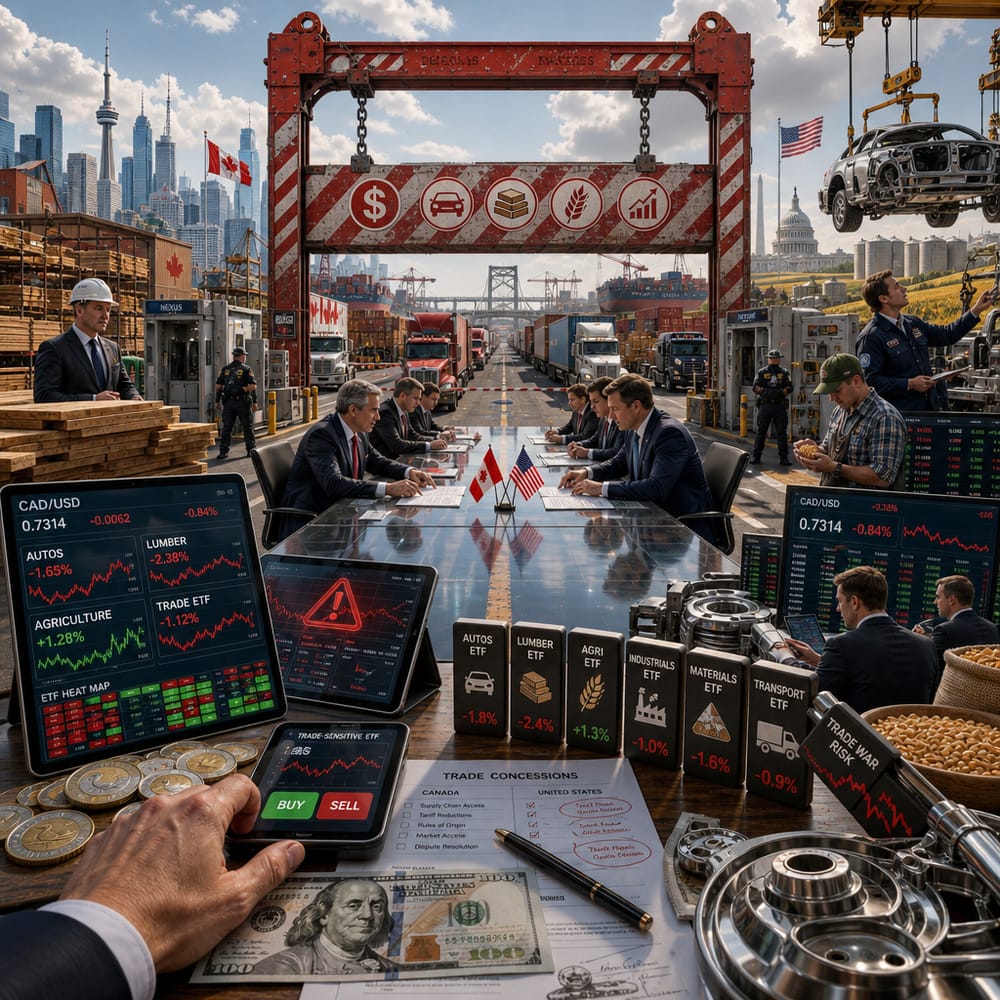
Grab your maple syrup and your hockey stick, folks, because the U.S. and Canada are back in the ring for another round of trade talks. And this time, it’s more than just a diplomatic dance—it's a potential game-changer for investors. The neighbors to the north are negotiating trade concessions to avoid new tariffs that could ripple through commodities, the auto industry, and the broader economy. The stakes are high, and retail investors better buckle up.
WHAT'S AT STAKE?
Let’s start with the lumberjacks—Canada’s timber industry. Lumber prices have been swinging like a jittery lumberjack's axe, and any new tariffs could make things go from bad to worse. U.S. homebuilders, already dealing with sky-high construction costs, will have to bite the bullet or pass the costs onto future homeowners. Lumber companies on both sides of the border are watching these talks like a hawk.
Then there's the auto sector. If you've ever driven a car that wasn’t built entirely in Detroit, it’s probably benefited from cross-border trade between the U.S. and Canada. From auto parts to finished vehicles, these trade flows are on the negotiation table. A smooth ride here means good news for U.S. automakers who rely on Canadian parts, while any roadblocks could dent profits faster than a pothole in February.
And let’s not forget agriculture. Canada is a key export destination for U.S. farmers, and any hiccups in trade could have American farmers scrambling like chickens after a fox gets in the henhouse.
BUCKLE UP FOR THE LOONIE RIDE
The Canadian dollar, affectionately known as the loonie (yes, it's a real thing), is also in the spotlight. If talks stall, expect the loonie to spiral and possibly depreciate against the U.S. dollar. This could make Canadian exports cheaper and more attractive globally, but it might also signal distress in the markets.
Cross-border trade flows are like the tides—when they’re strong, business is booming; when they’re weak, well, you might want to grab a life preserver. If you're holding onto trade-sensitive ETFs or stocks in sectors that straddle the border, keep an eye on that loonie and those trade flows. Trouble could mean turbulence for your portfolio.
TIMELINES AND TACTICS
So, when should you keep your eyes peeled for the next twist in this saga? Government schedules and negotiation windows are the tea leaves we’re reading. Talks are often loosely staged, so watch for announcements from Canadian trade officials or U.S. counterparts. Any missed deadline or delayed meeting could signal tension—and markets love to react to uncertainty.
But it's not just about deadlines and announcements. Political posturing, especially with elections always in the rearview or on the horizon, can throw a wrench into even the most straightforward trade talks. Investors should stay nimble and quick, ready to pivot as needed.
MARKET MADNESS
Financial markets have been pricing tariff risks into commodities, equities, and foreign exchange markets like a juggler timing his tosses. Lumber has already seen its share of volatility, and stocks in the auto sector might start reflecting that nervous energy soon. If you're into the fast-paced world of FX trading, the potential swings in the Canadian dollar could be your ticket to some adrenaline-pumping trades.
The current stock market rally, with its bullish undercurrents, seems to be humming along happily, but any hiccup in trade negotiations could have investors running for cover. Remember, market sentiment can shift as quickly as a cat on a hot tin roof.
SO, WHAT'S THE VERDICT?
For retail investors, the moral of the story is to stay informed and agile. The outcome of these talks could affect your portfolio directly, whether you're invested in commodities, the auto sector, agriculture, or more broadly in trade-sensitive financial instruments. Play it cool, keep an eye on the loonie, and don’t let the headlines throw you off your game.
In the end, whether these talks end in calm or chaos, the savvy investor will be the one who saw it coming. So grab your poutine and get ready for the show—this is one trade drama you won’t want to miss.
This article is for informational purposes only and is not investment advice. Always do your own research or consult a licensed financial professional before making investment decisions.
© Copyright 2024. All Rights Reserved.
© Copyright 2024. All Rights Reserved.