

Canada’s Tariffs: Implications for the Canadian Dollar and USD/CAD
Tuesday, August 25, 2026
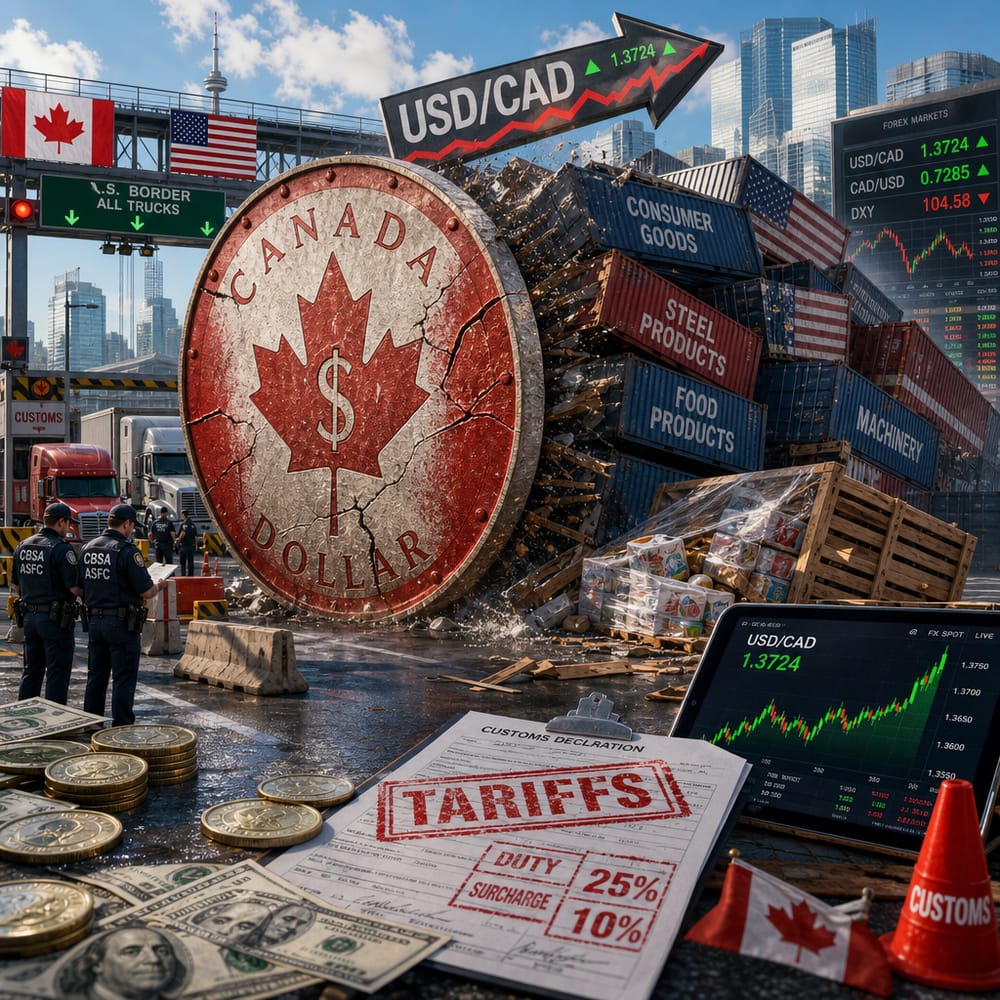
CANADA'S TARIFS: IMPLICATIONS FOR THE CANADIAN DOLLAR AND USD/CAD
Well, well, well, what do we have here? Just when you thought the trade drama between the U.S. and Canada was on a simmer, it’s back to a rolling boil. Canada has just announced it’s hitting the U.S. with $20 billion in retaliatory tariffs. For you currency market enthusiasts, it's time to sit up and take notice, because this move could shake up the USD/CAD currency pair like a snow globe at Christmastime.
Here's a crash course: tariffs are, in essence, taxes on imports. When two countries start throwing tariffs at each other like it’s a dodgeball match, it doesn’t just affect the goods being taxed. Nope, it goes deeper. Tariffs can also let loose a whirlwind in the currency markets, and here's how.
Tariffs can lead to alterations in trade balances. When Canadian maple syrup becomes pricier in the U.S. because of a tariff, maybe you start buying Vermont syrup instead. Over time, such changes in purchasing behavior can affect how much demand there is for each country's currency. More demand for Canadian goods would mean more demand for Canadian dollars, right? But when tariffs make things costlier, the demand can shift, impacting the currency exchange rates—sometimes with the grace of a ballerina and other times with the subtlety of a bull in a china shop.
Now, Canada’s $20 billion tariff punch is specifically aimed at sectors like dairy, seafood, and even those beloved hockey sticks. On the flip side, the U.S. has already given its own twist to Canadian steel and aluminum with hefty tariffs. These moves are more than just a diplomatic love tap; they can lead to real changes in economic dynamics.
So, how might this tariff tango affect the USD/CAD, you ask? Short-term, the exchange rate might reflect the immediate shock of these trade chess moves. Investors hate uncertainty almost as much as cats hate water, and Canadian tariffs create a bit of a guessing game. In such an environment, the Canadian dollar could weaken against the U.S. dollar if investors believe these tariffs will hurt Canada’s economic prospects more than the U.S.'s. However, if the market thinks the tariffs will significantly hurt U.S. exports, we might see the reverse.
Looking at the longer haul, these trade tensions can bake fresh complexity into the USD/CAD narrative. Persistent tariffs can affect everything from business forecasts to the cost of goods, eventually influencing monetary policy decisions. If these tariffs go from being a temporary rough patch to a permanent roadblock, the effects on currency could be more profound. Both countries might start looking at interest rate changes as a way to stabilize their economies, which in turn, could send the USD/CAD pair on a rollercoaster ride.
And let’s not forget the idea of retaliation escalation. If this trade spat tops the charts and goes platinum, more areas of trade could get caught in the crossfire, adding layers to the economic impact on both sides of the border.
But wait, what about the broader market vibes? Interesting things are happening elsewhere, too. Remember, U.S. Treasury yields are doing a little dance of their own, and the overall sentiment on Wall Street remains a song of optimism mixed with a cautionary beat.
For Canadian and U.S. businesses, the ripple effects of these tariffs could mean costlier imports, reduced profit margins, and a reevaluation of supply chains. Retail investors and market enthusiasts should keep a keen eye on how these tariffs progress, as they could further influence market sentiment and trading strategies.
In the ever-evolving playbook of global trade, tariffs are like the wild cards that can switch the game up at any time. The USD/CAD is just one currency duo caught in this crossfire. So, fasten your seatbelts, stay informed, and always have an eye on how these macroeconomic maneuvers might play out in the marketplace.
Canada’s latest tariff move isn’t just a headline; it’s a plot twist in the economic drama of international trade. What happens next? Well, as with any good series, you’ll have to stay tuned to find out. And remember, in the world of currency and trade, the only constant is change.
This article is for informational purposes only and is not investment advice. Always do your own research or consult a licensed financial professional before making investment decisions.
© Copyright 2024. All Rights Reserved.
© Copyright 2024. All Rights Reserved.