

Busan Handshake Hype Meets Hard Questions
Thursday, October 30, 2025
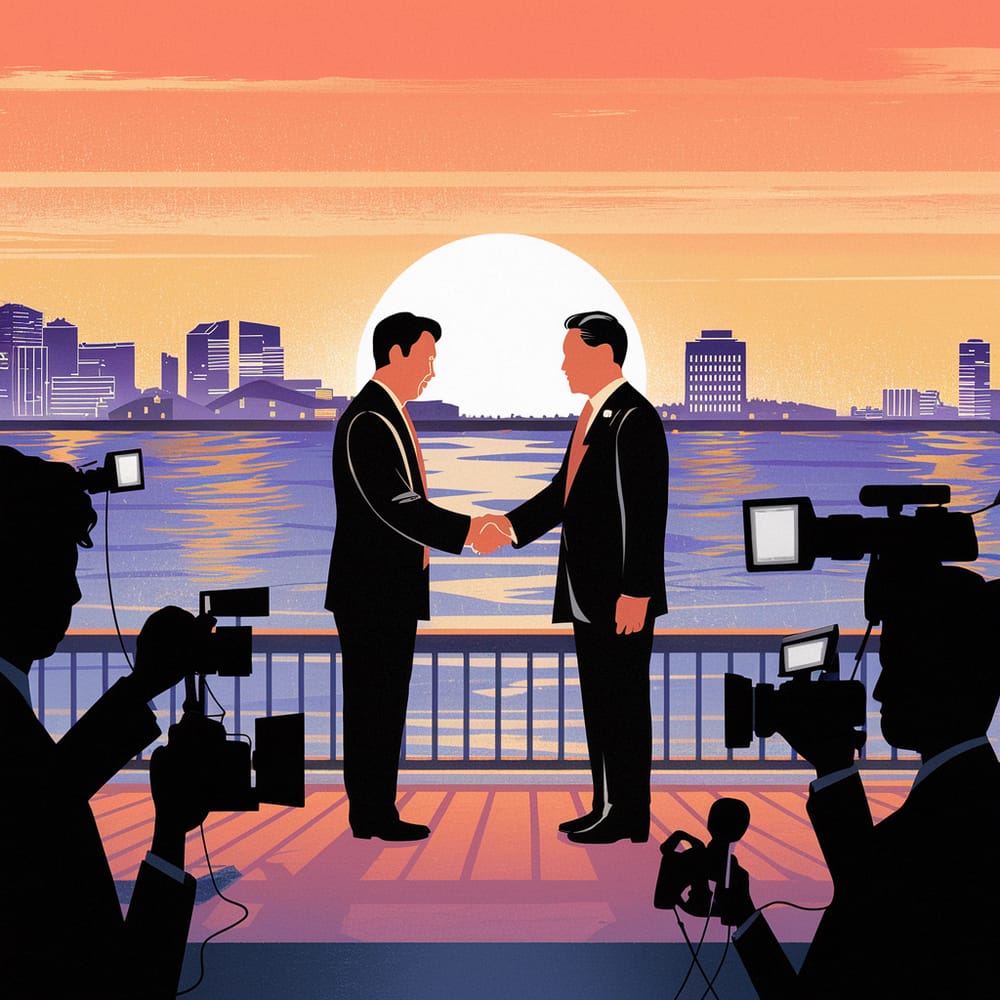
The Handshake That Shook the Internet
The moment Xi Jinping and Donald Trump clasped hands in South Korea, China’s internet went into overdrive. After years of frosty relations and fiery rhetoric, one handshake sent a jolt of optimism through social media. Hashtags exploded, comments poured in, and for a fleeting moment, it felt like the trade tensions that shadowed both nations might finally ease.
Many online saw the meeting as a reset — a chance to cool tempers and restart the dialogue. Some even dubbed it “the Busan Breakthrough,” a hopeful nod to a thaw in U.S.-China relations. But beneath the excitement, others warned that a handshake doesn’t rewrite policy — it just opens the door for the next round of negotiations.
Tariff Talk and the Business Buzz
While citizens celebrated online, boardrooms buzzed with cautious calculations. Executives on both sides of the Pacific started sketching out what a post-handshake world might look like. The wish list was clear: roll back tariffs to single digits and get trade moving again. Lower tariffs could spark capital flows, revive deals in commodities and tech, and boost both economies.
There were whispers that Washington might ease restrictions on Chinese investment, though details were vague. Trump offered a small olive branch, announcing plans to halve a fentanyl-related tariff. Still, overall trade duties remain steep — a reminder that the mountain ahead is far higher than one friendly meeting can flatten.
Business Sees a Window of Opportunity
Inside China, business leaders called the meeting a much-needed “pressure valve.” With growth slowing and investor confidence wobbling, any sign of cooperation helps. If the U.S. offers a steadier path — and if tariffs start to come down — dealmaking could quickly accelerate.
But most remain pragmatic. They’ve seen this movie before: hope, headlines, and then hard reality. Yet even cautious optimism counts for something. For entrepreneurs navigating uncertainty, the fact that the two biggest economies are talking again feels like a step in the right direction.
State Media: Careful Optimism, Not Celebration
The official tone mirrored the public’s cautious enthusiasm. State media didn’t roll out the fireworks but framed the summit as a constructive conversation. Reports highlighted cooperation, mutual benefit, and “shared development goals.” At the same time, editorials reminded readers that genuine progress depends on substance, not symbolism.
Commentators were quick to underline a simple truth: swagger and slogans don’t build factories. Tariffs hurt both sides. And if political theater overshadows practical trade steps, the global economy risks staying stuck in neutral.
What Happens After the Photo Op?
Markets did what markets do — they reacted fast. Stocks ticked up, commodity prices shifted, and traders started pricing in the possibility of reduced tensions. But savvy investors know the rhythm: first the handshake, then the waiting, then the second-guessing. Optimism can lift the market for a week, but without concrete policy changes, the bounce fades fast.
The best-case scenario now? A concrete timeline for tariff reductions, clear guidelines for Chinese investment in the U.S., and ongoing meetings to build trust. The worst case? A return to tough talk and policy whiplash that leaves global businesses scrambling again.
For now, China is cautiously optimistic. The Busan handshake didn’t transform the world, but it did shift the tone — and in diplomacy, tone can be the first small spark that lights a much bigger fire.
© Copyright 2024. All Rights Reserved.
© Copyright 2024. All Rights Reserved.