

Broad USD Weakness Against Majors and Emerging Currencies
Wednesday, August 19, 2026
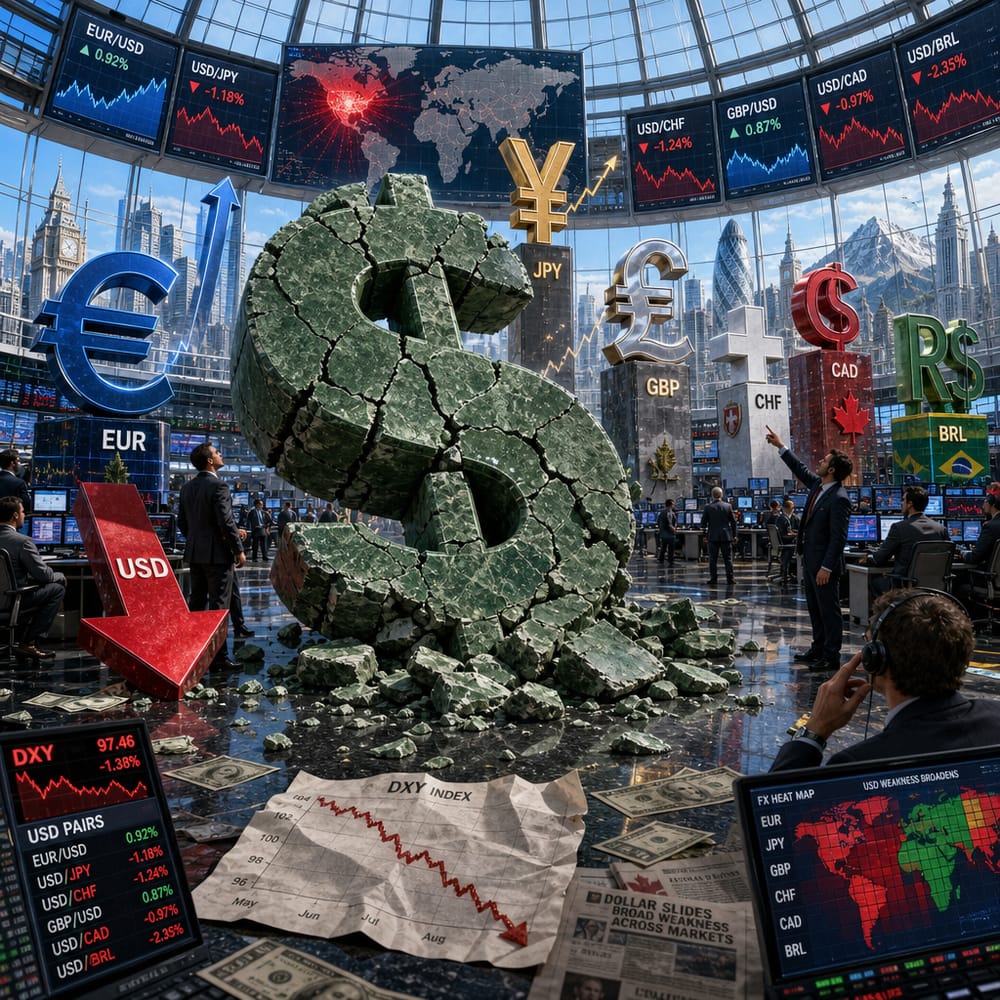
THE DOLLAR’S SLIDE: WHAT’S WEAKENING THE GREENBACK AND WHY IT MATTERS
If the U.S. dollar were a character in a soap opera right now, it would be the one going through a very public, very dramatic identity crisis. Yes, the once-mighty greenback is showing weakness against major currencies like the Swiss Franc, Euro, Japanese Yen, and British Pound, not to mention emerging contenders like the Brazilian Real. But before you start lining up at your local currency exchange with wads of U.S. cash, let's dig into what’s driving this unexpected downturn and why it could matter to your wallet.
WHAT’S GOING ON WITH THE DOLLAR?
Picture this: the dollar swaggered onto the global stage with the confidence of a rockstar on a world tour. But now, it's more like a washed-up singer trying to reclaim its former glory. So, what's behind this fall from grace?
First up, we’ve got the Federal Reserve, that all-powerful DJ spinning the monetary policy beats. Recent moves suggest the Fed might pull back on its aggressive interest rate hikes as inflation jitters start to ease. Higher rates typically make currencies more attractive because they offer better returns for investors. With the Fed cooling its jets, the dollar loses a bit of that shiny, high-yield allure.
Then there’s the headline-grabbing Treasury announcements that could be adding to the mix. The Treasury Department doubled down on its debt buyback operations, aiming to calm the stormy bond markets. As yields tumble following these announcements, the dollar tends to feel the pinch, losing some of its competitive edge against other currencies.
TRADE WINDS AND INVESTMENT FLOWS
This isn’t just about making your summer vacation to Europe marginally less expensive. A weaker dollar has far-reaching implications, especially when it comes to global trade and investment.
For one, U.S. exports can become more appealing to foreign buyers when the dollar's weaker. Why? Because they get more bang for their buck. This could potentially boost American manufacturing and agriculture, which have been craving a comeback tour of their own.
But hold your applause. A softer dollar can also make imports pricier for U.S. consumers. So, if you're stoked about that new imported gadget or that bottle of French wine, keep an eye on those price tags.
On the investment side, a dollar that's losing its swagger can drive more investors to seek refuge in other currencies or alternative assets, such as gold. While this might not sound like a blockbuster plot twist, it could subtly shift the balance of economic power.
IS THIS A TREND OR A TEMPORARY SLUMP?
Now, let's tackle the million-dollar question: Is this the start of a longer-term trend, or just a temporary set of missteps?
Well, predicting currency trends is like trying to predict next season’s hottest TikTok dance. It’s a wild ride with plenty of twists. However, some analysts suggest that if the Fed continues to ease off the rate-hiking pedal, we might see more sustained weakness in the dollar.
Let’s not forget geopolitical dramas, like those between the U.S. and other countries, which can influence investor sentiment and currency valuations. Case in point: the recent tensions in the Gulf region and other global hotspots don’t exactly help the dollar’s case for stability.
SO, WHAT SHOULD RETAIL INVESTORS DO?
For the everyday investor, the dollar’s drama might feel like background noise amid your regular financial news playlist. But it’s a good reminder to keep a versatile portfolio – one that doesn’t put all its eggs in the dollar basket. Consider diversifying with some international exposure or assets that can act as a buffer when currency valuations swing.
In short, keep calm and diversify on. The financial world is full of moving parts, and while the dollar’s recent wobble might be grabbing the spotlight, savvy investors know it's always wise to look beyond the headlines.
So, as the dollar works through its latest storyline, grab the popcorn, keep an eye on the markets, and remember: in finance, as in soap operas, drama is just part of the game.
This article is for informational purposes only and is not investment advice. Always do your own research or consult a licensed financial professional before making investment decisions.
© Copyright 2024. All Rights Reserved.
© Copyright 2024. All Rights Reserved.