

Broad Analyst Sentiment Shows Upgrades Lagging as Downgrades Accelerate in November
Friday, November 13, 2026
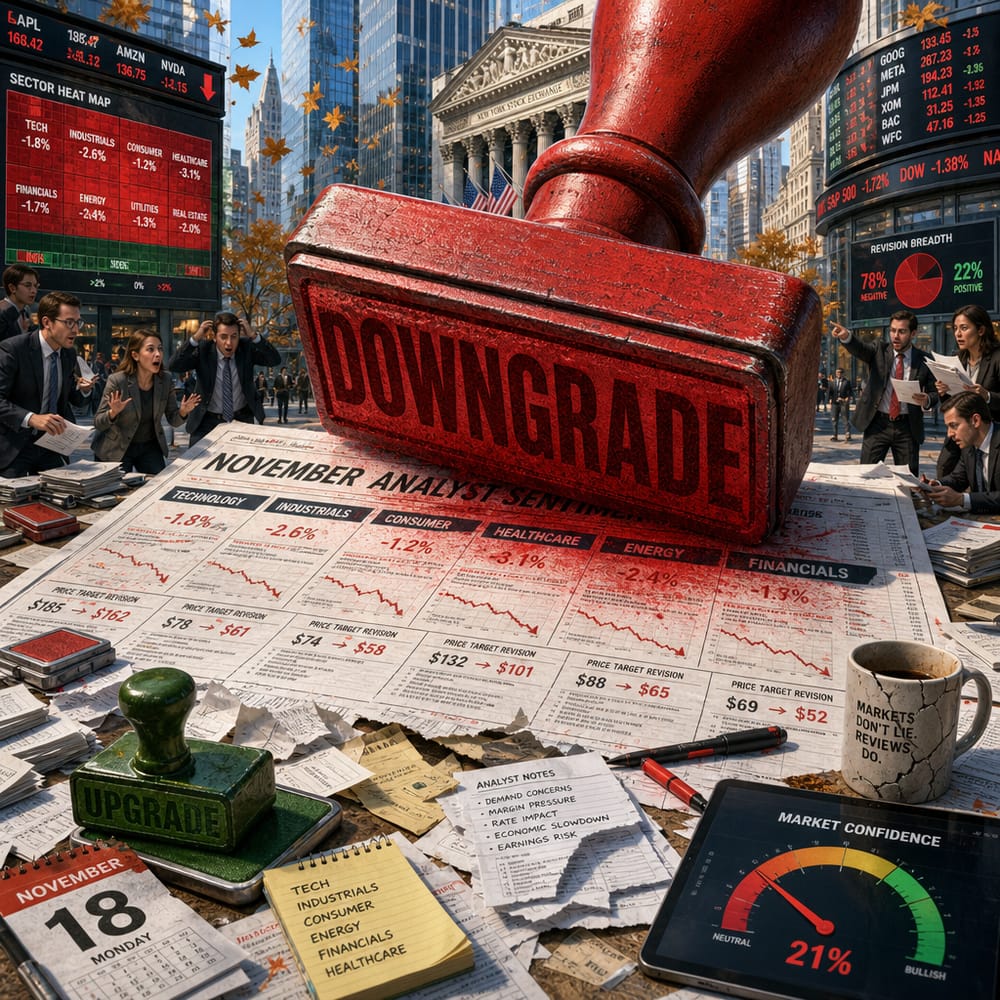
ANALYST UPGRADES TAKE A BACKSEAT AS MARKET DOWNTURNS DOMINATE NOVEMBER
If you thought analysts were the unyielding cheerleaders of the stock market, November is here to prove you wrong. Like a bitter wind sweeping across Wall Street, downgrades are outpacing upgrades and leaving investors with a chill in their bones. So, what's driving this pessimistic pivot, and should we all be breaking into a sweat?
The answer, as always, is more complicated than one might hope. This month's analyst sentiment has been a bit like that awkward first date: all smiles and nice dinners one moment, but then awkward silence and split checks the next. Analysts seem to be sending mixed messages, but if you look carefully, there’s a pattern emerging: a collectively raised eyebrow and a lot of cautious side-eyeing at the market.
DOWNTURN DRIVERS
Why the sudden surge in downgrades? Well, blame it on the usual suspects: economic uncertainties and sector-specific issues that have investors scratching their heads. Inflation, while cooling somewhat, still refuses to take a backseat, causing many to wonder if the Fed might have more rate hikes up its sleeve. Meanwhile, global supply chain disruptions and geopolitical tensions are acting like that cousin no one likes but keeps showing up to Thanksgiving uninvited.
And speaking of unwelcome guests, let's not forget about Nvidia. Once the darling of Wall Street, the chipmaker has recently become the poster child for scandal-driven volatility. Its CEO Jensen Huang's abrupt resignation amid a spy scandal has sent Nvidia's stock into a tailspin, dragging the tech sector with it. The company has lost a shocking $1.7 trillion in market value, marking its longest losing streak since 2012. With tech being such a significant slice of the market pie, it's no wonder analysts are feeling jittery.
SECTORS FEELING THE HEAT
Tech isn’t the only sector getting hit with a downgrade stick. Financials are also feeling queasy as AI risks emerge as the biggest threat to the financial system, according to a recent Fed survey. Imagine trying to navigate a ship through waters where AI pirates lurk, ready to hijack your stability at the drop of a hat. Not a comforting thought, right?
Meanwhile, sectors reliant on stable communication and transportation infrastructure are on edge, thanks to recent FAA hiccups causing nationwide flight delays. These issues, while seemingly isolated, highlight vulnerabilities that could have ripple effects on industries reliant on timely delivery and logistics.
IMPLICATIONS FOR INVESTORS
So, what does this mean for you, the retail investor? Well, it’s time to dust off that portfolio and give it the once-over. Analysts’ downgrades are more than just academic exercises—they can dictate the flow of investor dollars, impacting stock prices and sector stability.
With downgrades on the rise, investors might reconsider their current holdings, especially in tech and financials, and perhaps look to diversify into sectors less prone to the current market jitters. Utilities and consumer staples might not have the glamour of tech stocks, but they're the dependable sort, the kind you’d introduce to your mom.
But remember, downgrades don’t necessarily spell doom. Sometimes, they’re just a wake-up call to reassess and reallocate. As with any market movement, staying informed and flexible is key. Keep your eyes peeled for opportunities, because in the stock market jungle, the early bird—or the well-informed bird—catches the worm.
THE TAKEAWAY
As we roll deeper into November, and with the holiday season approaching, it's crucial to keep a pulse on the analyst sentiment. A few downgrades aren’t cause to run for the hills, but they do signal a need for caution. Like any good detective, question everything, seek out the root causes, and adjust your strategies accordingly. After all, in the world of investing, it's the informed and adaptable who prevail. So grab your trench coat, turn up your collar, and get sleuthing—there's a market mystery waiting to be solved.
This article is for informational purposes only and is not investment advice. Always do your own research or consult a licensed financial professional before making investment decisions.
© Copyright 2024. All Rights Reserved.
© Copyright 2024. All Rights Reserved.