

Brent Collapse Eases Bond Pressures: Stocks Snap Back on Oil-Driven Relief
Thursday, August 27, 2026
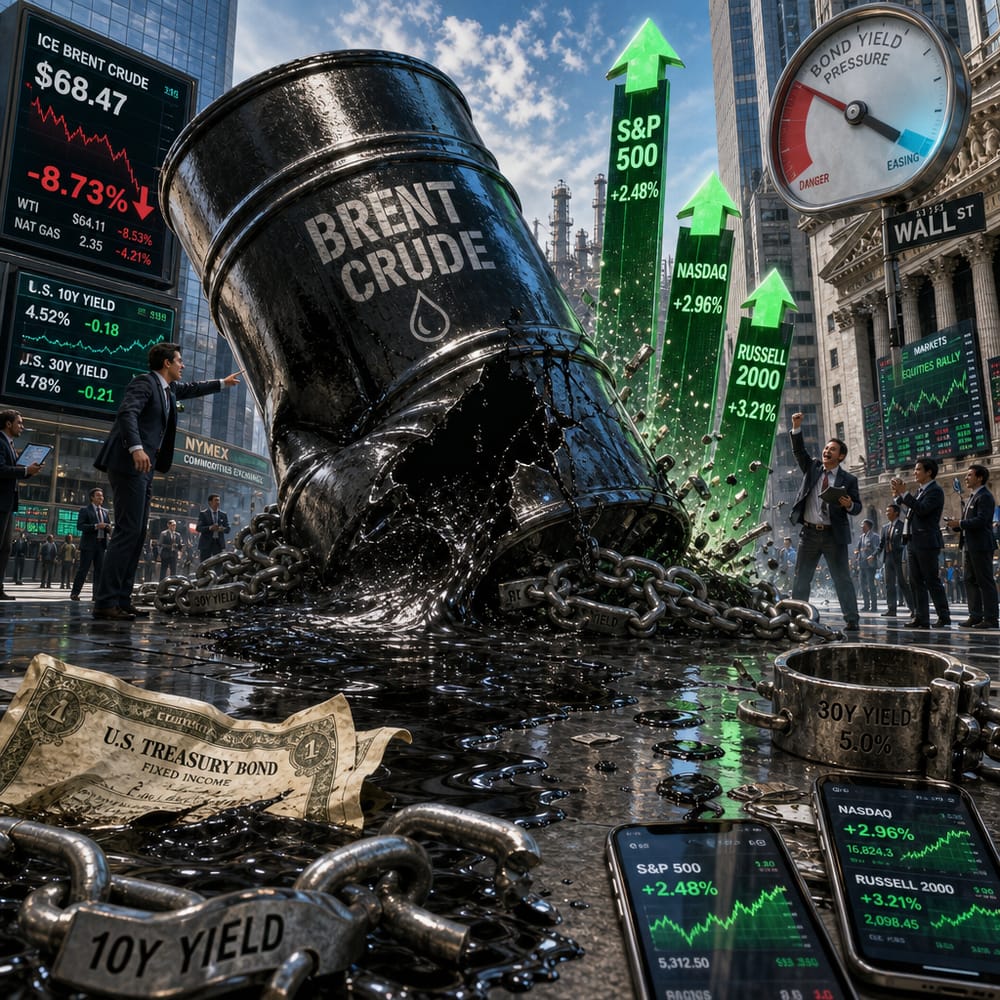
A dramatic tumble in Brent crude prices is causing quite the ripple effect in the financial world. Imagine the oil market as the troublemaker in a high school drama; its antics are always causing chaos elsewhere. On Tuesday, Brent crude decided to drop 3.6%, giving the bond market some much-needed breathing room and sending a surge of energy into the stock market. Think of it as the cool breeze of relief after a hot and stuffy day, where everyone’s sweating the small stuff.
So, what’s the big deal about a drop in oil prices? For starters, when oil prices fall, it’s like someone turning down the heat in a pressure cooker. Bond yields—those interest rates on government loans—are often sensitive to inflation concerns. Lower oil prices can ease these worries because energy is a big chunk of the inflation pie. Less inflation expectation? Lower bond yields. It’s as if someone found the inflation cheat sheet and erased a few answers.
With bond yields taking a chill pill, equities, or stocks for those who don’t speak Wall Street, got a nice lift. The S&P 500, Nasdaq, and Russell 2000 all enjoyed gains. It’s like the markets decided to throw themselves a little “oil price relief” party.
So, how do these sectors and stocks benefit when the oil seesaw tips downward? Well, lower oil prices can be a blessing for sectors like transportation and consumer goods. Airlines, for instance, might dance a little jig since fuel is one of their biggest expenses. Lower oil costs mean they can fly higher with better profit margins, and maybe—just maybe—keep your ticket prices from going through the roof.
Then there’s the consumer sector. When people spend less at the gas pump, they might buy that extra latte or finally get that pair of shoes they’ve been eyeing. It’s all about discretionary spending, and cheaper oil helps put a few extra bucks in pockets.
But let’s not forget our small-cap stocks, often represented by the Russell 2000. These smaller companies sometimes suffer under the weight of high oil prices because they lack the deep pockets of larger firms. A drop in oil cost is like a shot of adrenaline, boosting their potential for growth and profitability.
Now, with the Fed’s annual symposium in Jackson Hole just around the corner, everyone’s eagerly anticipating Fed Chair Kevin Warsh’s next move. Warsh, known for his cryptic style, might have something to say about these market dynamics. It’s like waiting for the headmaster to make an announcement during assembly—you know it’s coming, but what will it be?
Adding a twist to our tale is the recent news from chipmakers like Nvidia, which have been hogging the spotlight due to their own stellar performances. With Nvidia’s profits climbing thanks to the AI boom, the tech-heavy Nasdaq got an extra shove upwards, complementing the push from relieved oil markets. It’s a tech-meets-oil moment, like your favorite buddy cop movie where opposites team up to save the day.
And let’s not forget the Fed’s own experiments with a hands-off approach, hoping the economy can self-correct without constant intervention. It’s like teaching a kid to ride a bike without training wheels—anxiety-inducing but potentially rewarding.
In summary, the seesaw of oil prices and its far-reaching impact on bonds and stocks is a vivid example of how interconnected our financial world is. It’s not just about oil rigs and barrels; it’s about how these changes trickle down to influence what’s in your investment portfolio, perhaps making your 401(k) look a little healthier.
So next time you fill up your gas tank or check your stock portfolio, remember that a drop in oil prices is more than just numbers on a screen. It’s a complex dance involving bonds, stocks, and how we all interact in this global financial theater. Keep your eyes peeled and your investments nimble—because in the world of finance, today’s drama could be tomorrow’s plot twist.
This article is for informational purposes only and is not investment advice. Always do your own research or consult a licensed financial professional before making investment decisions.
© Copyright 2024. All Rights Reserved.
© Copyright 2024. All Rights Reserved.