

Boston Fed's Susan Collins Signals Imminent Rate Hike if Inflation Doesn't Progress
Tuesday, August 25, 2026
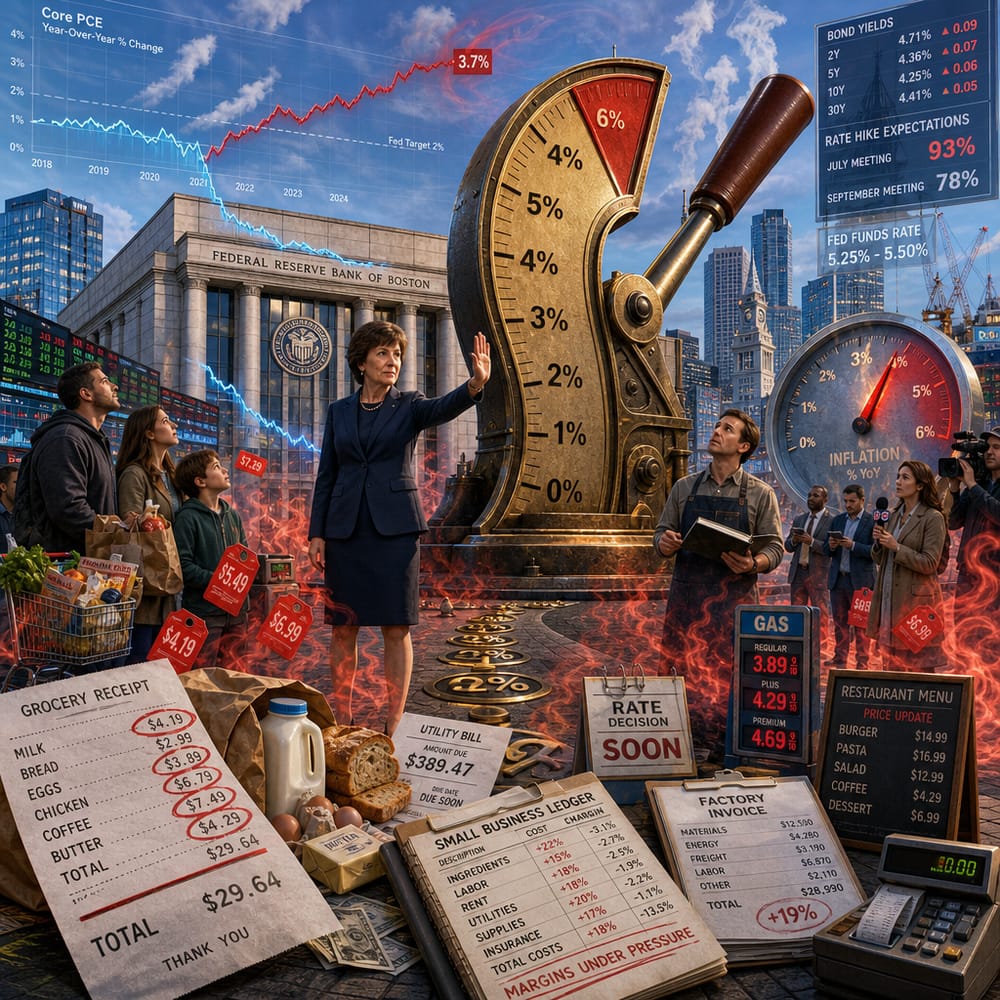
SUSAN COLLINS SIGNALS IMMINENT RATE HIKE IF INFLATION DOESN'T PROGRESS
Hold onto your hats and hide your wallets, folks! The Federal Reserve might just be gearing up to show inflation the door with a potential interest rate hike. Susan Collins, President of the Boston Fed, recently made it clear: if inflation doesn’t hop on a downward trend pronto, higher rates are coming to a theater near you. Collins described the current state of high prices as a 'pervasive' concern, echoing what everyone at your local grocery store has been mumbling under their breath these days.
Why does this matter, you ask? Because changing interest rates is like pulling the strings on a financial marionette show, with the economy as the main performer. Interest rate hikes are the Fed’s not-so-secret weapon to poke inflation in the eye, but they also mean you might pay more for that shiny new car loan or your mortgage. And let’s not forget, businesses feel the pinch too, facing higher borrowing costs and possibly passing on those costs to, well, you guessed it, consumers like you and me.
THE BIGGER PICTURE
So, what would a rate hike mean for the U.S. economy? For starters, more expensive borrowing could slow down economic growth. Think of it as hitting the brakes on a bike that's cruising downhill. If the brakes are too abrupt, the whole ride gets bumpy. Businesses may scale back on investment, hiring might slow, and consumer spending could take a hit—all while we try to keep our balance.
On the flip side, higher rates might cool off prices across the board. That coveted balance (or “Goldilocks” scenario) where inflation is 'just right' is exactly what the Fed aims for, but it's a tricky tightrope to walk.
But don't freak out just yet. The Fed isn’t about to slam down on the rate hike button with the fury of a toddler denied candy. They'll be scrutinizing all sorts of economic tea leaves first. Top of the list? The Personal Consumption Expenditures (PCE) data—basically a fancy term for measuring how much we're spending and what we're getting for it. They'll also keep an eye on employment numbers and GDP growth, ensuring they don’t spook the market like a Halloween prank gone wrong.
THE BUSINESS AND CONSUMER REACTION
So how might businesses and consumers react if rates go up? Businesses, especially those living on borrowed money, might tighten their purse strings. Higher rates can mean higher costs for everything from expanding operations to keeping the lights on. This could translate to fewer jobs being created or even layoffs in sectors that are sensitive to financing costs.
For consumers, the ripple effects are clear as day. Higher interest rates mean higher payments for things like mortgages and car loans. It might make that dream of a white picket fence seem just a bit further out of reach. And let’s not forget about credit cards—the debt trap that could get a little stickier with rising rates.
But here’s the kicker: the Fed’s not operating in a vacuum. Even as they contemplate rate hikes, geopolitical tensions, trade wars (hello, Canada’s tariffs, we see you), and market volatility are all the extra plot twists the Fed juggles like a dizzying Netflix drama.
THE RATE HIKE PLAYBOOK
So, what’s on the Fed’s bingo card before they make a move? They’re laser-focused on seeing sustained drops in inflation, strong job numbers, and steady growth. If any of these signals start flashing red, that hike could be a no-go.
In this economic chess game, patience is key. Collins and her team won’t rush their next move, lest they topple the board. So, while the possibility of a rate hike looms, it’s not a foregone conclusion. The Fed will continue to weigh all options carefully, trying to strike a balance between taming inflation and not derailing the economic recovery train.
Whether you’re hunkering down for the long haul or considering shifting your financial strategy, keeping an eye on the Fed's next move is as vital as ever. As always, stay savvy, stay informed, and maybe think twice before those impulse purchases. After all, in the world of finance, change is the only constant.
This article is for informational purposes only and is not investment advice. Always do your own research or consult a licensed financial professional before making investment decisions.
© Copyright 2024. All Rights Reserved.
© Copyright 2024. All Rights Reserved.