

Boston Fed's Collins Signals Rate Hikes
Friday, August 28, 2026
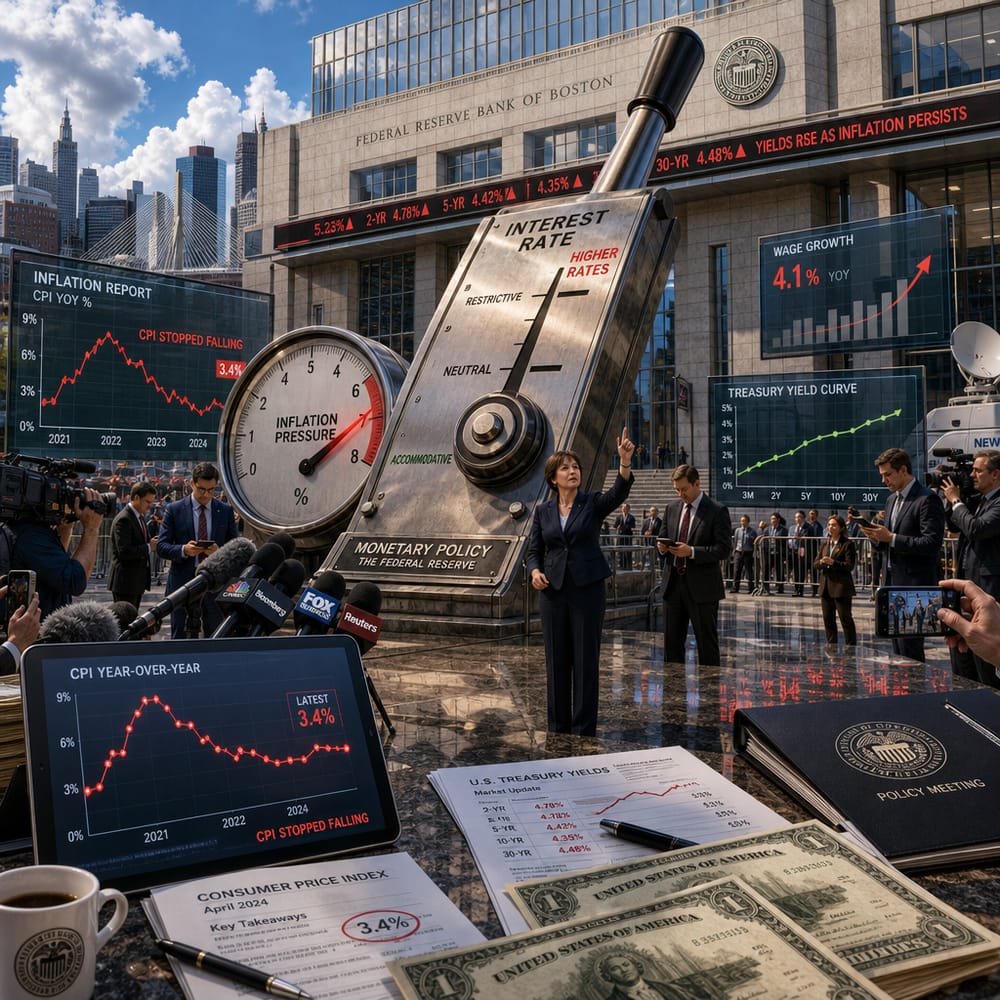
BOSTON FED'S COLLINS SIGNALS RATE HIKES: A PERMISSION SLIP FOR THE MONEY HAWKS?
When the folks at the Federal Reserve start talking about interest rate hikes, it isn’t just the coffee at Wall Street breakfasts that gets a jolt. So when Boston Fed President Susan Collins hints at another rate hike, it's like throwing a bone to the financial hawks and sending a shiver down the spine of the market doves. Here's what you need to know about your next potential rate hike, and whether Susan Collins is just the tip of the hawkish iceberg.
If you felt like you needed a translation during Kevin Warsh's July press conferences, you weren't alone. Fortunately, his speech at Jackson Hole was as crystal clear as a newly buffed window. Warsh's message on inflation? It’s sticking around longer than that last guest at your party. He's set on wringing it out, and that’s Fed-speak for interest rate hikes. Warsh isn't flying solo on this mission; Collins is echoing his sentiments. They both seem ready to co-pilot the aircraft of monetary policy towards higher altitudes.
But what does that mean for you, the retail investor with a wallet that's already feeling the squeeze? Well, if rates go up, borrowing becomes more expensive. That new car loan or mortgage could cost you more in interest payments. For businesses, higher costs of borrowing might mean tighter belts and potentially slower expansions. Companies that need a steady flow of credit—think small businesses—might find themselves in a pinch.
Interest rates are the Fed's tool of choice to keep the economy balanced. Raise them, and you cool down spending and borrowing, which theoretically should help bring inflation down. The downside? It can also cool down economic growth. The tricky part is making sure they don't throw the baby out with the bathwater.
Collins' comments suggest she's in agreement with Warsh that the current inflation outlook needs more than a gentle nudge; it needs a firm shove on the brakes. And when two Fed bigwigs align, it's like a green light for potential action. The implication here is that we might be standing on the precipice of more rate hikes sooner rather than later.
What’s more, Collins isn’t just echoing Warsh because it sounds nice on paper; there seems to be an emerging consensus among Fed officials that high inflation is public enemy number one. Sure, the latest PCE (Personal Consumption Expenditures) and CPI (Consumer Price Index) readings may have been better than expected, but in Fed land, "better than expected" doesn't cut it if the numbers are still above the target.
Now, let’s talk market reactions. The S&P 500 hasn't gone off the rails yet, which could mean investors are cautiously optimistic that any policy tightening won't be dramatic enough to derail the current economic growth. However, it’s a delicate balance—a teeter-totter of epic proportions. Throw the markets too far one way, and it risks massive selloffs or asset bubbles bursting.
For sector-specific impacts, keep an eye on interest-sensitive assets. Bonds, for instance, are like the nervous little brother in the family of financial instruments—they’re especially sensitive to interest rate changes. When rates go up, bond prices typically go down.
And then there's your everyday consumer. If you’ve been putting off buying a house or car, it might be time to lock in those rates before they edge higher. But hey, if you've already secured a sweet fixed-rate deal, sit back and enjoy watching your variable-rate friends sweat it out.
In conclusion, Collins' comments shouldn't be taken lightly. They're a significant nod to the potential reality of rate hikes coming soon. And while there’s a growing consensus among Fed officials, investors should brace for impact but not panic. As always, in the world of finance, the only certainty is uncertainty. Keep your eyes on the inflation data and your ears open for any more cryptic clues from the Fed. For now, it might be wise to have a plan B for your finances if those interest rates decide to take off on a jet plane.
This article is for informational purposes only and is not investment advice. Always do your own research or consult a licensed financial professional before making investment decisions.
© Copyright 2024. All Rights Reserved.
© Copyright 2024. All Rights Reserved.