

Boston Fed’s Collins Cites Persistent Inflation and Geopolitical Risk as Rationale for Another Rate Hike
Friday, September 25, 2026
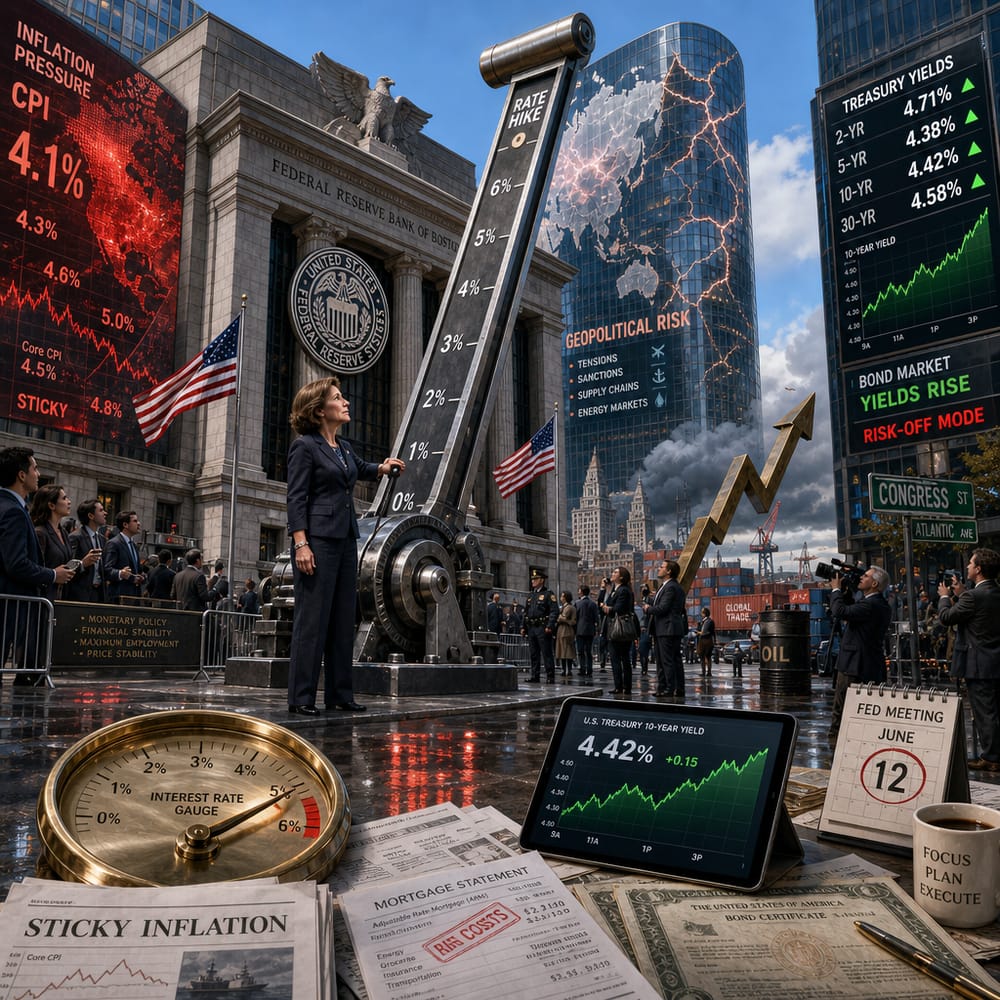
BOSTON FED’S COLLINS CITES PERSISTENT INFLATION AND GEOPOLITICAL RISK AS RATIONALE FOR ANOTHER RATE HIKE
If the economy were a soap opera, inflation and geopolitical tensions would be the scheming villains, always lurking in the background, plotting the next dramatic twist. Boston Fed President Susan Collins has definitely been tuning in, citing these two troublemakers as her reason for supporting another rate hike. Buckle up, because this monetary policy rollercoaster isn’t showing signs of slowing.
Let’s break it down like a Fed official at an economics party. Collins is essentially saying, “Hey, inflation is still hanging around like the last guest at a party who just won’t leave, and those geopolitical tensions? Well, they're the unwelcome news headlines causing everyone headaches.” So, what’s the Fed’s response? Another rate hike. Think of it as their way of turning off the lights, hoping inflation takes the hint and finally calls it a night.
For the average investor, understanding why the Fed plays this rate hike game matters. It’s like getting a peek at the secret recipe for your favorite dish – it helps you anticipate what’s coming and plan accordingly. Collins isn’t just raising rates for fun; she's aiming to wrestle inflation back under control. But with rate hikes as with wrestling, there are always consequences.
So, what’s the risk of the Fed continuing its hike-a-thon? Picture the economy as a delicate house of cards. Keep stacking rate hikes, and the structure might start to wobble. Higher rates can dull economic growth by making borrowing more expensive, be it for a new car, a home, or that next big business investment. Consumers may tighten their belts, businesses might slow their roll, and suddenly, growth is looking more sluggish than a Sunday driver in the fast lane.
Then there’s the geopolitical circus. It’s a tangled web that includes everything from Middle Eastern tensions to global trade quarrels. The latest? Iran offering to reopen the Strait of Hormuz, a critical oil chokepoint, if certain U.S. conditions are met. Moves like this add uncertainty, and markets despise uncertainty almost as much as a cat hates water. These tensions ripple through the economy, influencing oil prices, trade flows, and consequently, the Fed’s calculus on rate hikes.
But wait, there’s more! The Fed must also ponder its influence on the global stage. When U.S. rates rise, the dollar tends to strengthen. Good news if you’re vacationing abroad – your dollars go further. Bad news if you’re a U.S. company relying heavily on exports, as a strong dollar makes American goods pricier overseas.
Investors should keep an eye on how these rate hikes impact various sectors. Tech companies, for instance, often rely on borrowing to fuel their rapid growth. Higher rates could cramp their style. Meanwhile, financial firms might welcome rate hikes, as they can charge more for loans. It’s a mixed bag, and finding the right investment strategy is like trying to solve a complicated puzzle, only the pieces keep changing shape.
For the Fed, overseeing interest rates feels a bit like steering a massive cruise ship. It’s about making small, calculated adjustments to navigate through inflationary icebergs and geopolitical storms without capsizing the economic vessel.
So, if you’re watching this economic saga unfold, remember: inflation and geopolitical tensions are the plot points fueling the Fed’s latest moves. As Susan Collins and her Fed colleagues tap dance on this monetary tightrope, they’ll need to balance the risks of further rate hikes with the need to keep inflation and uncertainty in check. In the meantime, savvy investors should stay nimble, ready to adjust their strategies as the Fed’s narrative continues to evolve.
In this riveting episode of “As the Economy Turns,” keep your popcorn handy. Rate hikes, inflation, and geopolitical drama make for quite the show, and the next act promises to be just as unpredictable. Stay tuned.
This article is for informational purposes only and is not investment advice. Always do your own research or consult a licensed financial professional before making investment decisions.
© Copyright 2024. All Rights Reserved.
© Copyright 2024. All Rights Reserved.