

Bond Yields Surge—Small Caps Tumble as Risk Sentiment Frays
Wednesday, September 30, 2026
Bond Yields Surge—Small Caps Tumble as Risk Sentiment Frays
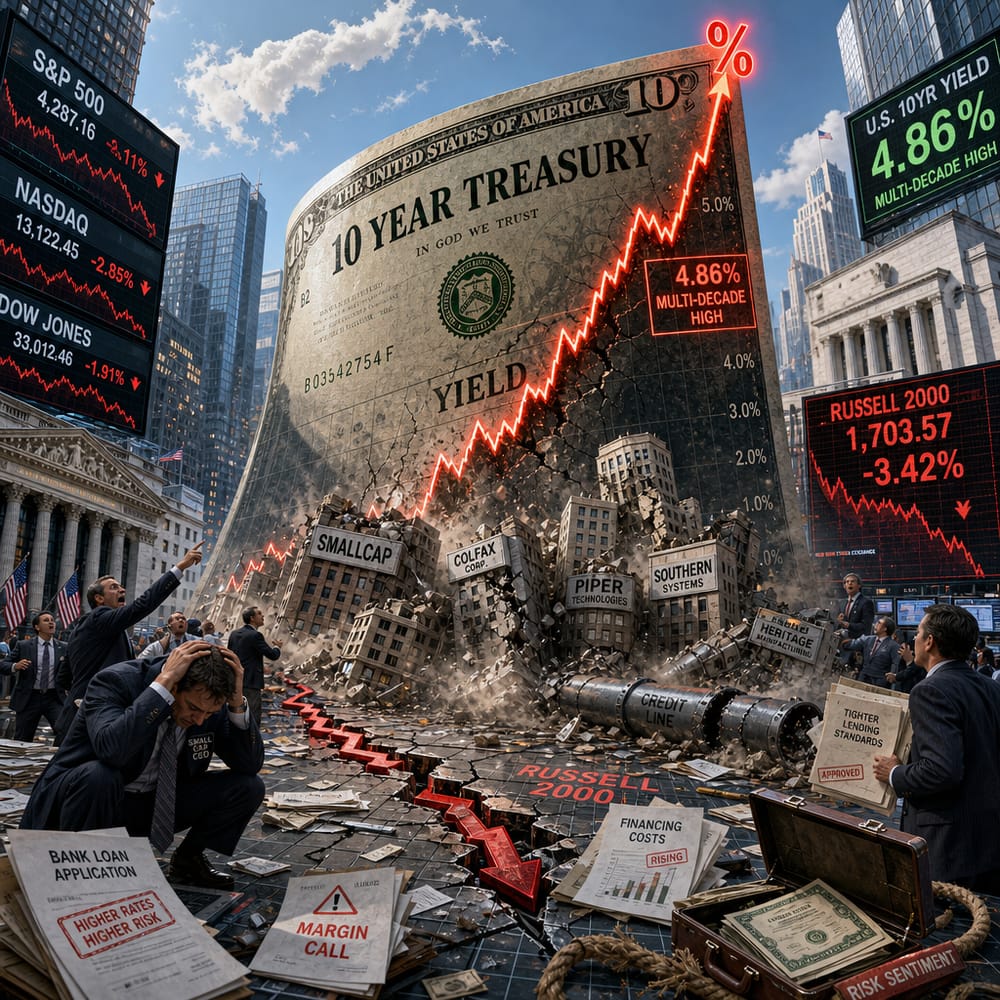
When the U.S. 10-year Treasury yield starts strutting around like it owns the place, it's not just the bond geeks that notice—it's the entire market. Recently, those yields have rocketed to highs we haven't seen since the '90s, and they’re shaking things up more than a rock band in a library.
You might think, "Okay, bond yields are up—so what?" Well, higher yields mean higher borrowing costs for everyone, from big businesses to regular folks with mortgages. But it's the small-cap stocks—the Davids to the large caps' Goliaths—that are finding themselves squarely in the path of this financial tempest. Let's break it down.
RISING YIELDS, RISING STAKES
When Treasury yields climb, it signals that investors are demanding higher returns for their money. It becomes more enticing to park cash in safe, government-backed securities than to gamble on stocks that carry risk. For small-cap companies—which make up the Russell 2000 index and are often more financially fragile than their larger peers—this is like trying to run a marathon with ankle weights.
These small companies typically rely on borrowing to fund growth. Higher yields translate to higher interest rates, which means pricier loans. Picture that growth plan you had for your startup. Now imagine it with a side of increased debt payments. Not so appetizing, right?
And it’s not just about borrowing costs. Elevated yields are causing a broader market rotation. Investors are shifting their portfolios, dumping riskier small-cap stocks in favor of bigger, more stable companies that can better weather economic uncertainties. It’s like moving from a rickety sailboat to a sturdy cruise ship as the storm clouds gather.
A TALE OF TWO MARKETS
So, how's this playing out across the stock markets? The S&P 500, the ultimate popularity contest winner of American business, along with the tech-heavy Nasdaq, and the Dow Jones, have taken a hit, but they’re not quite in the panic room yet. Their larger constituents tend to have deeper pockets and more access to different funding options.
But the Russell 2000 is nursing a black eye. It's down as uncertainty over further rate hikes and economic growth looms large. The higher Treasury yields rise, the more they cast a shadow over risk sentiment. Think of it as a market mood ring—when yields go up, investor risk appetite doesn’t just change color, it turns a bright shade of cautious.
WHAT’S NEXT?
Higher Treasury yields aren't just a U.S. obsession. They reverberate globally, affecting everything from mortgages in Madrid to startups in Shanghai. So, what’s Uncle Sam doing about it? The Federal Reserve is caught in a balancing act—trying to curb inflation without putting a chokehold on economic growth.
For everyday investors, it’s a time for gut checks. Are your stock picks ready for higher interest rates? Have you diversified enough, or is your portfolio a little too YOLO? While small-cap stocks are feeling the heat, it's worth remembering that these little guys can rebound fiercely once the dust settles.
In the meantime, this yield drama isn't just some late-night finance geek fest. It's a wake-up call for high spenders and cautious savers alike. It’s about understanding that today’s bond market chatter could influence tomorrow’s loan rates or investment returns.
So, whether you fancy yourself an investing newbie or a seasoned pro, the message is clear: Stay alert, stay informed, and maybe keep one eye on those Treasury yields. They might not be the life of the party, but they're certainly calling the shots right now.
And that, my friends, is why even a humble Treasury yield can be as fascinating as a prime-time soap opera. Investing isn't just about numbers—it's about understanding the stories those numbers tell. And right now, the story is all about shifting sands, from Wall Street's skyscrapers to Main Street's small businesses. Stay tuned!
This article is for informational purposes only and is not investment advice. Always do your own research or consult a licensed financial professional before making investment decisions.
© Copyright 2024. All Rights Reserved.
© Copyright 2024. All Rights Reserved.