

Bond Yields Surge Rattle Equities: S&P 500, Nasdaq Slide as 10-Year Treasury Hits 24-Year High
Wednesday, October 07, 2026
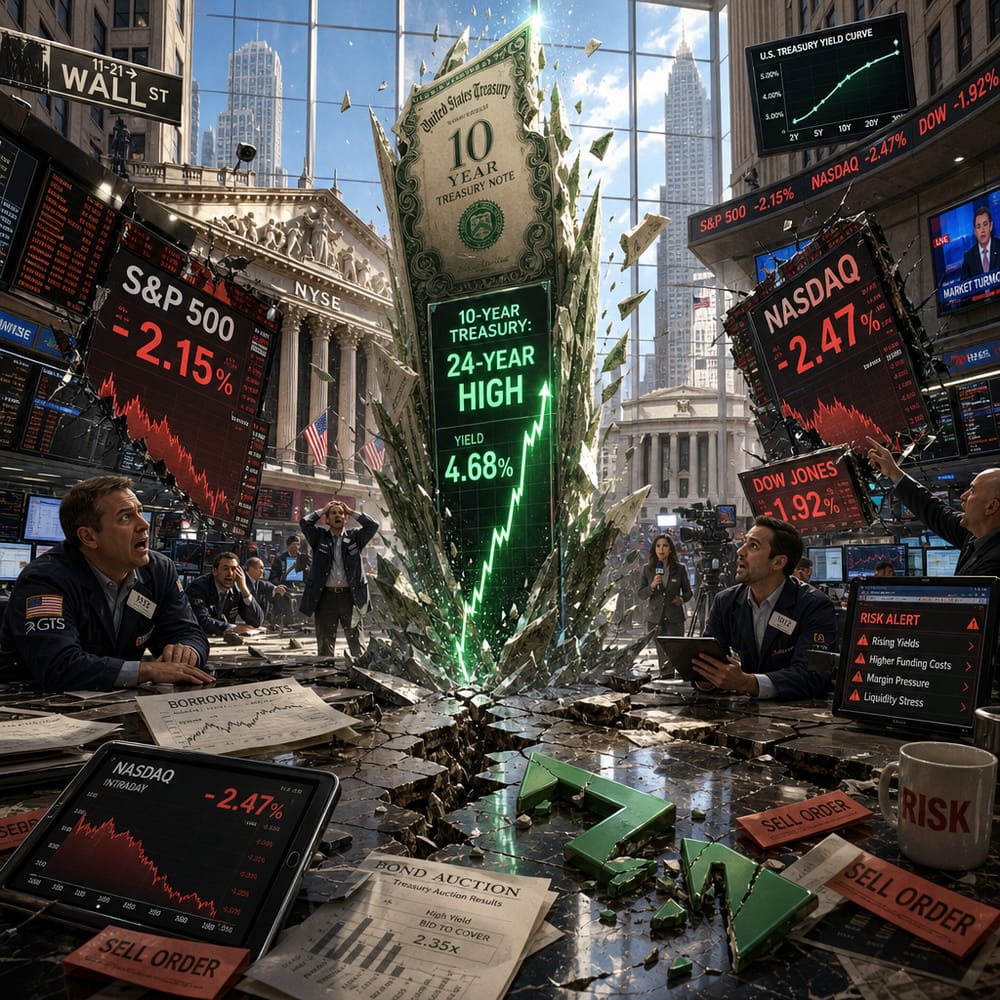
THE RISE AND FALL: HOW 10-YEAR TREASURY YIELDS ARE ROCKING THE MARKET
Move over, Hollywood drama. The real suspense is happening in the bond market. The 10-year U.S. Treasury yield just hit a chilling 24-year high, and major stock indices — S&P 500 and Nasdaq included — took a nosedive, leaving investors with a new genre of market thriller: rising yields and tumbling stocks.
So what’s the big deal about the Treasury yield? Think of it as the backbone of the financial world. When it climbs, it lets everyone know money's more expensive to borrow. It’s like your friendly neighborhood coffee shop suddenly charging $10 for a latte — it shakes things up, especially for sectors that thrive on cheap credit, like tech.
Tech stocks and high growth companies, the darlings of the stock market, are particularly sensitive to these changes. Their high valuations are based on future earnings. When borrowing costs rise, the value of those future earnings shrinks faster than your enthusiasm for paying $10 for caffeine. For companies like Apple and Microsoft, this means investors start thinking twice about forking over their cash.
But it’s not just the tech titans feeling the pressure. Rising yields can have a domino effect across the entire market. Higher yields typically translate into higher mortgage rates and loan costs, impacting everything from household spending to business expansion plans. In simple terms, people and companies might spend less money. Big yikes.
Now, not everyone's crying over rising yields. Some sectors see them as a golden opportunity. Financial institutions like banks often benefit because they can charge more for loans while their deposit payouts stay relatively low. It’s like flipping the script on who holds the wallet's power.
The Federal Reserve is playing its own game of financial chess. The Fed has been hinting — sometimes subtly, sometimes with all the nuance of a wrecking ball — that more interest rate hikes might be on the way. Their goal? To tame inflation. Unfortunately for stock investors, these hikes tend to make bonds more attractive compared to riskier stocks. The outcome? Investors start moonwalking away from equities like a pop star at a farewell tour.
The broader implications for the equity market are like the plot of a season finale — uncertainty. As yields rise, the cost of everything from mortgages to corporate debt balloons. Companies that once had a low cost of capital now face steeper hurdles, translating into potential slowdowns in hiring, investment, and growth.
Investors are left scratching their heads, asking, "Where’s the safe haven?" Bonds, traditionally the go-to for low-risk returns, suddenly seem cozy again. But with inflation lurking in the shadows, even the bond market holds its own risks.
This shift in sentiment is a reminder that the market doesn't operate in a vacuum. Economic growth, corporate earnings, and shifts in consumer spending are all interlinked with the undulating pulse of bond yields. The fear? That the higher borrowing costs could throttle growth just when things were starting to look up.
How should the everyday investor navigate this thrilling but unpredictable plot twist? Diversification remains the steadfast hero. Balance riskier assets with those traditionally considered safer, like bonds or defensive stocks in sectors such as utilities or consumer staples. These areas are less sensitive to economic cycles and can provide a cushion when the market hits turbulence.
In the grand theater of finance, the latest yield spike has certainly given investors a reason to rethink their portfolios. While the market may be awash in uncertainty, it’s also a land of opportunity. The key is being nimble, informed, and ready to adjust when the next twist unfurls. After all, in the world of investing, the only certainty is change.
This article is for informational purposes only and is not investment advice. Always do your own research or consult a licensed financial professional before making investment decisions.
© Copyright 2024. All Rights Reserved.
© Copyright 2024. All Rights Reserved.