

Bond Yields Surge Dragging U.S. Equities Lower
Friday, October 02, 2026
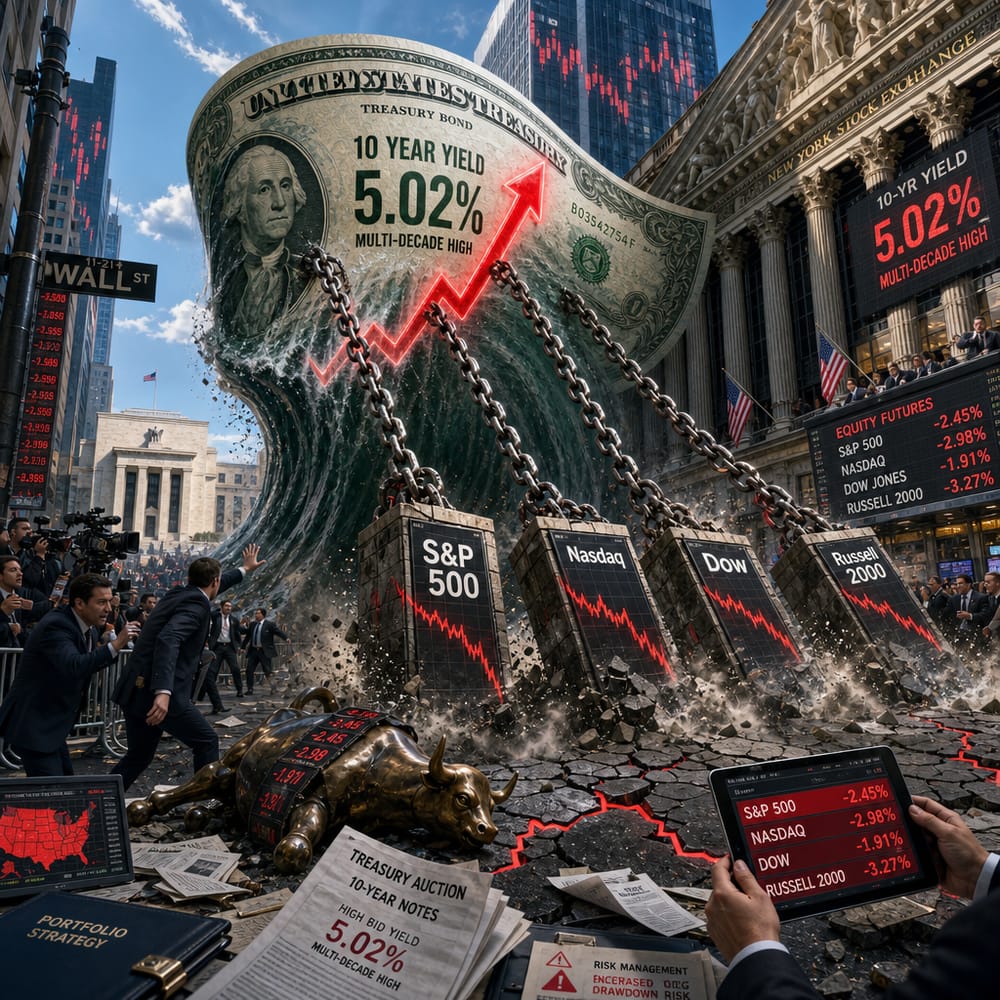
BOND YIELDS SURGE DRAGGING U.S. EQUITIES LOWER
Hold onto your hats, folks, because the financial rollercoaster just took another steep dive. Bond yields are climbing like a mountain goat on a caffeine rush, and they're dragging the U.S. stock market down with them. If the mention of "bond yields" makes you want to snooze, wake up! This is the financial gossip you didn't know you needed.
So, what’s really going on here? Well, the 10-year Treasury yield—the big kahuna in the bond world—just hit levels that haven't been seen since your playlist was full of Backstreet Boys and Britney Spears. We're talking about a yield north of 5.28%, dragging the 30-year Treasury yields up with it. For those of you scratching your head, bond yields are the return you get for holding the government’s IOUs, and when those yields rise, it spells trouble for stock markets.
Why? Picture this: when bonds promise better returns, they become the hot ticket in town. Investors start dumping their stocks like last season's fashion, diving into the safer waters of bonds. It's like everyone suddenly deciding they’d rather stay in and watch Netflix than risk a night at that new sketchy club downtown. As the demand for stocks wanes, prices drop, and the major indices like the S&P 500, Dow, and Nasdaq begin to look like they’ve seen a ghost.
Indeed, the impact is already clear. The S&P 500 has taken a hit, and the Nasdaq, which typically enjoys living on the edge with its tech-heavy portfolio, isn't spared the pain. Even the Dow, the old reliable of stock indices, is feeling the pinch. Those rising yields are casting a shadow as ominous as discovering your Uber rating has slipped below 4.0.
But why are yields spiking now? Good question, Watson. It seems the market got spooked by a weaker-than-expected jobs report, which usually might calm inflation fears and lower yields. Surprise! This time, it's doing the opposite, as it adds fuel to the fire of speculation about the Federal Reserve's next moves. While the Fed might hit pause on interest rate hikes in the short term, the long game could still involve higher rates to combat inflation, keeping those yields buoyant.
And let's face it, nothing gets markets twitchier than the Fed's next step. Will they continue to pump the brakes on rate hikes, or is another increase lurking in the shadows like that creepy doll in a horror movie? Investors are hanging on every word from the Fed, but higher yields suggest a lean towards a still tighter monetary policy ahead.
While the effects ripple across the market, sectors most susceptible to borrowing costs—like real estate and utilities—are taking a harder hit. These sectors, which often rely on heavy borrowing, are feeling squeezed by the prospect of paying more for the privilege of debt. It's a bit like being charged extra just for having your credit card at the ready.
Meanwhile, tech stocks have had a mixed reaction. Some, like Nvidia, have soared to new heights thanks to bullish investor sentiment, while others have cooled off in the general equity sell-off. Yet, tech's inherent riskiness might dampen those gains if bond yields continue to rise, since higher interest rates make future profits worth less today. It's a mathematical quirk that could keep tech investors up at night.
Looking forward, there's a blend of anticipation and anxiety in the air. Investors uncomfortably watch how rising yields might influence the Fed's future policy decisions, all while hoping inflation doesn't surge back like a bad case of déjà vu. The market's next moves are as unpredictable as the ending of a true-crime podcast, with plenty of twists guaranteed along the way.
So, as bond yields do their thing and stocks continue to act like they've had one too many espresso shots, remember: in the world of finance, what goes up must grapple with gravity. Fasten your seatbelts; the ride's not over yet.
This article is for informational purposes only and is not investment advice. Always do your own research or consult a licensed financial professional before making investment decisions.
© Copyright 2024. All Rights Reserved.
© Copyright 2024. All Rights Reserved.