

Bond Yields Surge Amid Hot Economic Data, Pressuring Equities
Wednesday, September 23, 2026
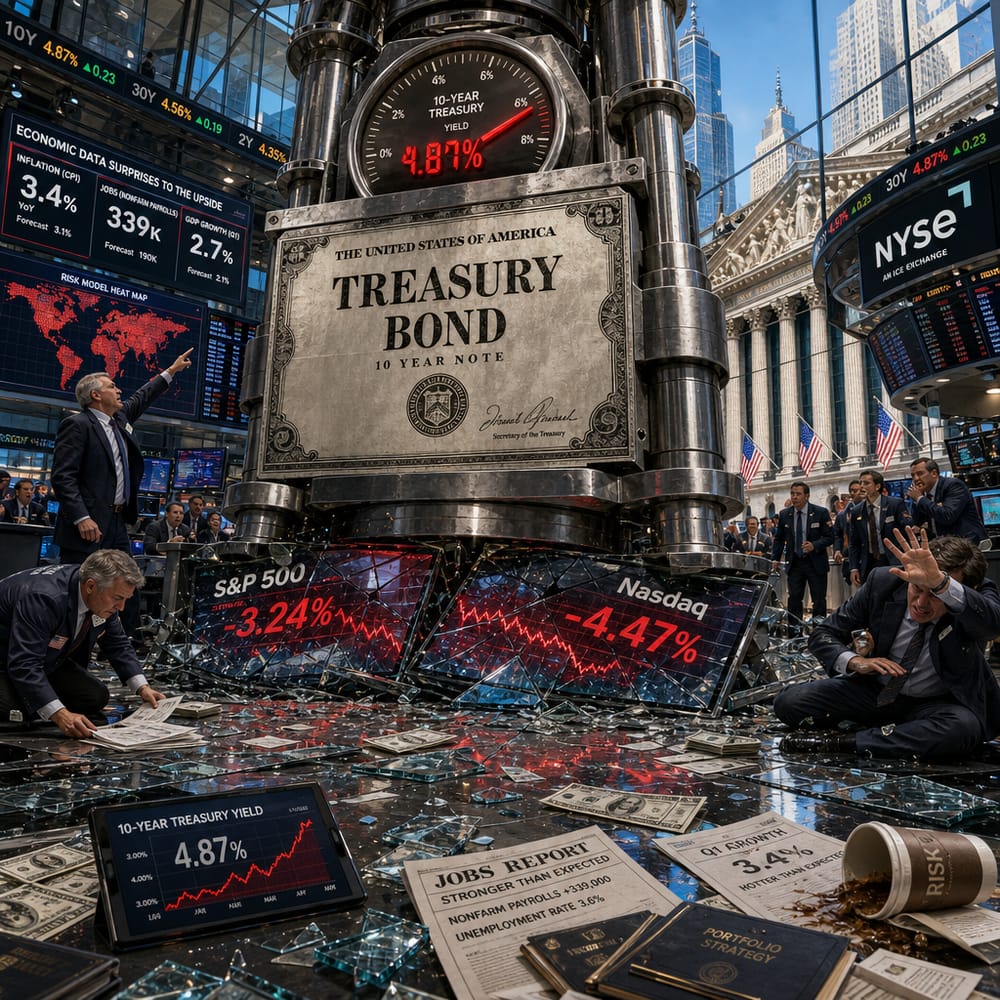
BONDS FLEXING, STOCKS STRESSING: WHY YOUR PORTFOLIO MIGHT NEED A NEW STRATEGY
Break out your popcorn, folks, because Wall Street’s drama is getting juicier. The age-old financial tit-for-tat between bonds and stocks is in full swing, and this time, bonds are stealing the spotlight. In a move that’s sending ripples through retirement accounts and investment strategies alike, U.S. Treasury yields have spiked to levels not seen since Britney Spears was topping the charts in 2007. So, what’s fueling this bond bonanza, and how does it affect you and your portfolio? Let's dive in.
WHAT’S DRIVING THE YIELD ROLLER COASTER?
The 10-year Treasury yield just jumped over 5.1%, a surge fueled by red-hot economic data that’s making traders sweat over potential Federal Reserve rate hikes. Imagine playing Monopoly and suddenly landing on Boardwalk with three houses while holding a Get Out of Jail Free card. That’s how the bond market feels right now. With the services PMI hitting a five-year peak and manufacturing not far behind, investors are bracing for the Fed to remind everyone who’s boss by possibly hiking rates again in October.
But why do yields matter to you? Simply put, rising bond yields mean higher borrowing costs. Whether you’re buying a house or running a business, this trickles down to your pocket, affecting everything from mortgage rates to credit card interest.
STOCKS FEELING THE PRESSURE
While bonds are having their moment in the sun, stocks are feeling the heat. The S&P 500 and Nasdaq have been on a roller coaster of their own, grappling with the weight of these climbing yields. Interest-rate-sensitive sectors—hello, technology and utilities—are especially vulnerable. Think of these sectors like the Titanic facing an iceberg, except the iceberg is made of rising interest rates that can crunch through corporate profits faster than you can say “dividend cuts.”
Tech stocks like Apple, Google, and Amazon have been leading the charge in recent years, but as borrowing costs increase, these companies may find themselves navigating choppier waters. Meanwhile, utility companies, which rely heavily on debt, might see their earnings squeezed as their cost of capital rises. And let's not ignore the real estate sector, which, like a house of cards, could wobble if the cost of borrowing remains high.
THE FED AT THE CROSSROADS
The big question on everyone’s mind: What will the Federal Reserve do next? The recent surge in economic activity seems to have put another rate hike on the table for October. Fed Governor Michael Barr hinted at “further policy adjustments,” which is central banker speak for “we might just bump up those interest rates a bit more.” The Fed has a tricky dance to perform—cool inflation without sending the economy into hibernation. How they navigate this path could be the difference between a market correction or a full-blown economic whiplash.
OPPORTUNITIES IN THE CHAOS
But don’t despair just yet. Where there’s volatility, there’s opportunity. Savvy investors might find solace in sectors less tied to interest rates. Consumer staples and healthcare, for instance, tend to weather the storm better during times of interest rate hikes. These sectors offer essential goods and services people rely on regardless of the economic climate. Plus, companies with strong balance sheets and lower debt levels could prove more resilient against the backdrop of rising yields.
And for those feeling adventurous, there’s always the option of diversifying into foreign markets or exploring alternative assets like commodities, which can sometimes zig when traditional markets zag.
WRAPPING UP
So, what’s the takeaway from this Wall Street showdown? Rising bond yields are more than just numbers—they’re a jolt to investors, a wake-up call to reassess and maybe rethink your portfolio strategy. Whether you’re a seasoned market player or a casual observer, now’s the time to put on that thinking cap and maybe chat with your financial advisor. Remember, in the world of investing, adaptability is the name of the game. So stay informed, stay flexible, and as always, keep your eyes on both the risks and rewards.
This article is for informational purposes only and is not investment advice. Always do your own research or consult a licensed financial professional before making investment decisions.
© Copyright 2024. All Rights Reserved.
© Copyright 2024. All Rights Reserved.